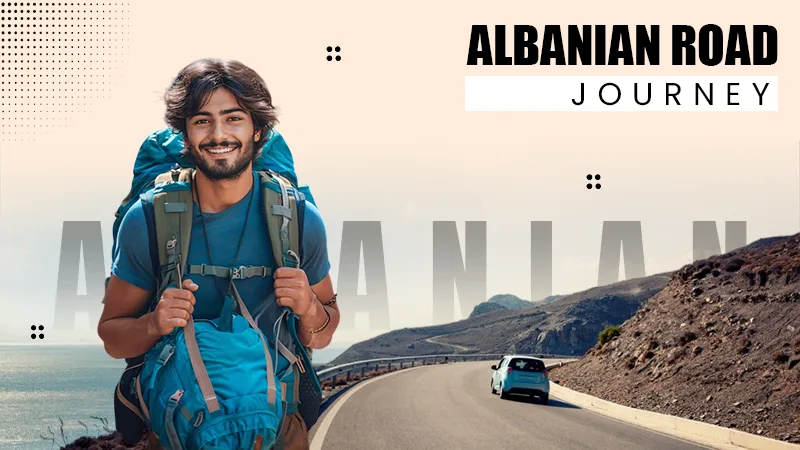
Albania is one of those rare European countries where the journey between places is as important as the places themselves. There are buses. There are taxis. There are organised tours. But none of those shows you the country.” To see Albania properly, you need a steering wheel and a tank of fuel, and you need to start in the capital city.
Reliable car rental Tirana services have multiplied in recent years, and for any traveller with a week or two to spare, this is now the single most rewarding way to explore the southwestern Balkans.
What follows is not an agency directory nor a price comparison. It is a road map — a narrative of what the country reveals to you when you have your own wheels and a willingness to drive.
Key Takeaways
- Exploring why driving beats every alternative.
- Understanding the southern loop: one week, two UNESCO Towns, and the Riviera.
- Analyzing the northern alternative: into the Albanian Alps.
- Assessing the practical notes before you book.
Why Driving Beats Every Alternative
Intercity buses (sometimes called furgons) in Albania are not run on formal schedules and rarely stop at places worth seeing. The Riviera villages south of Vlorë, the mountain valleys of Theth and Valbona, the thermal springs of Përmet, the Roman ruins of Apollonia – they all involve multiple changes or aren’t served by public transport at all.
A car also gives you something else: time. Albania welcomes halting travellers. A wedding procession along a country road. A stallholder selling honey from his own apiary. A view of the Adriatic that no guidebook had bothered to mark. These are the moments that transform a holiday into a memory, existing only for those who can stop when they want.
Let’s be real about the comparison of alternatives. A day-trip guided tour from Tirana to Berat costs about €40–60 per person. Car rental in Tirana: prices start at around €20 per day for an economy car in 2026, with weekly rates often falling below €15 per day. For a weeklong trip for two, the maths is unassailable—and the freedom is priceless.
The Southern Loop: One Week, Two UNESCO Towns, and the Riviera
The classic Albanian road trip from Tirana heads south in a clockwise loop. It takes about seven days comfortably and covers approximately 850 km – no drive longer than 2.5 hours and no overnight repeat.
DAY 1: TIRANA – BERAT. The route is south on the SH3, a well-paved and straightforward road, arriving in Berat in under two hours. The “city of a thousand windows” clings to the banks of the Osum River, its white Ottoman houses piled up the hillside beneath a hilltop castle that still houses a small community. Park beneath the old town; the cobbled streets above are too narrow for any sensible driver.
Day 2 – Berat to Gjirokastër. The drive is about three hours through agricultural plains and into rising hills. Berat’s stone-built southern twin is Gjirokastër – another Unesco site and the birthplace of writer Ismail Kadare and dictator Enver Hoxha. The roofs are slate, the castle huge, and the bazaar still a bazaar.
Day 3: Gjirokaster to Saranda via the Blue Eye. The Blue Eye (Syri i Kaltër) is a karst spring of impossibly cold, impossibly blue water whose true depth has never been measured. It’s 40 minutes south of Gjirokastër. Beat the tour buses; arrive before 10:00. Sarandë itself is a working resort town with views across to the Greek island of Corfu; it’s a base, not a destination. The real prize is nearby Butrint, an archaeological site that stacks Greek, Roman, Byzantine and Venetian ruins on a forested peninsula. Minimum of two to three hours.
Day 4: Riviera – Sarandë to Himarë. This is the drive that makes it all worthwhile. The coast road climbs the Llogara Pass – and from 2025, a new tunnel cuts dramatically across the slowest section. The Albanian Riviera between Sarandë and Vlorë is the Mediterranean’s equal. Turquoise water, pebble beaches, and olive groves falling straight to the sea. Stop where the view calls for it.
Day 5-6: Riviera beach days. Stay in Himarë or Dhërmi. Swim. Eat grilled fish. Have raki at sunset. You can still do this in Albania without spending European money, one of the last places in coastal Europe to do so.
Day 7: Back to Tirana, four hours up the coast past Vlorë and along the SH4. End your trip with an overnight stay in Blloku, the lively café district of Tirana.
The Northern Alternative: Into the Albanian Alps
If you have less time, or simply prefer mountains to the sea, head north instead. The SH1 from Tirana to Shkodra is a fast, modern road — ninety minutes door to door. From Shkodra, the SH21 climbs into the Accursed Mountains toward Theth, fully paved since 2024 but still narrow, winding, and demanding. The drive from Shkodra to Theth takes about 2.5 hours; from Tirana airport directly, it takes roughly three hours on the new toll corridor.
A few practical notes for the north. Fill up in Koplik — there is no fuel station in Theth. Mobile coverage in the mountains is unreliable; download offline maps before leaving Shkodra. The road is open roughly from June through October; in winter, it becomes impassable. An SUV or crossover is strongly recommended, not for the main road itself but for the gravel tracks within the Theth valley leading to the Blue Eye of Theth and the Grunas Waterfall.
What the Road Will Teach You
Driving in Albania is actually safe, but it has its own grammar.
Local drivers pass confidently, sometimes around corners. Keep right. Keep steady. Let them through. ” Horns are communication, not aggression – a quick beep at a blind corner means ‘I’m here’.” In the towns (that’s every village), the speed limit is 40 km/h; on the rural roads, 80-90; and up to 110 km/h on the A1. Police use radar all the time and write tickets on the spot.
“Always carry your passport, driver’s licence, rental agreement and insurance. Police checks at the city’s entrances are routine and usually brief. The legal limit is 0.05 per cent blood alcohol, but zero is the safest level.
Do not drive out of cities at night. Rural roads lack lighting, shoulders, or consistent surfaces, and hazards that are manageable during the day become serious at night.
Practical Notes Before You Book
A few honest details that the booking sites tend to bury.
Cash is king. Albania runs heavily on cash. The currency is the lek, but euros are widely accepted at rounded rates. Many smaller hotels, guesthouses, and gas stations in rural areas do not take cards.
Cross-border restrictions. Most Albanian rental companies prohibit taking the car into Montenegro, Kosovo, or Greece. A few allow it for an extra fee, plus a Green Card. Confirm before booking — going without permission voids your insurance.
Insurance excesses. The basic coverage usually means a deposit of €1,000–2,000 blocked on your credit card. The extra cost of a third-party excess policy or full coverage is well worth it.
Fuel: €2.20 per litre in 2026. A weeklong southern loop will cost about €60–75 in fuel. Fill up before mountain bits – rural stations are few and not all have cards.
It’s the time of year. May-June and September-October are the best: warm, less crowded, mountain passes open, and beaches still swimmable. July and August are hot and crowded. In winter the north is completely bound up.
A Closing Thought
A car in Albania is more than just transport. It is the difference between observing the country through a tinted bus window and walking its hills, its kitchens, its conversations. Car hire Tirana is the start of that difference – the simple act that transforms a flight ticket into a journey. The roads are better than rumour would have it, the people more hospitable than expectation prepares you for, and the country itself is changing rapidly enough that the version you see this year is one no future traveller will quite encounter again.
Drive safely. Stop frequently. Let the road work its magic.
Is Albania Good for a Road Trip?
Albania is a country for road trips. A few hours of driving can take you from the following: Beautiful wild alpine scenery in the north to UNESCO-listed historic towns.
What is the leading cause of death in Albania?
Heart disease is the number one killer in Albania and in the world. Cardiovascular diseases kill 17.5 million people prematurely every year, and this number is expected to increase to 23 million by 2030.
Why is Albania becoming a tourism destination?
The country has pristine beaches, mountains, traditional food, archaeological pieces, distinctive customs, low prices and the wildness of the rural landscape.
What’s so special about Albania?
Albania is known for its coastline along the Ionian and Adriatic Seas. It’s also famous for its history, which includes Roman, Byzantine, and Ottoman influences, as well as its unique cultural traditions, such as besa (an Albanian code of honour).