- Why Smart Home Security Matters for Traveling Families
- Preparing Your Smart Home Before Leaving for Vacation
- Using Smart Cameras and Doorbell Systems for Remote Monitoring
- How Smart Lighting and Automation Improve Home Security
- Protecting Your Smart Home Network From Cybersecurity Risks
- Managing Deliveries, Visitors, and Emergency Alerts While Away
- Common Smart Home Security Mistakes Families Should Avoid
- Conclusion
“The best security blanket is a well-prepared home.”
— Martha Stewart (American Entrepreneur, television personality, and Author)
Nothing interrupts a relaxing family vacation quicker than thinking about what is going on back home, like way more than you expect. From deliveries that no one grabs, to random visitors and those “what did I lock it?” moments, plus security risks and small electrical troubles, leaving the house empty for a couple of days can make travelers pretty anxious. Good news, modern smart home tech basically acts like a digital guardian that keeps an eye on things even when the family is miles away. With the right setup, travelers can monitor their homes remotely, receive instant alerts, and enjoy vacations with far greater peace of mind.
Why Smart Home Security Matters for Traveling Families
Family vacations should feel easy, like you can breathe, not like you are stuck managing a second life. But leaving a home unattended for several days can bring up serious concerns, from unwanted entry to package theft, and also electrical hazards that you really do not want to discover later.
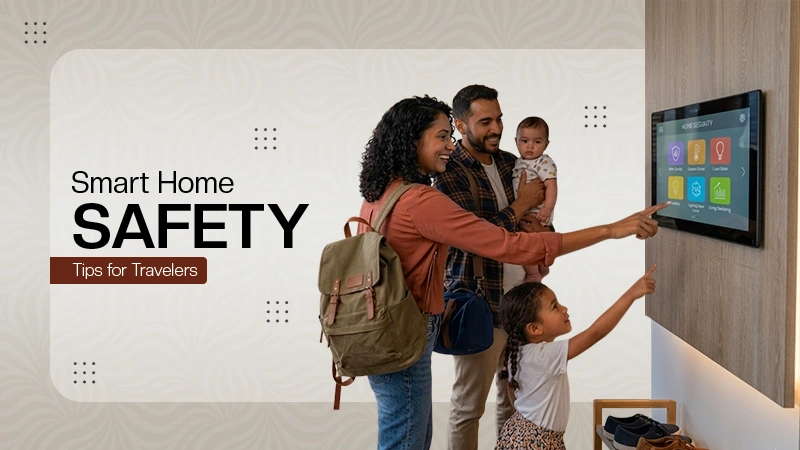
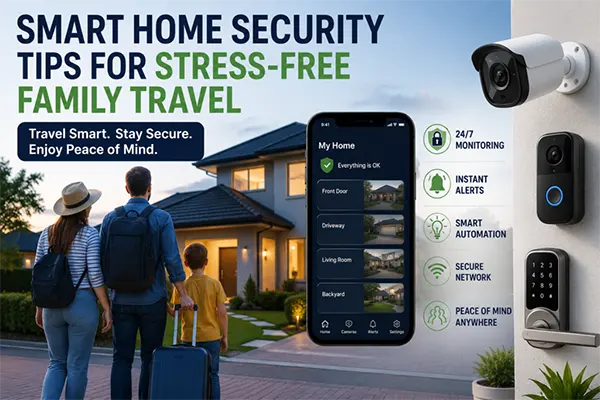
Smart home security systems lower that stress by letting homeowners use real-time oversight and control through smartphones and connected gadgets. Families can peek at camera views, lock doors remotely, receive urgent alerts, and even adjust lighting while they are traveling.
Also, today’s smart security setups help a house look “still lived in,” which can stop suspicious people earlier. Rather than depending only on traditional deadbolts and loud alarms, smart tech adds many layers of defense that stay active 24/7, without anyone there to babysit it.
Preparing Your Smart Home Before Leaving for Vacation
Before you head out, families should do a full smart home safety sweep, not just a glance at the app. Key prep steps include:
- Testing smart locks and any alarm routines
- Updating device firmware, plus the security apps
- Checking Wi-Fi stability and thinking through backup power options.
- Confirming camera coverage near entrances, porches, and driveways
- Setting up automatic lighting patterns,
- Make sure emergency alerts, and contact notifications are turned on and working.
Travelers should probably not say loud and for everyone to see, that they are gone for a long vacation on social media before coming back home, because those posts can accidentally give away that the place is empty.
Using Smart Cameras and Doorbell Systems for Remote Monitoring
Smart cameras and video doorbells are now some of the more practical tools for remote home monitoring, and it is kind of hard to beat that convenience.
With these setups, homeowners can grab live video, motion alerts, and visitor notifications straight on their phones. In other words, families can check the front entry, the garage area, the back garden, and even certain indoor rooms from almost anywhere across the planet.
Video doorbells are particularly helpful for delivery days while traveling. Homeowners can talk to the delivery person staff remotely, or they can lean on a reliable neighbor to pick up parcels.
A lot of newer platforms also include night vision, cloud-based recording, motion tracking, plus AI activity detection, so monitoring is more accurate and less “guessy”.
How Smart Lighting and Automation Improve Home Security
A dark and quiet house sitting there for several days can quickly suggest that nobody’s inside. Smart lighting helps address that by automatically turning lights on and off based on a schedule, like a quiet routine.
Automation can also generate believable day-to-day movement patterns, so the home seems lived in while everyone is away.
Some systems go further, too; they can manage curtains, televisions, background music, and various appliances from a distance.
Then there is motion-activated outdoor lighting, which adds another level by making entry areas easier to see and by discouraging anyone from hanging around the property.
Honestly, these small automation touches often create a pretty convincing security presence, even if you never “watch” the house directly.
Protecting Your Smart Home Network From Cybersecurity Risks
Smart home devices rely a lot on being internet-connected, and that also means cybersecurity should never be pushed aside, ever.
Families really should use strong passwords, turn on two-factor authentication, and keep updating device firmware regularly, because even small security flaws can turn into big problems. Also, using a separate Wi-Fi network for smart devices can help you stay more protected, even if the main network is compromised or something.
When you travel, it is best to avoid public Wi-Fi if you are trying to control smart home features, since unsecured connections can quietly raise the cybersecurity stakes.
One of the more advanced choices for modern households is the X-SENSE XS0B-MR smart smoke detector. This connected smart smoke alarm merges smart technology with dependable protection, so it can support a safer home environment overall.
Managing Deliveries, Visitors, and Emergency Alerts While Away
Your smart home system can also help you deal with surprises, even when you are not at home.
Video doorbells let you talk to visitors from a distance, and smart locks can generate temporary access codes for trusted relatives, neighbors, or maintenance workers when it is needed, not just whenever.
Package management gets smoother with motion alerts and delivery notifications. Some people even pair smart garage systems with this, so packages can be placed securely.
Emergency alerts tied to smoke detectors, water leak sensors, or security systems can notify you fast if something seems off.
Quick alerts usually reduce damage and can improve response times when an emergency comes up.
Common Smart Home Security Mistakes Families Should Avoid
There are many common mistakes that homeowners typically make, which weaken the security of their home. Some of them are given below:
- Not updating the software makes the device more susceptible to hacking.
- Using a weak password poses a high risk in cybersecurity.
- Posting a real-time vacation update on social media can alert criminals that no one is at home.
- Forgetting battery backup for necessary equipment during a power outage.
Conclusion
The smart home security system makes it easier for families to travel with peace of mind and confidence. Homeowners are well-protected with cameras, smart lighting, automation, and emergency alerts. But technology will only work if it’s coupled with adequate preparation and cybersecurity. There are ways to make devices more secure, to secure Wi-Fi, and to avoid common mistakes that can make them less safe. Families can take pleasure in their vacations while keeping away from the anxiety of housekeeping without a smart home system.
Why does smart home security matter while travelling?
Smart home security lets families keep an eye on things from afar, receive urgent alerts, and lower risk life break ins, package theft, and even electrical issues.
Which devices tend to help most for travel security?
Smart cameras, video doorbells, smart locks, automated lighting, smoke detectors, and motion sensors are usually the most helpful options.
How can smart lightning improve home security?
Smart lighting creates the appearance that someone is home by automatically turning the lights on and off during scheduled times.