
Sometimes life needs a greater change than just mountains, beaches, and forests.
It does not need a complete shift from city life but just a different end to it. This is where “Australian farms” comes into play.
When I planned such a trip, I had a rough sketch in my head of open lands, livestock, a house located in a remote area, and more.
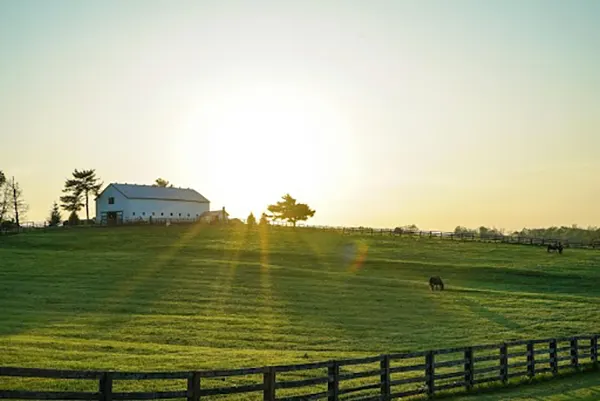
Read this article to explore more about this journey.
Key Takeaways
- Sheds of the farm, from building these sheds to relaxing under them.
- Daily life in these rural areas, which involves physical tasks but is not entirely chaotic.
- Adding simplicity to your life with simple but nutritious food, the flavours your life might be missing.
- Timing that feels diifferent here,from beautiful sunrise,to calm evenings and soothing sunsets .
The Shed Is the Farm
It’s not storage; it’s everything.
On most Australian farms, the shed isn’t just a place to keep tools. It’s where work happens, where things are fixed, where vehicles live, and occasionally where people spend most of their day.
You’ll see massive steel structures sitting slightly off from the main house, often bigger than the house itself.
Wide spans, high clearance, big sliding doors. Everything designed to handle machinery, equipment, and constant use.
Inside, it’s organized chaos. Tractors, parts, workbenches, materials, and sometimes even makeshift offices or break areas.
It’s not attractive in a polished sense, but it’s incredibly functional.
These Things Go Up Fast
One of the biggest surprises was how quickly these sheds can actually be built.
Many farms use kit systems now. You order the structure, it gets delivered in parts, and then it’s assembled on-site. The process is streamlined to the point where, within a short timeframe, you’ve got a full-scale building up and running.
That’s where the popular The Shed Company comes in. Their model is straightforward: engineered steel shed kits designed to be delivered and assembled efficiently, often turning what would be a long construction process into something that comes together in a matter of days.
In practical terms, it means people can add large sheds without months of disruption. You buy it, it arrives, it goes up, and suddenly you’ve got a fully usable structure that can handle everything from machinery storage to workspace and beyond.
And really, it feels like adding another house to the property, just built for work instead of living. Also, these are liveable. So you actually can live in it.
It does make traditional brick-and-mortar builds feel slower and, in some cases, a bit outdated by comparison.
Size Actually Matters Here
The scale is challenging to explain until you see it.
We’re talking sheds that can fit multiple vehicles and large equipment, and still have room to move around comfortably. High roofs so machinery can be lifted, repaired, or stored without constraints. Or sheds you can live in.
This isn’t overbuilding. It’s planning.
Farms don’t upgrade infrastructure every year. When they build, it’s for long-term use. That means bigger, stronger, and more adaptable.
Steel Over Everything
Almost all of these sheds are steel.
It makes sense. Australia’s conditions aren’t simple: heat, storms, dust, and everything in between. Steel handles better than most materials, and it allows for those large, open internal spaces without columns getting in the way.
It also means maintenance is more predictable. Less patchwork, more durability.
What Daily Life Actually Looks Like
Once you get past the idea of “rural life”, the day-to-day is pretty structured. Early starts are standard. You’re up with the light, sometimes before it. Coffee, quick check on the plan for the day, then straight into it. There’s no easing in.
Work follows the season more than anything else. What needs to be done depends on the time of year, the weather, and what’s already in motion. Some days are predictable. Others shift quickly if something changes.
It’s Physical, But Not Chaotic
There’s a rhythm to it that you don’t really understand until you’re in it.
Tasks are lined up in a way that makes sense. You move from one thing to the next without overthinking it. Correct something, verify something, move something, repeat.
Even when things go wrong, and they do, it’s handled as part of the day, not as a disruption. You adjust and keep going.
It’s not slow. It’s just focused.
You’re Outside More Than You Think
Most of the day is spent outside. You notice the weather constantly because it affects everything. Heat slows you down. Wind changes how you approach certain jobs. Rain can shift the entire plan.
You get used to reading conditions without contemplating it. You start noticing patterns: how mornings feel different from afternoons and how quickly things can change.
There’s no separation from the environment. You’re in it all day.
The Food Is Simple, But It Works
You don’t spend much time thinking about food, but it matters more than you expect.
Meals are practical. Filling, straightforward, no fuss. Breakfast is quick. Lunch depends on what’s happening. Dinner is where things slow down a bit.
And it hits differently.
After a full day outside, even basic food feels solid. There’s no need for anything complicated.
Time Feels Different Out Here
One of the biggest shifts is how time works.
You’re not checking your phone constantly. You’re not jumping between tabs or tasks. You’re doing one thing at a time, finishing it, then moving on.
Days feel full, but not rushed. You look up, and it’s already late afternoon. Not because you were busy in a scattered way, but because you were focused.
Evenings Are Quiet
Evenings are the time when everything comes to a halt. Work wraps up, the light starts fading, and the pace slows down naturally. It’s quiet and undistracted. You sit, eat, maybe talk, maybe not. And that’s enough.
It’s Not Isolated Like You Think
There’s a stereotype that farm life is isolated. It’s quieter, sure. But it’s not disconnected.
There’s constant movement, people coming through, conversations happening, and things being organised behind the scenes. You’re not alone; you’re just not surrounded by crowds.
And when you do go into town, it feels more intentional.
You Start Noticing Small Things
After a while, your attention shifts.
You notice how the light changes across the land. How certain times of day feel more productive than others. How your energy matches the pace of the work instead of fighting it.
It’s not something you plan. It just happens.
And once it does, it’s hard to ignore.
This is where your experience gains pace.
It’s Not Romantic, But It’s Real
Spending a month on a farm resets a few assumptions.
It’s not the slow, peaceful lifestyle people imagine from the outside.
It’s active, structured, and requires consistency.
But it’s also straightforward. You know what needs to be done. You do it. You see the result.
There’s not much in between.
Reality-driven actions, but with peace.
So What Was It Really Like?
More practical than expected.
More structured. Less about “getting away from it all” and more about being fully in something.
And the noteworthy fact is that it’s not easier than city life. It’s just different.
Less noise. Less distraction. More clarity around what actually matters in a day.
Final Thought
If you’ve never spent time on a working farm, it’s easy to build a version of it in your head.
But the reality is simpler.
It’s work, rhythm, and routine. It’s paying attention to what’s in front of you and getting through it properly.
After a month of that, you start to question the need for all the extra noise.
What are farms like in Australia?
More than half of the country’s land area is pasture. Much of it has extensive cattle and sheep stations. In fact, some stations are so large that you need to use helicopters to herd the animals.
What is an Australian fam called?
An Australian farm is called a ‘station’. This is a large piece of land that is used for livestock production.
How many days in the year is there farm work in Australia?
The farm work takes 88 days or three months of specified work. In case you are applying for a visa extension
Why is Australia very famous?
Australia is famous for a lot of things, which include swathes of tropical beaches, marine reserves, Aboriginal culture, cute koalas, etc.