
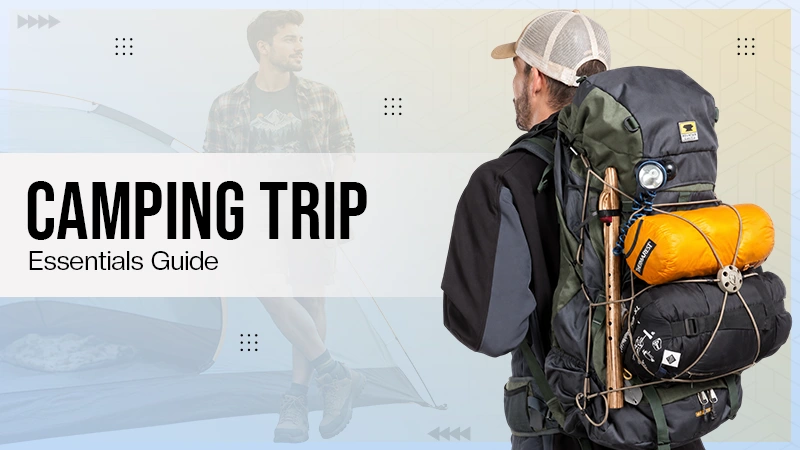

Many hikers and trail runners fail to carry the gear that counts as adequate for an emergency, leading to them getting injured or worse with nothing to help them during the problem, as many times there’s nobody close to help you solve your issues.
This is why it is essential to plan and pack before you head out for a weekend camping or hiking trip, enabling you to be prepared for any situation and helping you attain the best experience possible without many problems.
This guide includes the ten essential frameworks that help you make the outing feel a lot easier and more enjoyable.
Key Takeaways
- The essential categories are navigation, sun protection, insulation, illumination, first aid, fire, a repair kit, nutrition, hydration, and emergency shelter
- A sleeping pad matters as much as the bag. Its insulation value, listed as an R-value, blocks the cold that the ground pulls out of you all night.
- Carry what the hike requires and treat what you collect for the campsite. A pump filter, a squeeze filter, or chemical tablets each handle the other job at varying speeds
- A successful weekend camping and hiking outing relies less on carrying more gear than on carrying the right gear and knowing how to use it efficiently
The Ten Essentials Framework
The Ten Essentials started as a list from a small Seattle-based climbing club in the 1930s and now works as a complete systems checklist. The list names ten categories of preparedness, and each category can be met with more than one object.
The categories are navigation, sun protection, insulation, illumination, first aid, fire, a repair kit, nutrition, hydration, and emergency shelter.
For a weekend that includes a fixed camp along with daily hikes, you pack every system twice in your head.
One version goes in the pack you carry on the trail. The other stays at the campsite. A map and compass belong in the first group even when your phone holds the same data because a dead battery removes the phone from the plan.
Shelter and Sleep System
Your tent is the center of the campsite, and the rest of the setup works around it. Pick one rated for the season and pitch it on a footprint so ground moisture stays outside. The sleeping bag should be rated at least 10 degrees below the coldest night you expect, since a bag rating marks the survival temperature and comfort comes several degrees warmer.
A sleeping pad matters as much as the bag. Its insulation value, listed as an R-value, blocks the cold that the ground pulls out of you all night. Bring a repair patch for the pad and a spare tent stake or two. Small failures at camp are cheap to fix when you carry the parts and expensive when you do not.
Water and Hydration Planning
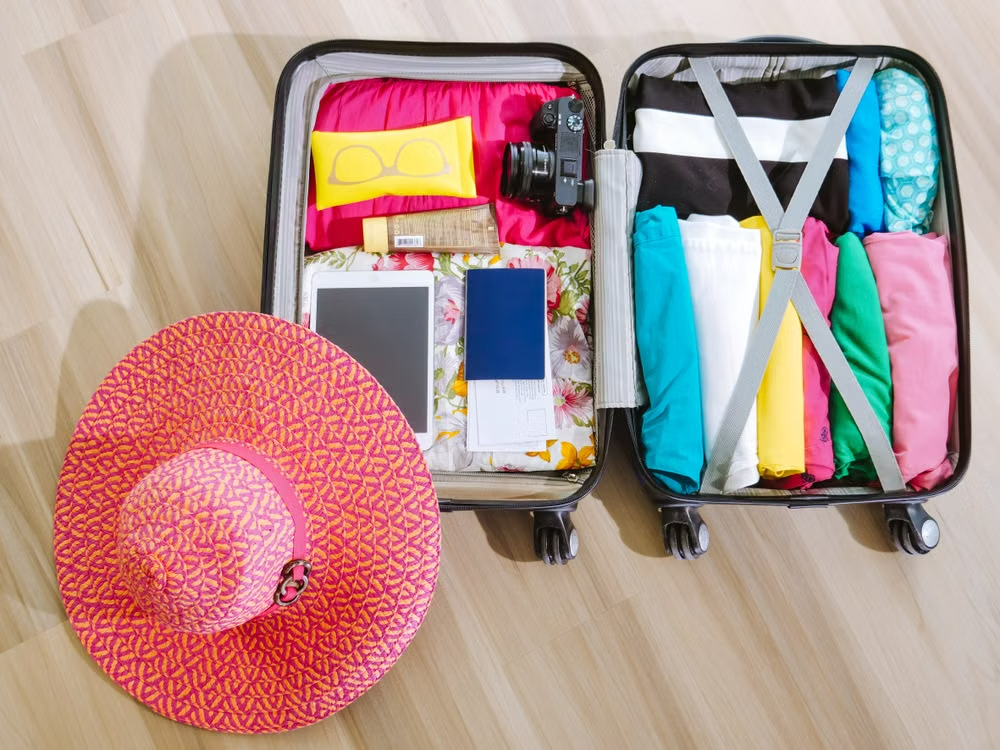
Water quite literally decides how far you can go. The American Hiking Society recommends intake at approximately one quart per hour during heavy exercise, so a four-hour loop in summer heat can demand close to a gallon before you return to camp.
Carry what the hike requires and treat what you collect for the campsite. A pump filter, a squeeze filter, or chemical tablets each handle the other job at varying speeds.
Dehydration announces itself early. The symptoms of dehydration show up starting with a headache, then transition to dark urine, nausea, and dizziness. Pale and plentiful urine is the simplest field test that you are drinking enough.
Cutting Tools and Field Repair
A cutting tool proves useful in ways that are easy to overlook until the moment you actually need one. It opens food packaging, trims cord to length, cuts moleskin for a blister, and prepares kindling for a fire. Campers tend to split the task between a fixed tool at camp and a smaller folding blade on the way.
Lists that rank the best EDC knives usually favor a blade under four inches with a locking mechanism and a handle that maintains a secure grip in wet conditions. A basic repair kit rounds out the same category. Duct tape wound around a water bottle, a few zip ties, and a needle with heavy thread will mend a pack strap or a torn tent panel without a trip back to town.
Navigation and Light Sources
A phone covers navigation until it does not. Download offline maps before you lose signal, and carry a paper map and a compass that need no charge. Learn to orient the map to the terrain before the trip, while you have time to practice. Light is the other easy thing to forget. A headlamp keeps both hands free for cooking or pitching a tent after dark, and a small backup light weighs almost nothing. Install fresh batteries before the trip and carry a spare set in your pack. Many hikers who need help after sunset simply started their descent later than planned, and a working light is what keeps a late finish from turning into an unplanned night out.
Fun Fact
A cutting tool like the Swiss Army Knife was originally created for the Swiss Army in 1891 to open canned food and disassemble rifles.
Insulation and Layering for Night Temperatures
Mountain weather turns without much warning, and nighttime temperatures at elevation drop well below what the afternoon suggested. Hypothermia does not require freezing conditions. It sets in when the body loses heat faster than it makes heat, and wet clothing on a 50-degree evening is enough to start the slide.
The early signs of hypothermia consist of uncontrolled shivering and clumsy hands, so consider them as an indication to add a layer and get dry. Pack a synthetic or wool base layer, an insulating mid layer, and a shell that cuts through the wind and rain.
Cotton holds water against the skin and works against you once it is wet, so keep it out of the active layers. A warm hat does more than its weight suggests because an uncovered head sheds heat quickly.
First Aid and Trip Communication
A first-aid kit for a weekend covers blisters, cuts, allergic reactions, and pain. Pack adhesive bandages, gauze, antiseptic wipes, and any personal medication. Knowing how to utilize the medical kit matters as much as owning it, so read the instructions before you leave your place.
The same 2026 study found that a quarter of the hikers surveyed had not told anyone where they were going or when they expected to be back. That single step costs nothing and can significantly shorten a rescue. Leave a written plan with a friend and set a time when they should call for help if you have not checked in.
Food, Cooking, and Campsite Cleanup
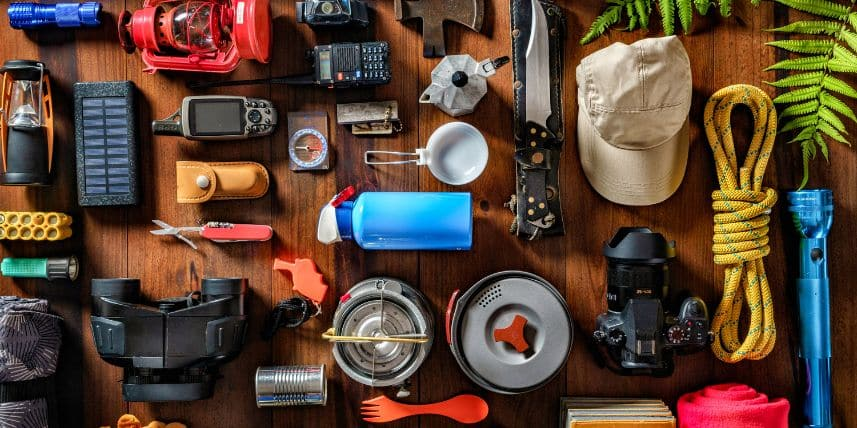
Food for two days comes down to a simple estimate. Plan roughly 2,500 to 4,000 calories per person per day depending on effort, and favor dense foods that survive a pack. A small stove, a fuel canister, a pot, and a lighter handle hot meals and morning coffee. Store food away from the tent in a bag hung from a branch or in a hard canister where local rules require one, since a fed bear becomes a returning bear. Sound food storage is the core of bear safety at any camp in bear country. Pack out everything you bring in. A few sealable bags for trash keep the site clean and keep wildlife uninterested in your camp.
A Final Pass Before the Trailhead
Gear failures on a weekend camping and hiking trip rarely come from exotic problems. They come from a missing layer, an empty water supply, or a kit that no one in the group knew how to open. Lay every item on the floor the night before and sort it by system, the same way the Ten Essentials framework does. Check each piece against the two settings you will use it in, camp and trail. The 15.7% figure from the Rocky Mountain survey is a reminder that looking ready and being ready get measured differently. The floor test is where you find the gap while you can still fix it.
Conclusion
A successful weekend camping and hiking outing relies less on carrying more gear than on carrying the right gear and knowing how to use it efficiently. A well-planned checklist allows you to stay prepared for changing climate, unexpected delays, and minor equipment failures without adding unnecessary weight to your pack.
By reviewing your gear before you leave and following a system like the Ten Essentials, you can spend more time enjoying the trail and less time dealing with avoidable problems, making every trip safer, more comfortable, and more rewarding.
Why is a sleeping pad R-value as important as a sleeping bag rating?
A sleeping bag compresses beneath your weight, losing its insulating value. An insulated sleeping pad (R-value) blocks the cold that the ground continuously draws from your body all night.
How do I prepare for navigation if my phone has offline maps?
Batteries drain rapidly in cold weather or areas with weak signals. Always carry a physical topographic map and a magnetic compass, and practice orienting the map before heading out.
What is the best way to prevent blisters while hiking?
Wear moisture-wicking wool or synthetic socks (avoid cotton), break in your footwear before the trip, and apply moleskin or blister tape at the first sign of a “hot spot” on your foot.