“Traveling is one of the most rewarding things in life. Staying connected is more important than ever, whether you are visiting a busy city, trekking in the wild mountains or relaxing on a tropical beach.
Reliable internet access will help you get around new places, stay in touch with loved ones, manage your work, book accommodation and deal with unexpected situations.
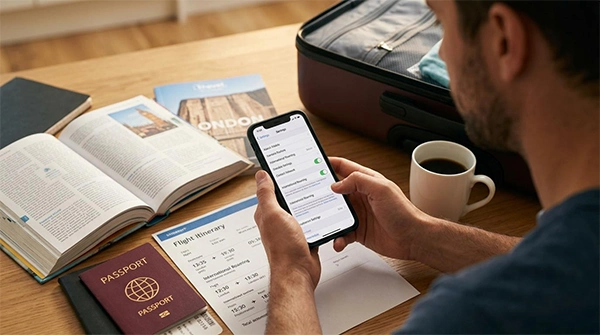
Thankfully, today’s technology offers several options to stay connected no matter where your travels take you.
This guide explores the best options and practical tips for maintaining seamless connectivity while traveling.
Key Takeaways
- Staying connected helps with navigation, communication, and accessing important information while traveling.
- Selecting the right option ensures reliable and convenient internet access during your trip.
- eSIMs provide flexible, convenient, and hassle-free connectivity while abroad.
- Planning ahead helps avoid extra costs and connectivity issues during travel.
Why Staying Connected Matters
Having internet access while traveling goes beyond posting vacation photos on social media. A reliable connection enables you to:
- Access digital boarding passes and travel documents.
- Use GPS navigation and public transportation apps.
- Stay in touch with family and friends.
- Book hotels, tours, and transportation on the go.
- Translate foreign languages instantly.
- Respond to work emails if you’re traveling for business.
- Contact emergency services when necessary.
Whether you’re a tourist, digital nomad, or business traveler, staying connected makes every trip safer and more convenient.
Choose the Right Connectivity Option
There are several ways to access the internet while traveling, each with its own advantages.
1. Public Wi-Fi
Free Wi-Fi is available in many :
- Airports
- Hotels
- Cafes
- Restaurants
- and shopping malls.
While it’s convenient, public networks are often unsecured.
Public Wi-Fi works well for light browsing but shouldn’t be your only internet solution.
2. International Roaming
Most cell phone carriers offer international roaming. They can be handy, but roaming charges can mount quickly depending on where you go and how you use your phone.
Before you travel, check your carrier’s international plans so you won’t be surprised by unexpected charges.
3. Local SIM Cards
You can get cheap mobile data when you’re there by buying a local SIM card. This option is often reasonably priced for longer stays.
However, purchasing a local SIM may involve:
- Finding a local mobile provider.
- Showing identification.
- Swapping your existing SIM card.
- Learning about local mobile plans.
While practical, it may not always be the most convenient choice for short trips.
4. eSIM Technology
An eSIM is one of the easiest ways to stay connected. An eSIM isn’t the same as a traditional SIM card. Rather, it’s embedded in compatible smartphones and activated digitally.
If you’re unfamiliar with the technology, learn what is eSIM and how it simplifies international travel without requiring you to replace your physical SIM card.
Benefits of Using an eSIM While Traveling
An eSIM offers numerous advantages for international travelers:
- Quick digital activation.
- No physical SIM card required.
- Keep your primary number active.
- Switch between multiple mobile plans easily.
- Save time upon arrival.
- Reduce expensive roaming charges.
Many travellers now prefer eSIMs because they offer instant connectivity as soon as they land.
Plan Ahead Before Your Trip
Sort out your connectivity options before you leave home to avoid unnecessary stress.
Consider these steps:
- Verify whether your phone supports eSIM technology.
- Download offline maps.
- Save hotel confirmations and travel documents offline.
- Install transportation and translation apps.
- Inform your bank about international travel.
- Back up important files to cloud storage.
A little preparation can make a significant difference during your trip.
Use Essential Travel Apps
Several apps can help you stay connected and organized while traveling:
- Google Maps for navigation.
- Google Translate for language assistance.
- WhatsApp for messaging and calls.
Download these apps before you leave so that you can use them, even if the internet isn’t available for a while.
Protect Your Online Security
Cybersecurity is particularly crucial when travelling, because you’re frequently connecting on unfamiliar networks.
Follow these best practices:
- Enable two-factor authentication.
- Use strong, unique passwords.
- Keep your phone and apps updated.
- Lock your device with biometric authentication or a PIN.
- Avoid downloading files from unknown sources.
- Use a trusted VPN on public Wi-Fi.
These precautions help protect your personal information throughout your journey.
Manage Your Mobile Data
Even with generous data plans, managing your usage can prevent slow speeds or unexpected limits.
Helpful strategies include:
- Download entertainment before your trip.
- Turn off automatic app updates.
- Limit video streaming on mobile data.
- Monitor your data usage regularly.
- Enable data-saving modes when available.
Stay Connected Across Multiple Countries
If you are travelling between several countries, it may be inconvenient to keep changing SIM cards. Travellers are now increasingly opting for providers like Holafly to offer travel-friendly eSIM plans that cover multiple destinations, making international connectivity a lot simpler.
This flexibility is especially valuable for backpackers, business travelers, and digital nomads moving between countries.
Final Thoughts
Keeping in touch on the go has never been simpler. From local SIM cards and public Wi-Fi to sophisticated eSIM technology, travellers now have more options than ever to get reliable internet access wherever they go.
Whether you’re traveling for business, leisure, or long-term exploration, staying connected ensures a smoother, safer, and more enjoyable experience.
How do you stay connected while traveling?
Keep a backup source for internet access that can be used during an emergency.
How to stay calm during travel?
Visualize: Imagine a place where you feel safe, comfortable, and at peace. Think about the details of that place and let yourself go there in your mind.
What are the 12 reasons for travel?
Each journey is a window into one of 12 motivations for travel: Curiosity, Inspiration, Happiness, Creativity, Serendipity, Hardship, Service, Healing, Wonder, Empathy, Eroticism, and Hope.
What makes a person connected?
People often connect with others through shared interests, activities, or goals. The internet and social media can help facilitate these connections.
How does travel connect people and places?
By visiting different places and immersing ourselves in various cultures, we learn about how others live, their values, traditions, and beliefs.