Winter travel – one of the most fascinating trips of the year. But do you know that most of the families easily make bookings for winter excursions, but are often seen unprepared? As a result, they fail to experience what they had booked for.
Cold weather, glacier walks, ski trips and ice cave tours all require much more than just warm jackets. The best thing is that these essentials are also not too expensive to consider.
With the right layers, proper footwear, a few easily forgotten essentials, and some extra planning for kids, the winter trip can be made much more exciting and fun.
Keep reading to explore what travellers often overlook before cold-weather excursions and what essential things are.
Why Cold-Weather Prep Gets Overlooked
Most travellers spend several hours researching their itinerary — but few spend any time planning what they’ll wear.
That’s a major mistake. Camping trips in cold-weather are one of the few times when your gear makes or breaks your memories.
Fun fact:
The CDC specifies that roughly 1,300 Americans perish from hypothermia every year — and thousands more fall ill due to improper cold exposure.
The scariest part?
Hypothermia can occur even in normal temperatures. Hypothermia can arrive at 10° C if you are wet, windy and fatigued. That is why trip planning means inspecting your equipment FIRST when responsibly touring an ice cave with children.
When travelling with kids, be absolutely certain you know these things before booking an ice cave tour so no one is left cold, scared or bored in the middle of it. Children relate to cold temperatures VERY differently than adults — and inappropriate layers can make bad conditions occur fast. These things mean a winter adventure beyond the slope.
Now let’s get into the good stuff.
The Layering Mistake Most Travellers Make
Most people evaluate “warm” as “thick”.
No, that’s not accurate. Layering several thinner clothes over each other will keep you warmer than one large jacket.
Here’s how a proper layering system works:
- Base layer: Wicks moisture aside from your skin (merino wool or synthetic fabric, never cotton)
- Mid layer: Entraps warmth (fleece or a light down jacket)
- Outer layer: Stops wind and water (a shell jacket)
Why does this matter?
Skin loses heat the most quickly when it is wet. If your base layer collects sweat next to your skin, you will start literally freezing within minutes – even if you are inside a big ol’ parka.
Bonus Tip: Transport a second base layer in your daypack. In case your first one gets wet, you can change into the dry one and stay warm for the remainder of the day. This is how most tour specialists do it, too.
Cotton is your opponent in the winter. Give up all cotton t-shirts, hoodies, or jeans at the hotel. Cotton catches moisture and will stay wet for hours. Worst of all, it drives heat away from your body.
Gear Travellers Always Forget
You’ve sorted the clothing. What about every other aspect?
The list of travel toiletries that people don’t acknowledge they need until they’re shivering on the trail is broad:
- Neck gaiter or buff — Protects your face from wind coolness
- Hand warmers — Cheap, tiny, and lifesavers
- Sunglasses — Snow blindness is real, even on cloudy days
- Waterproof gloves — ordinary gloves soak through fast
- Insulated water bottle — Plastic bottles freeze firmly in cold weather
These items aren’t costly. But when they’re missing, the trip suffers.
It’s mainly the little things that make or break trips in cold weather – not the big clear stuff. Lose a pair of gloves and what was believed to be an enchanting glacier hike can swiftly become a two-hour race to the bus.
Get it all set up the night before. Running around desperately searching for things in the morning is why travellers leave half of their valuables behind.
Just one extra tip … Keep a dry bag in your daypack to keep all the gear dry from melting snow. Wet gloves. Wet spare socks. What good are they? Literally none. For about $5 you can prevent the whole situation from occurring.
Grip: The One Nobody Talks About
Now for the biggest lapse of all…
Grip. Many travelers favor warmth and overlook one major concept. Cold-weather ground is slippery ground. Public health accounts tally up to 1 million people injured each year due to falls on ice and snow.
Slipping on a glacier or icy walkway is vital business. It can spoil your trip right then and there.
Here’s what to look for in cold-weather footwear:
- Deep rubber lugs on the sole
- Waterproof upper (Gore-Tex or a comparable brand)
- Ankle aids for uneven terrain
- Extra space for thick wool socks (don’t cram your foot in)
For tougher ice conditions, consider buying microspikes or crampons. These are worn over your boots and allow you to have an edge on hard ice. Many organized tours will have them, but it’s always good to double-check before stepping away from the hotel.
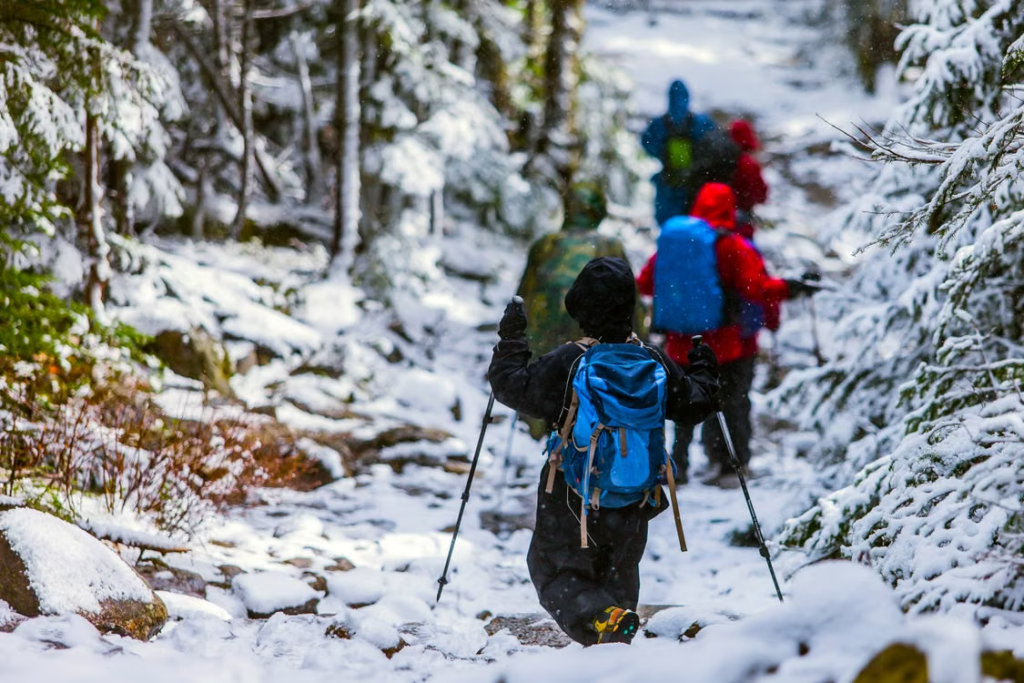
Also, take your trekking poles. They give you two more points of contact with the floor. Plus, they make icy patches WAY less unsettling – particularly for children or elderly travellers.
Buying spikes at your destination and renting boots there is often less costly than purchasing both at home. Many winter tour organizers have quality rental equipment. Ask before you pack a suitcase chocked full of gear you’ll only use once.
Prepping Kids for a Cold Excursion
Kids feel the cold twice as swiftly as adults.
It’s why families with kids have to take special planning precautions. These are the guidelines that make winter trips exciting for everyone:
- Dress kids in one more layer than you’re carrying yourself
- Pack snacks that don’t stop dead (energy bars work; fruit doesn’t)
- Bring more socks and gloves — kids get them wet fast
- Schedule your tour for the right length of time. 2 to 3 hours is ideal.
- Watch for shivering or uneasy behaviour (early signs of getting too cold)
Children are also the exact way. They won’t tell you they’re cold until they are numb. Ask them every 20 minutes how they are feeling. Ask if their fingers are cold yet instead of if they’re cold.
Finally… Pack a day pack just for them. Extra hats, gloves and socks pack small and will be consumed WAY more often than you think!
Also, explore the best and worst months to visit Phoenix.
Bringing It All Together
In the end, winter vacations are actually great, but only for those who know how to pack well. Keeping the right layers to keep you warm and dry, smart footwear to keep the movement easy, and a few other essentials can prevent small issues from ruining your trip.
Especially for those travelling with kids, leave an extra room for clothing, snacks, and breaks. And ensure proper equipment is provided by the tour operator.
This way, you spend less time taking stress and more time enjoying the winter beauty.
Now go pack that base layer!
What to wear for a cold-weather excursion?
A three-layer system is a great starting point: a moisture-wicking base layer, an insulating mid-layer, and a waterproof outer layer.
Why should I avoid cotton in cold weather?
Cotton absorbs moisture and dries slowly. When wet, it allows the body to lose heat easily.
How to prepare better for kids?
Dress kids in the right way, carry extra gloves and socks, bring snacks that remain the same for a long time, and choose an excursion length that matches their age.