
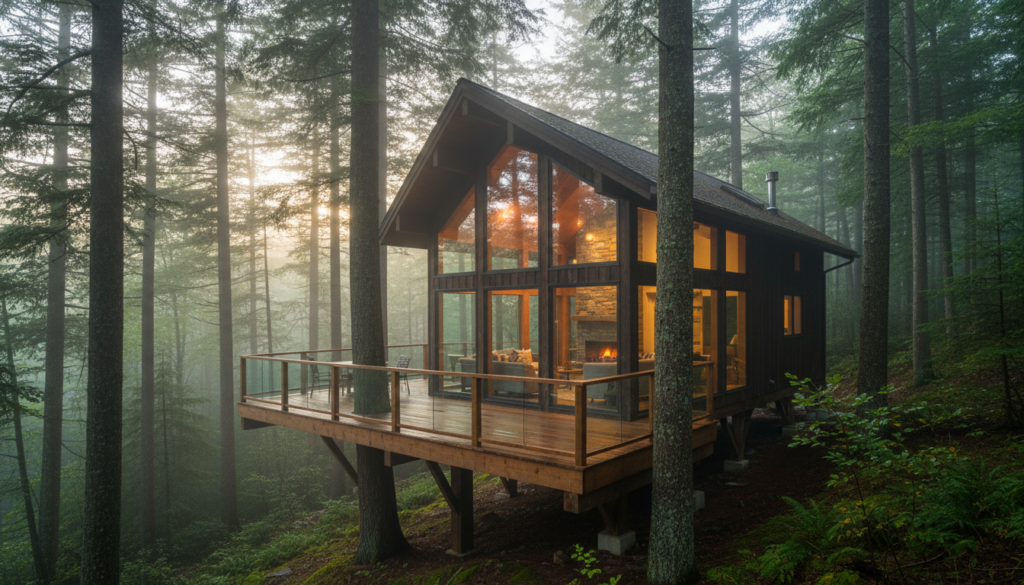
Somewhere in the hills of northwestern Pennsylvania, a quiet revolution in overnight accommodations has taken root, literally, in the trees. The forests surrounding Cook Forest State Park, home to some of the tallest old growth white pines and hemlocks east of the Mississippi, have become an unlikely hub for a unique stay at a treehouse experience that blends rustic adventure with genuine comfort. These are not the plywood platforms of childhood memory. They are fully appointed dwellings perched among the branches, designed for adults who want to sleep surrounded by nature without sacrificing a hot shower or a functioning kitchen.
Why Cook Forest Drew the Treehouse Builders
Cook Forest State Park earned National Natural Landmark status for its virgin timber stands, and the surrounding Clarion River valley has attracted hikers, anglers, and canoeists for generations. But the region’s lodging options historically skewed toward basic cabins and roadside motels. The treehouse movement filled a gap: travelers wanted immersion in the forest canopy itself, not just proximity to it. The towering hemlocks and hardwoods provided both the structural foundation and the atmosphere that makes these stays memorable. Waking up at canopy level, with birds at eye height and creek sounds rising from below, creates a sensory experience that ground-level accommodations simply cannot replicate.
What a Modern Treehouse Actually Looks Like
Today’s treehouse stays bear little resemblance to the rickety structures of summer camp lore. The properties near Cook Forest feature king-sized beds, wood-burning fireplaces, fully equipped kitchens, and private decks that extend into the tree canopy. Large windows frame forest views from every angle, and many units include soaking tubs or hot tubs positioned to maximize the feeling of bathing outdoors. Construction techniques have evolved to protect the host trees, using compression brackets and flexible attachment systems that allow natural growth without compromising structural integrity.
The Forest Floor Experience
The appeal of a treehouse stay extends well beyond the structure itself. Cook Forest’s trail network winds through old-growth groves where some trees exceed 200 years in age. The Longfellow Trail and Seneca Trail are among the most popular, passing through cathedral-like stands of white pine that filter sunlight into green-gold columns. The Clarion River, a designated Pennsylvania Scenic River, offers calm stretches ideal for kayaking and tubing, while deeper pools hold populations of smallmouth bass and trout that keep anglers returning season after season.
Seasonal Shifts, Year-Round Appeal
Each season transforms the forest around these elevated stays. Spring brings wildflower carpets and returning migratory birds. Summer fills the canopy with dense green cover that provides natural shade and privacy. Autumn turns the surrounding hardwoods into a mosaic of amber, crimson, and gold visible from treehouse decks in every direction. Winter, perhaps the most underrated season, strips the canopy to reveal long views
through bare branches, and snowfall muffles the forest into a stillness that feels almost meditative. A wood burning fireplace and a well-stocked kitchen make cold-weather stays as comfortable as midsummer ones.
A Different Kind of Disconnect
Part of what draws visitors to these canopy accommodations is the enforced simplicity. Cell service is limited. There are no televisions competing for attention. The entertainment is the forest itself: the sound of wind moving through hemlock needles, the sight of a pileated woodpecker working a dead trunk, the slow progress of morning light across the deck. For travelers accustomed to overstimulation, the reduction is not a sacrifice but a relief, and the elevation adds a layer of perspective that ground-level retreats rarely achieve.