
- The City Was Designed to Be Seen
- Bigger Isn’t a Feature, It’s the Default
- The Neighborhoods Each Tell a Different Story
- Luxury Is Everywhere, But It’s Not the Whole Story
- The Desert Is Still Part of the Experience
- It Moves Fast, And That’s the Point
- Why People Keep Coming Back
- What to Expect When You Go
- Final Thought
Dubai is one of the world’s fastest-growing countries—it seems to be evolving out of the desert. Even while being one of the seven emirates that build up the United Arab Emirates (UAE), this vibrant place is known for its own traditions, markets, and buildings.
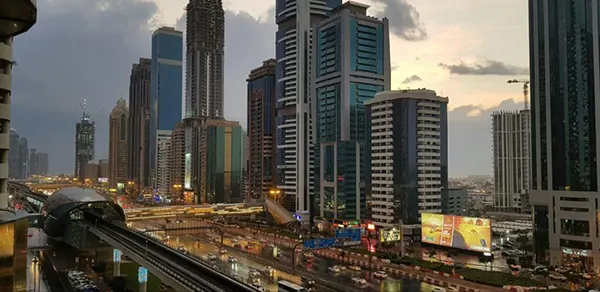
The smart city has an integration of both the traditional things and aspects of modernity, making it one of the best places to explore for the curious people around the world.
But what makes Dubai more interesting is not just its sky-touching buildings. But the way its growth foundations were set has been achieved continuously.
And once these aspects get clear, understanding Dubai becomes more realistic and transparent.
Keep reading to explore more about Dubai—where ‘extra’ is just a starting point.
Key takeaways
- Dubai was not developed at once. Its foundations were set earlier in such a way to ensure exceptional growth.
- Apart from the high buildings, attractive markets and best hotels, Dubai offers a wide range of tourist places to explore.
- Even after high growth, Dubai has a strong hold on its traditions that are seen in the exciting activities served in the desserts.
The City Was Designed to Be Seen
Dubai didn’t grow slowly like most cities. It was planned, funded, and executed at speed.
Developers didn’t just build neighborhoods; they built landmarks. Not only were whole districts created to shine out in their own countries, but they were also built to stand out around the world.
Companies like Emaar changed the skyline with projects like Burj Khalifa and Downtown Dubai, smoothly converting desert into one of the most obvious urban centers in the world.
Nakheel took a different approach, growing the city outside by creating artificial islands like Palm Jumeirah, changing what waterfront living could look like at a global scale.
Binghatti has built a name around visually unique, high-contrast architecture and branded living towers. Bingatti properties are bringing a more expressive layer to the city’s skyline.
Together, these developers reflect how Dubai operates. It’s not one style; it’s many visions trying to be the most memorable.
Bigger Isn’t a Feature, It’s the Default
In most of the cities, growth and development are specifically in chosen parts. But in Dubai, it’s not selective; it’s everywhere. Once this becomes clear to a person, the perspective towards Dubai changes completely:
Height, Scale, and Presence
The tallest building in the world is in Dubai, but it’s not the only thing that makes it special.
What points out is how each thing around it follows the same principle. Skyscrapers aren’t distinct icons; they’re everywhere. Roads are wider. Malls are larger. Hotels are meant as locations, not just places to stay.
Even living towers are built with scale in mind, often reaching dozens of floors with built-in services that make them feel like vertical towns.
Experiences Built to Impress
This extends beyond architecture.
Indoor ski slopes in the desert. Observation decks that push higher than anywhere else. Restaurants that prioritize views as much as food.
Dubai doesn’t separate function from spectacle. It combines them.
That’s why even routine activities feel amplified. A simple evening out often involves a skyline, a waterfront, or a setting that feels intentionally elevated.
The Neighborhoods Each Tell a Different Story
Dubai cannot be defined by any one of its major attractions. As it is a collection of things, places, and markets that are truly exceptional to see. When someone explores its neighbors, it feels more like simply changing environments. The difference is intentional:
Downtown Dubai: The Global Showcase
If Dubai has a center, this is it.
Downtown is where the city shows itself most clearly. The Burj Khalifa defines the skyline, framed by The Dubai Mall, Dubai Opera, and a tall mix of apartment and business towers.
It’s organized, polished, and always active. This is where most people who are visiting for the first time spend their time, and for good reason.
Dubai Marina: Density Done Differently
Dubai Marina offers a distinct form of the same goal`. Instead of a single symbol, it’s a unified group of high-rise buildings arranged around a man-made marina. Streets, restaurants, and rental towers all merge into each other.
It feels more lived-in, but still very much constructed. Every point is looked at.
Palm Jumeirah: Engineered Geography
Palm Jumeirah is where Dubai’s sight becomes hard to ignore.
An artificial island formed like a palm tree, created into the beach and filled with hotels, villas, and resorts. It’s one of the strongest signs of how far the city is ready to go to make something unique.
And it works. Not just visually, but practicality.
Luxury Is Everywhere, But It’s Not the Whole Story
It’s easy to limit Dubai to luxury. And yes, it’s present everywhere. High-end hotels, designer shops, excellent dining. But that’s only one layer.
Behind it, there’s something that supports it all. Transport systems, logistics networks, and large-scale planning that allow the city to operate effective no matter its scale.
There’s also a strong focus on real estate as an economic system. Developers aren’t just constructing for those living there; they’re building for global clients, which shapes how projects are created and sold.
The Desert Is Still Part of the Experience
Step out into the city, and the difference is right away.
The skyline disappears in less than an hour, and the landscape rises up into desert. Sand dunes swap highways. The flow slows down.
Desert safaris, dune driving, and standard camps are a common part of the Dubai experience, not an extra to it.
This variation is part of what makes the city work. The level of urbanization is defined by the speed at which one can exit it.
It Moves Fast, And That’s the Point
Dubai doesn’t hold onto things for long.
Compared to most cities, the speed at which projects are presented, built, and removed seems unusual. What’s new today is projected to be beat tomorrow.
This ongoing cycle keeps the city in motion. There’s always something under under way, always a new development entering the skyline.
It also means the experience of Dubai changes quickly. What you see one year may not be the same the next.
Why People Keep Coming Back
Dubai isn’t a one-time destination. It draws repeat visits because it keeps evolving. New hotels, new districts, new attractions. The baseline shifts constantly.
At the same time, the core experience remains consistent. Scale, ambition, and a focus on doing things differently.
For some, that’s exactly the appeal. For others, it can feel overwhelming. But either way, it’s hard to ignore.
What to Expect When You Go
Dubai is built for ease.
Transport is simple. English is generally used. Services are built around productivity.
At the same time, the climate plays a role. Summers are hot, with high temperatures that define how and when you explore. Most outdoor spending shifts to early mornings or evenings during hotter months.
Winter, by the way, is when the city opens up fully. Outdoor dining, beaches, and events all become more accessible.
Final Thought
Dubai has proved how real growth metrics are set and achieved in every state. It’s a city built on visibility, scale, and constant reinvention. Developers push boundaries, architecture leans toward the bold, and experiences are designed to stand out.
Whether one loves food, traveling, markets, or adventure. Dubai not only promises everything, but it also really serves varying experiences and makes things realistic.
And once you explore these things, you stop comparing Dubai to other places. It’s operating on a different set of rules entirely.
Why do people make repeated visits to Dubai?
As Dubai is not a one-time destination. It keeps evolving—new hotels, destinations and developed markets.
What does sand represent in Dubai?
It represents that while the city might have developed with time, the traditions and roots are still in place.
Are the buildings the only thing to explore in Dubai?
No, high buildings, exceptional hotels, and markets are just a part of major attractions. There is much to explore in Dubai.