For a few weeks each year, Iceland bends time. Around the summer solstice, the sun barely sets, giving you nearly 24 hours of usable light. No rushing sunsets. No strict itineraries. Just days that stretch longer than you expect.
I didn’t plan to stay six weeks. It was supposed to be a short trip. A couple of weeks, maybe a little more if it felt right.
But Iceland doesn’t really work like that.
The light shifts your sense of time. The landscape keeps pulling you forward. And before you realize it, you’re making dinner at midnight, brushing your teeth at 2 AM in broad daylight, and no part of it feels unusual.
Somewhere along the way, the trip stops feeling like travel and starts feeling like a rhythm.
In this article, I’ll tell you about my incredible experience at Iceland’s endless summer days through a 6-week campervan journey. In the following sections, discover the midnight sun, Ring Road, and life on the road.
KEY TAKEAWAYS
- Iceland’s endless summer is a once-in-a-lifetime experience.
- A campervan offers unmatched flexibility and control.
- Weather unpredictability becomes part of the experience.
- The best memories come from unplanned, everyday moments.
The Campervan Decision That Made Everything Work
The moment you decide to explore Iceland properly, one thing becomes clear: you need mobility.
Hotels don’t really work unless you want a fixed route. And Iceland isn’t built for fixed routes. The weather changes constantly, the light shifts, and plans don’t stick. So I rented a campervan straight out of Keflavík airport.
No overthinking. Just picked it up, got a quick rundown, threw my bag in the back, and drove out. That became home for six weeks.
Why a Campervan Just Makes Sense Here
Iceland is built for road travel.
The Ring Road, Route 1, loops around the island for about 1,300 kilometers, connecting most of the country’s landscapes in one continuous route. You don’t need to over-plan. You just follow the road, and things keep appearing.
Waterfalls, black sand beaches, glaciers, lava fields. One after another. And with a campervan, you’re not tied to anything.
You can stop when you want. Stay longer if something feels right. Leave if the weather turns. That flexibility becomes everything, especially because conditions change quickly here.
It also simplifies life. You wake up, open the door, and whatever’s outside is your day.
The First Night Sets the Tone
The first night in the van felt like a small win.
Pulled into a campsite along the south coast. Nothing fancy, just a field, a few other vans, and a view that didn’t make sense for something so casual.
Cooked something simple. Sat outside longer than usual. Looked at the watch, nearly midnight. Still bright.
The Light Changes Everything
This is where Iceland really changes you. When the light doesn’t leave, neither does your sense of urgency.
There’s No Real Night
From late May through July, Iceland experiences the midnight sun, where daylight stretches nearly 24 hours. Around the solstice, the sun barely dips below the horizon.
So you stop thinking in terms of “day” and “night.” You go for walks at 10 PM. You drive at midnight. You cook when you feel like it, not when it’s “time.” The sky never fully goes dark. It just softens. And instead of being disorienting, it feels like you’ve been given extra time.
You Stop Chasing Time
After a few days, you forget to check the clock. You’re not trying to catch a sunset. You’re not racing daylight. You just move. And that’s where Iceland gets you. The light removes urgency. You stop optimizing everything and start experiencing it properly.
Life on the Road (Without Trying Too Hard)
On the road in Iceland, you don’t force a routine; it quietly forms on its own. Without fixed schedules or time pressure, your days start to flow naturally, shaped more by light, weather, and curiosity than by plans. What sounds unstructured at first quickly becomes the easiest rhythm to settle into.
The Routine That Builds Itself
A rhythm shows up without you planning it. Wake up earlier than expected because the van fills with light. Coffee. Something quick to eat. Then drive. Stop when something looks worth it, which is often.
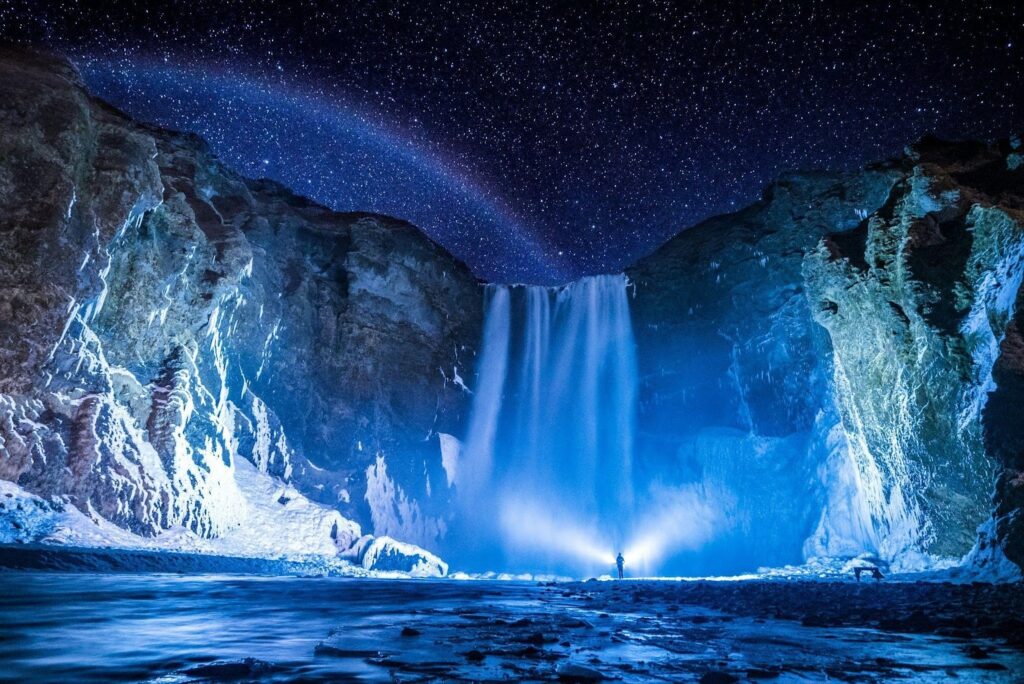
Waterfalls become part of the day. Skógafoss, Seljalandsfoss, and dozens you don’t even know the names of. You stop, walk, take it in, and move on.
The Ring Road Holds It All Together
Most of those six weeks were spent on or around the Ring Road.
It’s over 1,300 kilometers of constantly changing landscapes, and even if you loop it once, you don’t feel done. You end up going back, taking detours, revisiting places in different weather or light.
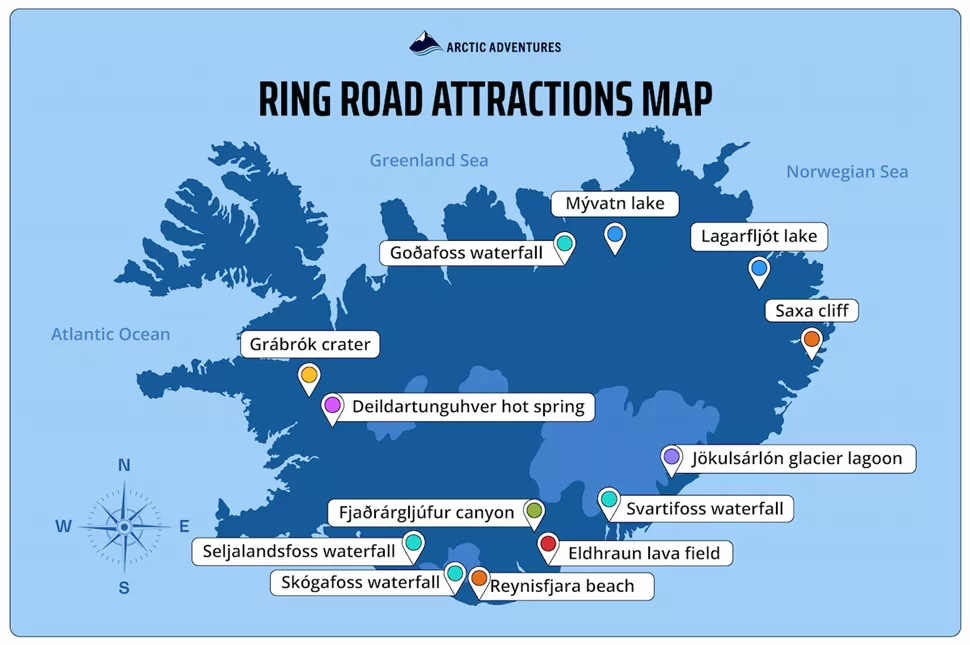
The south is dramatic: glaciers and black beaches. The east is quieter, less traffic, more space. The north feels different again, broader, calmer, less rushed. And the west pulls you back toward civilization without really losing that edge.
The following map lists the attractions on the ring road:
Campsites Are Part of the System
You don’t just pull over anywhere overnight.
Camping in Iceland is structured. You stay at designated campsites, which are spread all over the country and easy to find.
Some are basic. Some have kitchens, showers, and even shared spaces. But almost all of them come with views that don’t match how simple they are. You’re brushing your teeth with mountains behind you or the ocean in front of you.
It never really gets normal.
Iceland Is Constantly Doing Something
Iceland doesn’t stay still for a second. Even when it looks quiet, something is always happening: water falling, ice shifting, steam rising. You’re not chasing experiences here. You just move, and they keep showing up.
Waterfalls Everywhere
At first, every waterfall is a full stop. You walk up, take photos, and stay longer than planned.
After a while, they become part of the background, not because they’re less impressive, but because there are so many. You’ll be driving and see one in the distance and think, “yeah, that makes sense.”
Glaciers Feel Close
Then you hit places like Jökulsárlón.
A lagoon filled with floating ice, slowly moving toward the ocean. Seals popping up randomly. Everything quiet but active at the same time.
Then ten minutes away, those same pieces of ice are scattered across black sand at Diamond Beach. You don’t really plan these moments. You just end up in them.
Hot Water in Cold Air
Hot springs become part of the routine. Some are built and organized. Others are just there, natural pools in the middle of nowhere. You sit in hot water, cold air around you, sometimes rain, sometimes wind.
And it works. It resets you in a way that doesn’t feel forced.
The Weather Keeps You Flexible
In Iceland, the weather isn’t something you plan around; it’s something you move with. Sunshine can turn to rain within minutes, winds can pick up out of nowhere, and clear skies rarely stay for long. Instead of resisting it, you learn to stay flexible, adjust on the go, and let the conditions shape your day. That shift changes everything.
It Changes Fast
Sun, rain, wind, fog, sometimes within hours. You stop expecting consistency. You adapt instead. Plans become loose suggestions. You go where it’s better. You leave when it turns. And because you’re mobile, it works.
The Wind Is the Real Challenge
Cold is manageable. Rain is manageable. Wind is different. Some nights it feels like it’s testing the van. You learn quickly how to park, where to position yourself, how to work with it instead of against it.
It becomes part of the experience.
The Small Moments Stay With You
The big landscapes impress you. The small moments stay with you.
Cooking with the door open and a view you didn’t plan for. Driving late at night, even though it doesn’t feel like night.
Waking up and needing a second to figure out where you are, then realizing it’s better than expected.
Six Weeks Later
By the end, Iceland didn’t feel like a destination. It felt normal.
The constant light stopped feeling strange. The weather stopped feeling unpredictable. The movement, the driving, the stopping, it all felt normal. And leaving felt unnecessary. Not dramatic. Just… like I could have stayed longer.
Final Thought
Iceland in summer isn’t just a place you visit, it’s a pace you adopt.
The campervan makes it simple. The endless light stretches your days. The landscape keeps delivering without asking for much in return.
Six weeks sounds long. But when the sun barely sets, it goes faster than you think.
Is 6 weeks too long for Iceland?
Not really. With constant daylight and changing landscapes, time moves differently. Even a few weeks can feel short.
Is a campervan necessary?
Not mandatory, but highly recommended. It gives you flexibility that fixed accommodations simply can’t.
When is the best time to experience the midnight sun?
Late May to early July, with peak around the summer solstice in June.
Is it difficult to drive in Iceland?
Generally no, especially on the Ring Road. Just be cautious of weather changes and strong winds.