
“Life is a highway, and I want to drive it all night.”
—Canadian musician, Tom Cochrane.
Indeed, a highway mimics life; both involve a journey from one point to another, filled with unpredictable experiences, obstacles, and fellow travelers.
Thankfully, heading towards a road journey comes with guidance, where one can follow and protect themselves. It’s high time to follow the common indicators and make the journeys unforgettable, not regrettable.
Join me on this ride to highway trips with safety consciousness!
KEY TAKEAWAYS
- Road conditions can change in a heartbeat; vigilance is your best defense against “hidden” hazards.
- A 20-minute pre-trip inspection can save you hundreds in repair costs and hours of being stranded.
- Your safety depends as much on where you stop as how you drive.
Hidden Road Trip Risks
In the journey of 100 million recoveries, the Henderson car accident lawyer found some common pitfalls that could prevent the entire accident. When taking roads to the highway, these risks come along:
- Hidden Road Conditions: Potholes, debris, and isolated ice patches can cause sudden loss of control.
- Unsafe Stops: During travel, people carry limited resources, and stopping in isolated areas for rest can make travelers vulnerable to robbery or “fake checkpoints.”
- Distraction from Scenery: It seems harmless at first, but taking your eyes off the road to look at beautiful views can lead to fatal accidents.
- Driver Fatigue: Long, monotonous drives cause mental exhaustion, especially when heading solo. This results in slower reaction times and reduced awareness, even if you don’t feel tired.
Common Driving Hazards on Highways
A highway, undoubtedly the most convenient way to spend time, away from traffic and noisy environments. But some hazards are more critical, and you cannot avoid them.
| Common Hazards | Description | Solution |
| Blind Spots | Heavy vehicles have blind spots, and they cannot observe a small car/bike nearby. | Keep a 3-4 second following distance. |
| Vehicle Breakdown | Constantly driving for longer hours can lead to overheating and vehicle breakdown. | Take short breaks, check tire pressure and fluid levels, and keep a spare emergency kit. |
| Animal or Obstacle Encounter | Some isolated areas are prone to dangerous animal attacks or are not well constructed; there are high chances of encountering obstacles. | Keep the flash on when driving in dark areas and read the signboards. |
| Aggressive Driving | Some drivers overspeed and try to overtake. | Maintain a distance and a 4-5 second gap. |
Vehicle Checks You Should Never Skip
Small efforts sometimes give exceptional results. During my road trip, I also encountered vehicle failures, but this was the most effective checklist through which I ensured safety and continuity:
Perfectly fit hoses, belts, and wires.
Timely filter replacements.
Indicators, reverse, brake, fog, and headlights are functioning at their best.
Mirrors, side windows, the rear windscreen, and the windshield are all perfectly aligned.
Properly lubricated chain and crack-free tire conditions.
Filled fuel tank and 100% charged batteries.
Other than the above, you should never skip regular maintenance and service checks before any long road trip. You can afford minor repair costs, but your loved ones cannot afford the long-term personal loss.
Weather, Fatigue, and Other Travel Risks
Weather is the ultimate wild card. It can invite a sudden fog bank, or high crosswinds can turn a leisurely drive into a high-stress ordeal. So check about the locations before leaving and between rest periods.
Furthermore, highway hypnosis, also known as “white-line fever,” is another trance-like state due to overdriving. In this case, the driver’s brain switches to autopilot mode, leading to significantly slower reaction times. This could be even more dangerous than the unexpected weather changes themselves.
That’s why I prefer traveling in pairs and groups, so that one can drive while others can rest.
How to Prepare for Emergencies on the Road
A true traveler finds fulfillment in the process, viewing the journey itself—with all its unexpected detours, lessons, and interactions—as the ultimate experience rather than just a means to reach a destination. And as a smart traveler myself, I recommend being armed to the teeth.
It includes having
- Vehicle safety tools
- Emergency supplies
- Proper communication gears
- Important documents
Take a look at this descriptive image to understand profoundly:
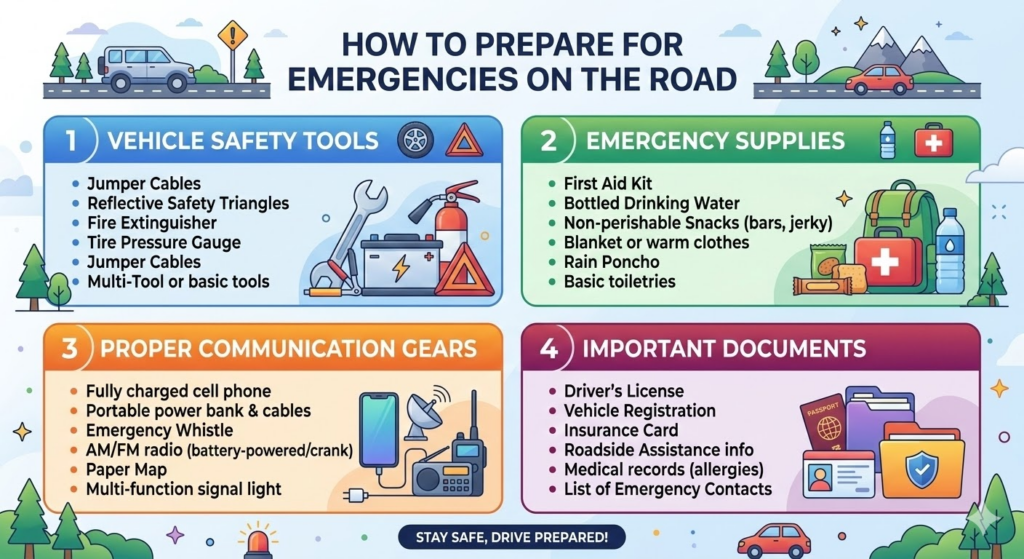
Without the right preparations being done, you may end up stranded, without any help, somewhere unfamiliar. Always remember, “Alert today, alive tomorrow.”
What is the biggest risk of night driving?
Reduced visibility and higher chances of drowsy driving make midnight to 6 AM the most dangerous time to drive.
Why is texting while driving dangerous?
It increases crash risk by 23 times when taking your eyes off the road for crucial seconds.
How do I handle sudden, heavy rain or fog?
Reduce speed immediately, increase following distance, and turn on low-beam headlights or fog lights.
What is the “4-second rule” for highways?
Maintain at least a 4-second gap behind the car in front to allow enough time to stop safely.