- What Makes A Rafting Trip Beginner-Friendly?
- 1. Bighorn Sheep Canyon (Arkansas River): Colorado Springs’ Easy, Splash-Filled Starter
- 2. Browns Canyon (Arkansas River): Iconic Waves In A National Monument
- 3. Upper Colorado River (Pumphouse To Radium): A Laid-Back Float Everyone Can Love
- 4. Clear Creek (Idaho Springs): Fast, Fun, And Forty-Five Minutes From Denver
- 5. Lower Animas River (Durango): Downtown Float With A Dash Of Whitewater
- 6. Cache La Poudre River (Fort Collins): Wild And Scenic Rapids For The Slightly Bolder Beginner
- First-Time Rafting Tips & Faq
- Conclusion
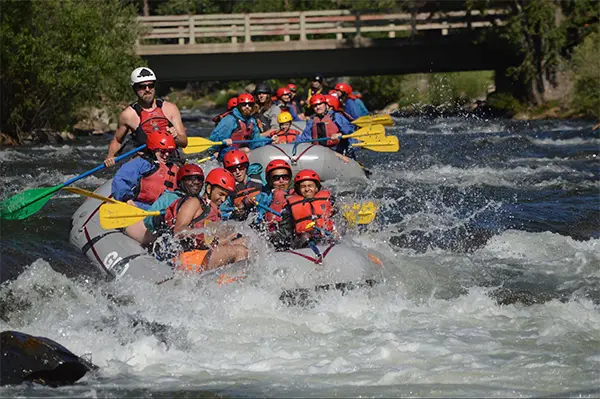
Are you planning to go rafting this vacation? The experience is as thrilling as you imagine.
But it is undeniable that such rafting needs to be carried out with caution to avoid accidents.
With that in mind, check out Colorado white water rafting specialists Echo Canyon River Expeditions near Cañon City that promise safety with fun, so your vacation goes smoothly.
You can even read further to explore more about this!
What Makes A Rafting Trip Beginner-Friendly?
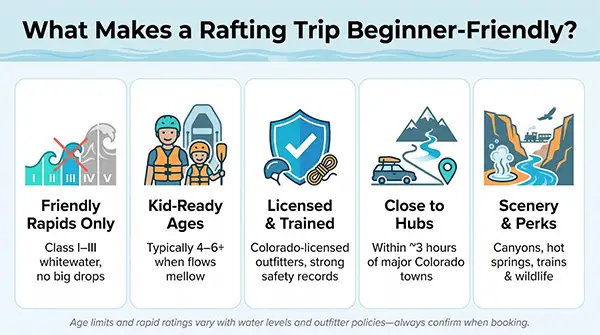
Before ranking Colorado’s rivers, we need common understanding on what “beginner” means.
First, the difficulty. We cut the line at Class III. Class I drifts like a lazy float, Class II gives everyone awake, and Class III creates roller-coaster waves without vertical drops. Anything harder belongs in another guide.
Second, the group. If a six-year-old can zip a child-size life vest securely, the run stays on our radar. Many outfitters even accept four-year-olds on gentle Class I–II floats, a sign the risk is low for tiny paddlers (FrayedPassport, 2026).
Safety standards outweigh wave size. Colorado licenses every commercial outfitter and reviews guide training and gear each season. Expect throw-rope drills, rescue practice, and helmets designed for toddlers and grandparents alike. We only list rivers where multiple companies post spotless safety histories year after year.
Convenience counts too. Half-day runs that start within three hours of Denver, Colorado Springs, Summit County, Durango, or Fort Collins make the list. You spend the morning paddling and the afternoon discovering a mountain town, not six hours in a shuttle.
Finally, we value scenery and extras. Granite walls, red-rock canyons, hot-spring stops, and the occasional steam train turn a first raft trip into a lifelong adventure.
Keep these benchmarks in mind as we explore river number one; each pick below meets them all and adds its own flavor of Colorado magic.
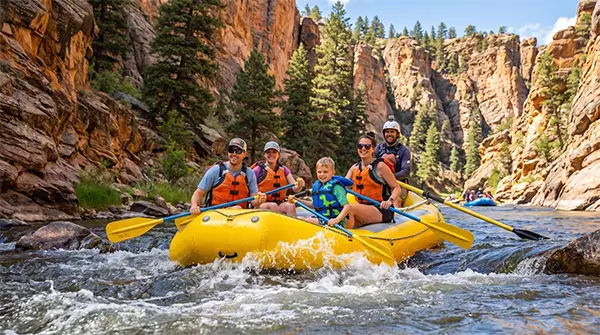
1. Bighorn Sheep Canyon (Arkansas River): Colorado Springs’ Easy, Splash-Filled Starter
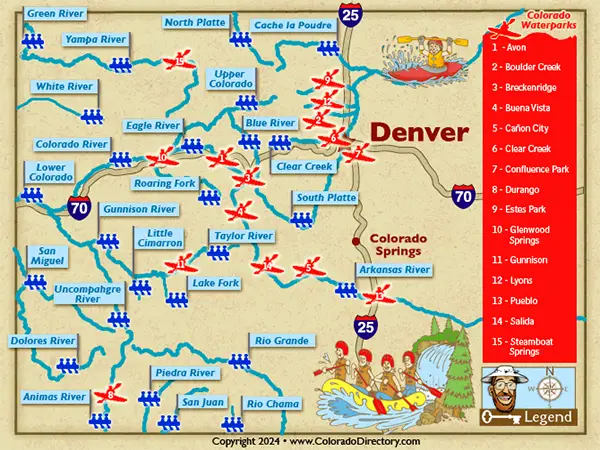
Overview of beginner-friendly whitewater rafting rivers across Colorado
Picture a sandstone-walled passage an hour west of Colorado Springs. Warm sun kisses the water, bighorn sheep graze on scrub high above the eddies, and your guide calls a gentle “forward two” as the raft glides toward a wave train called Wake-Up.
That wave sets the mood. Class II–III rapids roll in one at a time—just big enough to soak the bow and inspire a cheer, never big enough to swallow the boat. We call them “training-wheel rapids,” perfect for first adventures.
Most outfitters accommodate kids six and up, roughly fifty pounds once early-summer snowmelt calms. By July the river settles even more, so families pack entire front rows with grade-schoolers who still fit in dinosaur-print PFDs.
Echo Canyon River Expeditions defines the scene with a riverside base that feels more resort than outpost. Paved parking, indoor restrooms, and a grill serving burgers for post-trip appetites await. Guides begin every half-day with a five-minute safety drill on dry land, rehearsing how to pull a swimmer back by the shoulder straps. Nervous adults unwind before the raft ever leaves the beach.

Echo Canyon River Expeditions Bighorn Sheep Canyon base area image.
On the water, rapids like Shark’s Tooth and Spikebuck highlight a ten-mile float that lasts a shade over two hours. Between splashes you drift through calm pools where kids notice red-winged blackbirds and those namesake sheep—just enough downtime to swipe water off your sunglasses before the next wave.
Logistics stay straightforward. Drive to the outpost, gear up, ride a five-minute shuttle upstream, then raft back to the same parking area. No complicated gatherings or hour-long transfers. You finish by lunch and still have time for the Royal Gorge Route Railroad or a stroll along Cañon City’s riverwalk.
We rank it first for good reasons. Gentle rapids build confidence fast, professional guides keep risk minimal, and easy access from a major tourist hub seals the deal. Your first paddle stroke here sets a friendly foundation and leaves everyone asking when the next river day happens.
Sombrio Beach of Victoria also has an equally beautiful lush slot canyon.
2. Browns Canyon (Arkansas River): Iconic Waves In A National Monument
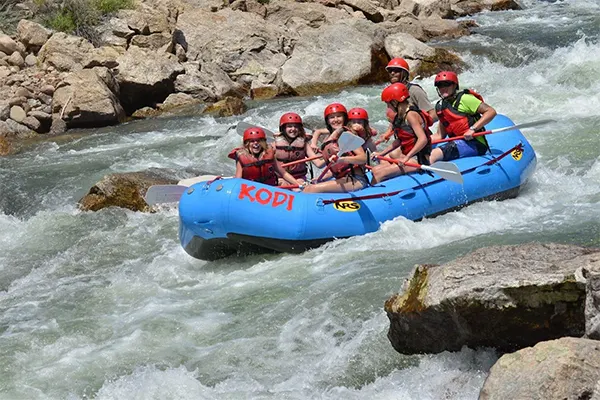
Browns Canyon Arkansas River family whitewater rafting picture
If Bighorn is the warm-up lap, Browns Canyon is the victory celebration. Two and a half hours from Denver, this granite destination serves steady Class III action framed by snow-streaked Fourteeners and ponderosa pines.
The river starts strong. Zoom Flume throws a curtain of spray over the bow, Pinball bumps the raft off smooth boulders, and the Staircase forms three waves in quick succession. Each hit earns a cheer, never a cooler-flipping impact.
Understand master the rhythm. They aim you at the fun center of a rapid, then drift into a pool where everyone rests and the Collegiate Peaks steal the show. Those pauses reassure nervous paddlers and give kids a moment to shout, “Did you see that splash?”
Age limits sit around seven once midsummer flows ease. Early June snowmelt can push ratings toward III+, so outfitters raise the minimum to nine or ten until levels drop. Ask when you book; they track daily cubic-feet-per-second like other people monitor weather.
Browns ranks high because it blends real adventure with postcard scenery. President Obama named it a National Monument in 2015, so the banks feature only junipers, mule deer, and river otters pacing your raft.
Logistics stay convenient. Meet in Buena Vista, ride a short shuttle, then select a half-day or full-day. The longer option adds a riverside picnic and Seidel’s Suckhole, a rapid that sounds rougher than it rides.
Finish with a soak at Mount Princeton Hot Springs, or enjoy ice cream in Salida. Scroll through GoPro clips on the drive home and you will know why seasoned guides call Browns “the rite of passage route.”
3. Upper Colorado River (Pumphouse To Radium): A Laid-Back Float Everyone Can Love
Swap crashing waves for canyon calm and you get the Upper C. This stretch flows through red-rock walls near Kremmling, carrying beginners along riffles so mellow that guides start water-gun fights mid-float.
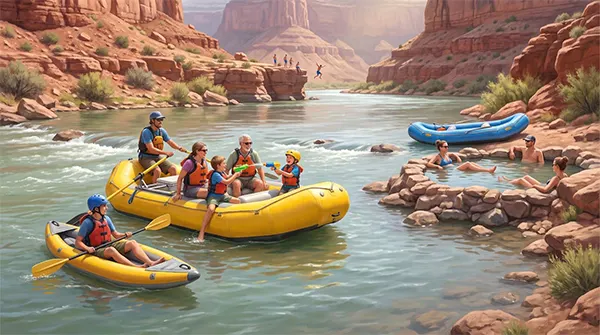
Rapids top out at Class II. Eye of the Needle and Little Gore Canyon add just enough movement to keep kids grinning, then the river relaxes into wide pools perfect for a swim. Many outfitters offer inflatable kayaks so older siblings can try solo paddling while the raft shadows close by.
Minimum age is a comfortable four, and some companies allow even younger tots during late-summer flows. Grandparents like it too because boarding is a gentle entry from a beach, not a boulder scramble. Outfitters provide life jackets, helmets for the tiny participants, and optional wetsuit jackets in spring.
Releases from Green Mountain Reservoir upstream maintain the flow even when drought shrinks smaller creeks statewide, making the Upper Colorado a smart backup if July heat drops other rivers.
Trips last two or three hours on the water. Meet-up spots sit two hours from Denver or one hour from Summit County ski towns, so you can raft in the morning and still enjoy a Breckenridge patio lunch.
Bonus moments await. A natural hot spring emerges from the canyon wall near Radium, where guides beach the raft so you can soak your feet in forty-degree-C water while the river slides past at ten. Cliff jumpers challenge their courage across the channel, giving raft-side spectators a free show.
For scenery, confidence building, and a photo album of relaxed memories, the Upper C is the clear choice.
4. Clear Creek (Idaho Springs): Fast, Fun, And Forty-Five Minutes From Denver
Time is short; adventure is endless. Clear Creek answers that challenge better than any river in the state.
Slip out of downtown Denver after breakfast and you will be changing into a wetsuit in Idaho Springs before the coffee cools. The creek drops steeply from the Front Range, so even its beginner stretch feels like stepping onto a moving sidewalk set to fast.
Rapids arrive quickly. Mountain Lion, Mister Twister, and Speed Limit 55 fire in quick sequence. They sit squarely in Class II–III territory, delivering splashy hits, tight turns, and zero chance to get restless. Guides call crisp paddle commands so the raft navigates boulders and punches waves without a pause.
Snowmelt spikes both flow and water temperature, so timing counts. Outfitters open the beginner run once levels dip to manageable in early July and keep it rolling until mid-August when the creek shrinks to trout trickle. They gear every guest in a full wetsuit, splash jacket, and neoprene footwear; even on a blue-sky day the water feels straight from an ice chest.
Kids as young as five participate once conditions settle, but stay honest about comfort with cold water. A nervous child riding bow can swap seats mid-trip or move closer to the guide where splashes soften.
Logistics are easy. Park at the boathouse, ride a five-minute van to the put-in, raft six miles, and step out right where your dry clothes wait. Total water time is about ninety minutes—perfect if you crave thrills but still want afternoon plans at Red Rocks or Coors Field.
The setting trades wilderness solitude for vibrant mountain-town energy. You may spot old gold-mine relics and catch the I-70 viaduct between canyon walls, yet the tight gorge muffles road noise once the first rapid roars.
Wrap the day with a pizza slice the size of a paddle at Beau Jo’s, or explore the historic Argo Gold Mill. Clear Creek proves you do not need a full vacation day to create a real whitewater memory.
5. Lower Animas River (Durango): Downtown Float With A Dash Of Whitewater
In Durango, the river rushes through the postcard. You encounter your guide a few blocks from coffee shops, hop a shuttle upstream, and soon drift back past bike paths, bridges, and cheering locals on the riverwalk.
The majority of the Lower Animas is Class I–II, a sightseeing glide beneath cottonwoods with the San Juan Mountains peeking south. Then Smelter Rapid appears. A wave train crests into a playful Class III drop that drenches the front row and lights up every photo reel. It lasts twenty seconds, yet families replay the moment for decades to come.
Outfitters welcome children as young as four once late-June flows settle. City proximity also means quick help and plenty of early take-outs, so first-time parents enjoy an extra layer of convenience.
Water temperatures reach the upper sixties by midsummer, warm enough for guides to invite a swim in calm stretches. Kids belly-flop in, kick downstream a few yards, and climb back grinning harder than any roller coaster could do.
The cherry on top steams and whistles. Time your trip so the historic Durango & Silverton Narrow Gauge Railroad chugs along the bank, coal smoke curling over the river while passengers click pictures of you instead of the scenery.
Once you pull out, walk five minutes to tacos on Main Avenue, or keep the adventure rolling with an evening train ride into the high country. Few rafting trips blend town energy and river fun this smoothly, which makes the Lower Animas a top destination for vacationers piling memories by the hour.
6. Cache La Poudre River (Fort Collins): Wild And Scenic Rapids For The Slightly Bolder Beginner
The Poudre is Colorado’s only Wild and Scenic river, and it saps no time proving the title. Highway 14 snakes beside frothy water, granite walls squeeze tight, and pine scent rides the breeze while you gear up 40 minutes west of Fort Collins.
Novice trips stay in the softer lower canyon, yet “soft” is relative here. Class II riffles lead into Rock Slide and Mad Dog, playful Class III drops that pop the raft over standing waves before sliding into glassy pools. Guides call it “technical fun”—plenty of splash with room to breathe between action.
Free-flowing snowmelt powers the Poudre, so timing matters. May and June serve brisk water and bigger hits; by July, flows mellow to sweet-spot beginner levels, and outfitters lower the age limitation to 7-8. August can run somber in drought years, so plan earlier if this canyon tops your list.
Safety briefings run extra deep out here. The canyon feels remote—no cell service, few roadside pull-outs—so attendants double-check every helmet strap and rehearse swim positions until the squad can recite them on cue. That diligence pays off; incidents remain rare, and guests end the trip bragging about teamwork, not mishaps.
View is the intangible perk. No bridges, billboards, or train whistles intrude—just granite, ponderosas, and the sound of rushing water echoing off stone. Pull-outs often double as picnic rocks where chipmunks beg for crumbs and ospreys patrol overhead.
After paddling, roll back into Fort Collins for a craft-brew aviation or a spin through the Museum of Discovery. Few rivers let you toggle between wildlife rush and college-town comfort in the same morning, which seals the Poudre’s spot on our list.
First-Time Rafting Tips & Faq
When is the most suitable time to go?
Mid-June through mid-August is the sweet zone. By then snowmelt surges have eased, rapids keep fun volume without the early-season punch, and water temps inch above ice-cream-headache levels.
July gleams brightest. Streams balance excitement and safety, outfitters drop minimum ages on most runs, and sunny mornings warm every splash before lunch.
Need an earlier window? Call the outfitter and ask how high water changes age limits and rapid style. Scheduling for late August? Stick to dam-fed stretches like Bighorn Sheep Canyon or the Upper Colorado, where releases keep channels full even during drought summers.
Daybreak launches win most of the time. You beat afternoon thunderstorms, skip peak crowds, and—as guides like to say—bigger smiles happen before the wind wakes up.
What to wear and bring on the river
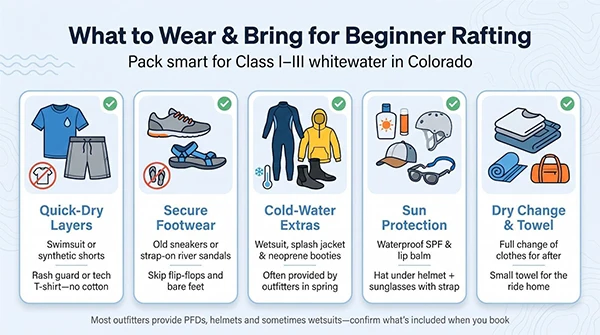
- Quick-dry layers: A swimsuit or synthetic gym shorts beneath a rash-guard top works for most summer travels. Cotton hangs heavy when wet and steals body heat, so leave the souvenir tee in the car.
- Snug footwear: Old sneakers or river sandals with heel straps pass the safety check. Flip-flops drift downstream faster than a lost paddle, and bare feet will not make it past gear inspection.
- Cold-water additions: Early-season or high-altitude runs feel brisk. Outfitters provide neoprene wetsuits, splash jackets, and booties at no extra charge in spring. Take the offer even if the sun feels warm at the bus; snowmelt water can turn enthusiasm into shudders in minutes.
- Sun shield: Apply waterproof SPF before you gear up, then stash a small bottle in the guide’s dry bag. A baseball cap under the helmet shades your eyes, and polarized sunglasses with a retainer strap avert squinting and expensive dives for lost shades.
- Dry change: Pack a full change of clothes and a small towel for the ride home. Store them in the company’s marked cubbies or your latched car so comfort is one step away when you step off the raft.
Finally, bring curiosity. Ask why rapids curve left or how guides read a horizon line—knowledge weighs zero and rides home with you after the droplets dry.
Is rafting truly safe, and do I need to know how to swim?
Short answer: yes. Commercial trips on Class I–III water are remarkably safe, and no, you do not require Olympic swim skills to join.
Every outfitter on this list carries a Colorado license renewed only after gear inspections, rescue drills, and paperwork audits. Before you touch a paddle, the crew shows you how to sit, hold the T-grip, and what to do if someone takes a shock swim.
Life jackets are U.S. Coast Guard-approved and sized down to preschool torsos. Snip yours snug, pull the shoulder straps; if the vest creeps toward your ears, a guide adjusts it until it stays tended on your ribs.
Plunging out happens less often than most first-timers expect. On beginner stretches, wave trains spill riders into gentle pools, not churning holes. If it does happen, float on your back, feet downstream, gaze on the guide who tosses a rope or pulls you in by the shoulder belts.
Non-swimmers ride every day. Tell the guide at check-in so they seat you close and run one extra drill. Confidence grows fast once you feel the lift of a well-fitted PFD.
Statewide, rafting fatalities average in the lower single digits each year, and almost all occur on advanced Class IV–V or private, unguided runs. Ride with licensed guides on beginner water, and the odds shift heavily in your favor.
Bottom line: Be attentive during the safety speech, keep the vest zipped, and paddle when your guide calls the stroke. Do that and rafting becomes less risky than the drive to the river—and a lot more fun.
Conclusion
Colorado offers a range of Class I–III rivers where professionally tutored trips turn first-timer nerves into wide-eyed grins. Choose the stretch that matches your crew’s comfort level, show up ready to paddle, and you will leave with stories that echo longer than any canyon. Adventure frankly does start with that first forward stroke.
Where is the best white water rafting destination for beginners in Colorado?
The best beginner whitewater rafting rivers in Colorado are Browns Canyon on the Arkansas River, Middle Clear Creek near Idaho Springs, and the Pumphouse section of the Upper Colorado River.
What are the best white water rafting spots in Colorado for kids?
The Best Colorado Rafting Day Trips for Families are the Arkansas River, Blue River, and Clear Creek.
Can beginners go white water rafting?
Yes, beginners can go white water rafting, especially on a guided beginner trip designed for people with zero experience.