Once you have picked a place to hike, that’s when your perspective changes dramatically. You begin to trace maps with your fingers and look at pictures of jagged mountains reaching up to the clouds. It’s a great thrill, but then comes the reality of planning the logistics of this trip.
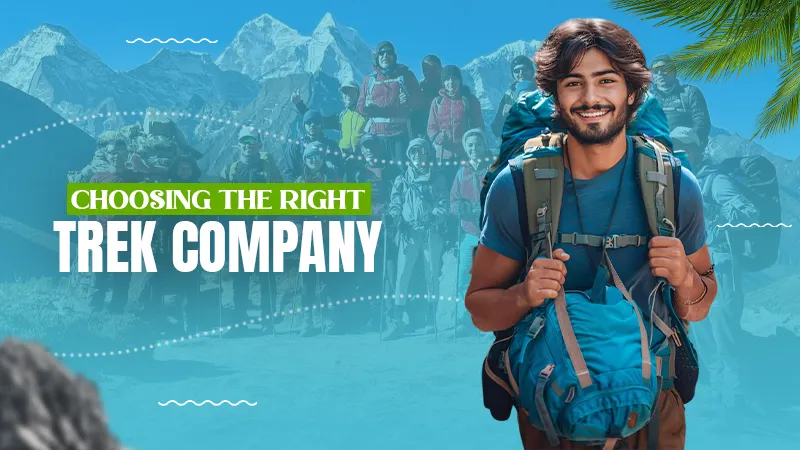
With hundreds of companies online advertising their services as the “best experience ever,” it can be confusing to find the right one. Ultimately, there is no decision more important than your choice of trekking company. In fact, this is more significant than what equipment you purchase.
When selecting your partner, make sure they match both your fitness level and your personal values. Thus, you can take some stress off yourself and enjoy a phenomenal experience where the only thing you need to think about is the path ahead of you!
KEY TAKEAWAYS
- Pick organizations that clearly state how they respond when there is an emergency and have mandatory evacuation insurance.
- Be sure to choose an operator that understands the entire region to provide the best and most authentic experience.
- Please do not select programs that advertise “lowest-price guarantees” as these often compromise staff pay or equipment safety.
- Please select companies that are aligned with the philosophy of “Leave No Trace,” and that are respectful of local mountain culture.
What Do You Actually Want?
Before you even begin emailing people, you need to know what you are looking for. Be honest. Do you want to push your body so hard you can barely stand? Or are you looking for a relaxing hike with plenty of time for photos and long lunches? If you sign up with a tour company that focuses on speed and summits when you genuinely wanted to see local villages and monasteries, you are going to have a bad time.
Measure your fitness level too. There is no valid reason to be embarrassed if you want an easy or moderate trek. Good companies will have solutions for everyone. You want a team that meets you where you are. If a company tells you that a vast, high-altitude climb is “easy for everyone,” they are lying to you. That is a red flag you should not ignore.
Experience is Everything
In the mountains, experience is the sole thing that matters. You want a company that has been active for a while. They need to have already made the wrong decisions on someone else’s trip years ago, so they don’t make them on yours. Look for people who specialize. If you want to go to the Himalayas, do not hire a company that spends 90% of its time in South America. Local knowledge is what ensures you are safe when a storm rolls in.
Read the reviews, simply read between the lines. Go to TripAdvisor or Google. Don’t just look at the stars. Look at what citizens say about the food, or how the guides handled a change in the weather. If a company has 5,000 perfect reviews and not one person mentioned a single small problem, be careful. Real trips have hiccups. You want to see how the firms fixed those issues. Also, make sure they are active members of professional associations. It shows they actually follow the rules.
The People on the Ground
The guide is the person you are going to be discussing every waking hour with. They are the most important part of the entire deal. Inquire with the company about them. Are they certified in first aid? Do they communicate in your language? Most importantly, are they local? A guide who spent years in those mountains knows things an outsider never will. They know where the trail became soft and where the best hidden views are.
Think about the rest of the crew, too. The porters, the office staff, the cooks. A good team means you can just concentrate on walking while they handle the heavy stuff. When you email the company, interpret how they treat you. If they are helpful and organized now, they will probably be helpful when you are at 15,000 feet (4.57 kilometers).
Staying Safe
Trekking is risky. Nature does not care about your itinerary, so it’s vital to choose a company with a solid plan for when things go wrong. Ask them the toughest questions. Do they carry a satellite phone? How do they handle a medical emergency?
You also need insurance. A reputable service will insist on it and will want to see that you’re covered for high altitude and evacuations. If they do not ask about your insurance, they are cutting corners.
A company that is concerned about safety might cost a little more, but you can’t put a price on knowing someone has your back. For instance, Epic Expeditions’ K2 Base Camp Trek in Pakistan includes expert guides, comprehensive safety measures, and evacuation protocols, ensuring that you’re well taken care of in the midst of any unforeseen circumstances.
Flexibility Matters
Some people love big groups. Others detest them. Think about what you prefer. Smaller groups typically mean more flexibility. If you want to stop for an hour to watch a sunrise, a small group can do that. A big congregation has a schedule to keep.
Ask if they do custom trips. If you need extra days to get used to the air, a good tour operator should be able to make that happen. You want to feel like a human being, not simply a number on a spreadsheet.
Taking Care of the Land
The mountains are unstable. We are just visitors. Look for a startup that takes sustainability seriously. They should have a process for trash, and they should stay away from single-use plastics.
It is also about the people. Do they evaluate their porters fairly? Do they respect the local culture? A group that treats the locals well is a company you can trust. Responsible tourism means these places stay intriguing for the next person who comes along.
The Cost
It is tempting to just settle for the lowest price. Please don’t do that. A bottom-dollar price usually signifies that someone is getting shortchanged. It is normally the guides or the safety equipment.
Look at very carefully what you are paying for. Does it include your meals, your permits, and your gear? You are looking for value, not specifically a low number. A high-quality, all-inclusive trip might look expensive on paper, but it can save you money and stress in the long run. You are paying for their technical expertise and your peace of mind.
Listen to Your Gut
At the end of the day, rely on your instincts. After you talk to a business partner, how do you feel? Are they patient? Do they answer your questions clearly? If you start to feel like they are just trying to sell you something, walk away.
Finding the right service is the start of the adventure. Once you find the right partners, you can give up worrying about the plans and start thinking about the trail.
What are the most important factors in determining whether a trekking company is legitimate?
Professional licenses, good third-party review ratings, and membership in at least one mountaineering association are all good indicators of a company’s legitimacy.
Should I use a local or an international trekking company?
Local companies tend to have better insight into their surrounding area and will keep a greater portion of your money in the local community.
What safety equipment will the company provide?
Good trekking companies will provide you with oxygen, satellite telephones, fully stocked medical kits and durable waterproof tents.
Is travel insurance necessary for trekking?
Yes, reputable trekking companies require their customers to have travel insurance that includes coverage for high-altitude emergency evacuations.