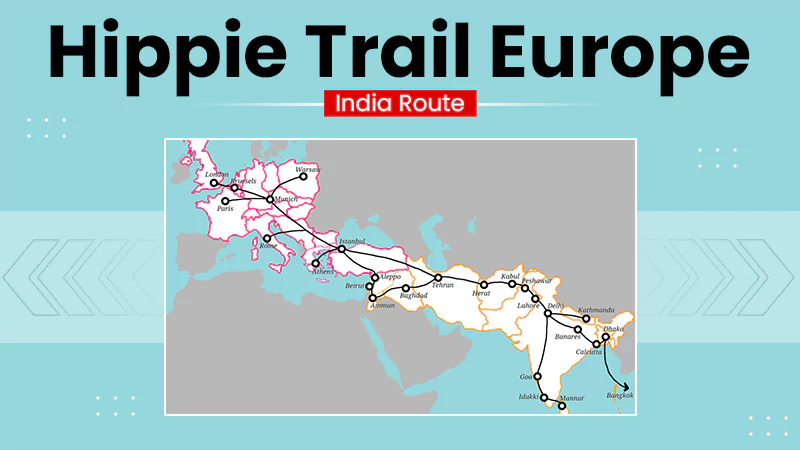
Back in the late 1960s and 1970s, if you wanted real freedom, there was one trip everyone talked about: the Hippie Trail. It stretched from Western Europe, through the Middle East, all the way to South Asia. Thousands of Young people kept it at the top of their bucket list. They packed up painted VW vans, hopped on rickety buses, or just hitchhiked, all chasing something bigger, maybe a trip that could change their life.
The whole world is looking pretty now, but people are craving a trip now after being stuck in their homes for a long time due to COVID. It just feels different than it used to be. Planning a trip in 2026 means dealing with restricted borders, technology, and comfort experiences nobody worried about earlier. So here’s a guide to help you do it without losing your mind.
What is the Hippie Trail and Why is It Trending Again?
The classic Hippie Trail typically launched in cities like London or Amsterdam, and from there, travelers made their way through Yugoslavia, Greece, Turkey, Iran, and Afghanistan, before finally reaching India and Nepal. Places like Istanbul and the beaches of Goa turned into legendary checkpoints for this iconic migration.
As you would think, war and political uncertainty pushed the trail into obscurity. So why the sudden resurgence in 2026? The modern revival is fueled by a deep craving for “slow travel,” with travelers turning away from the exhausting pace of three-day city breaks and luxurious resorts. They now want to really embrace and absorb the culture, landscape, and cuisine that only a long journey can provide.
According to recent global travel analytics, the desire for independent travel has spiked, with conservation organizations like the IUCN emphasizing the environmental benefits of slower, overland routes: lower carbon footprint and
Classic vs. Modern Route (Reality of 2026)
Retracing the exact steps of the 1970s is not feasible because of geopolitical realities, particularly when talking about travel through Iran and Afghanistan. The modern iteration of the journey from Europe to Asia calls for creative detours:
- The Caucasus Detour: Instead of heading deep into the Middle East, shift east from Turkey into Georgia and Azerbaijan.
- The Caspian Sea Crossing: From Baku, travelers frequently board cargo ferries across the Caspian Sea to reach Turkmenistan and Kazakhstan.
- The Silk Road Path: The route then curves south through the ancient Silk Road cities of Uzbekistan and Tajikistan.
- Reaching the Subcontinent: While crossing through Pakistan into India via the Wagah border is possible, it demands planning regarding visas for tourists. Because border status changes often, some people opt to fly the final leg from Central Asia directly into New Delhi to finish their route to India.
The Evolution of a Traveler: From Tents to Self-Care
The original travelers of the trail famously crashed in the back of vans, cheap hostels, or, if necessary, on the side of the road. While budget travel remains a core component of the culture of backpacking, the modern “Hippie Trail” is not necessarily linked to mud, hitchhiking, and discomfort. Today’s travelers can work remotely, carry laptops, and prioritize their physical and mental well-being while on the road.
Spending months on end on the road, absorbing the changing climate, the scorching sun, and dust all at once puts real stress on the body and skin. What many travellers decide to do in 2026 to combat this is make a stop in Cyprus for a complete recharge. They pair backpacking with the Limassol beauty center to professionally restore their face and body, and relieve fatigue, to set off and complete their journey through Asia.
Investing in high-quality skincare and booking the occasional aesthetic clinic treatment is now considered vital self-care.
What to Travel by: Campervan, Bus or Low-Cost Airline?
| Transport Mode | Pros | Cons |
| Motorhome travel | Ultimate freedom. Sleep anywhere. Cook your own meals. | Expensive to buy/rent. Complex border crossings and insurance rules. |
| Overland Buses / Trains | Most affordable and an excellent way to meet locals. Low stress. | Rigid schedules. Slow travel times. Carrying big backpacks. |
| Low-cost Airlines | Perfect for skipping dangerous or politically closed borders. | Breaks the continuous “overland” experience. Hidden baggage charges. |
In 2026, motorhome travel is already very widespread across Europe and Turkey. However, as the roads get rougher in Central Asia, many shift to regional train networks or “hop-on hop-off” bus routes.
Regardless of your transport, one critical piece of modern gear is a global eSIM. In the 1970s, travelers depended on physical letters sent to post offices, while today, an eSIM ensures you have internet access the moment you cross a border. You can instantly translate languages, download digital visas for tourists, and arrange last-minute budget travel accommodations.
Is It Worth Going on the Hippie Trail Today?
Sure, 100%. The actual route has changed a lot because of politics and war, but the vibe of the trip hasn’t gone anywhere. The world’s still messy and huge and amazing, and still out there waiting for anyone brave enough to leave their comfort zones and just go see it and experience the beauty as well as adventure.
Where does the Hippie Trail end?
The Hippie Trail started in Europe, traveling to Iran and Afghanistan, and ends in Nepal.
How long did it take to travel on the Hippie Trail?
It might take roughly nine months to travel the Hippie Trail.
What are the Hippies called today?
Today Hippies are called bohemians or naturalists.