- Location of Shrinathji Temple Udaipur
- How to Reach Shrinathji Temple Udaipur
- History and Establishment of Shrinathji Temple Udaipur
- Architecture of Shrinathji Temple
- Darshan Routine and Timings of Nathdwara Temple
- Best Time to Visit Shrinathji Temple Udaipur
- Must-Attend Festivals Celebrated at the Temple
- Nearby Attractions You Must Visit When Visiting Nathdwara
- Where to Stay in Nathdwara Near Shrinathji Temple
- Practical Tips For Visitors
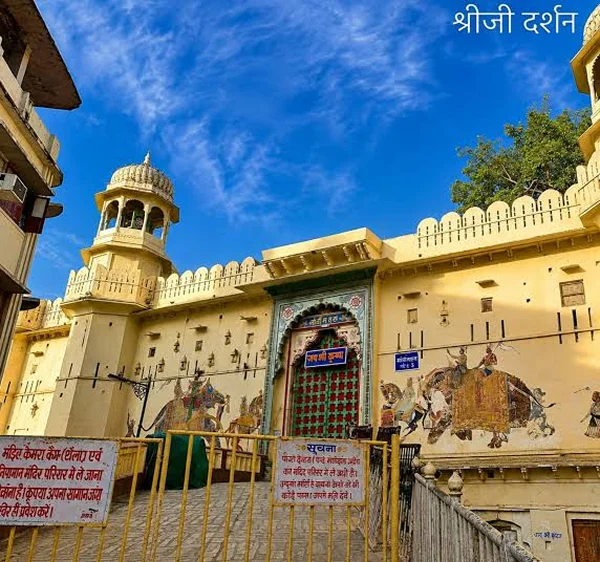
Located in Nathdwara, Shrinathji Temple Udaipur is also known as Shrinathji ki Haveli. This 17th-century Hindu temple is dedicated to Lord Krishna. It features a black marble idol of seven-year-old Krishna in his Baal Swarup, lifting Govardhan Hill on his finger to protect the people of Vraja from the wrath of Lord Indra. This shrine follows the Pushtimarg tradition (Path of Grace).
The temple features Pichwai paintings, Shrinath Gaushala, and architecture with a haveli-style layout, functional rooms, and more. It can be easily reached by flight or train. Follow along to learn more about Shrinathji Temple Udaipur, the best time to visit, how to reach, the darshan schedule and timing, must-attend festivals, and more.
Location of Shrinathji Temple Udaipur
Shrinathji Temple is located in the town of Nathdwara (previously Sinhad) in Rajsamand district of Rajasthan, India. Situated approximately 48 km northeast of Udaipur, it is best accessed by public transport, taxi, or a car from the airport, taking roughly 1- 1.5 hours.
How to Reach Shrinathji Temple Udaipur
Shrinathji Temple Udaipur is accessible via flights, railways, and public transport.
Here’s how you can reach the temple easily:
| Transportation Mode | How to Reach | Total Time |
| Flight |
| 3-3.5 hours |
| Train |
| 10-11 hours |
| Car/Taxi |
| 11-12 hours |
State buses and public transport options are available to commute within the interiors of Nathdwara.
History and Establishment of Shrinathji Temple Udaipur
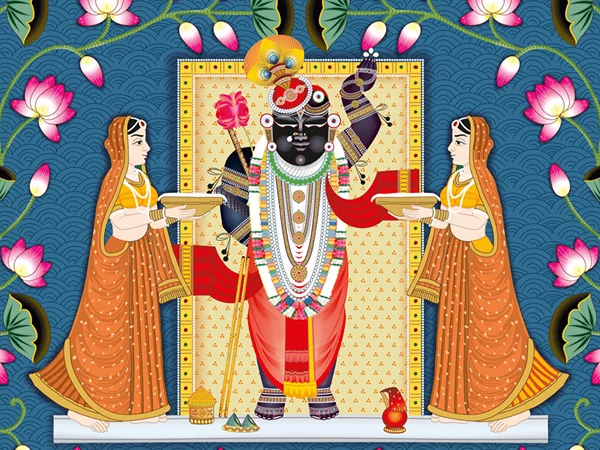
The idol of Shrinathji represents Lord Krishna as a seven-year-old, called Gopala in his Baal Swarup. Carved from a monolithic black stone, the idol depicts Krishna lifting Govardhan Hill on his finger to protect the people of Vraja from torrential rain unleashed by Lord Indra. The idol is beautifully adorned with precious jewels, intricate silk attire, and a diamond-studded crown.
Sthala Puranaand Establishment
Shrinathji’s deity was initially worshipped at Govardhan Hill in Mathura district of Uttar Pradesh. However, in 1672 CE, amid the threats of looting by foreign settlers, Mughals, and Sultans, the idol was transported from Mathura to Agra via the Yamuna River. After six months, it was finally moved to Sinhad (present-day Nathdwara).
As the chariot reached Sinhad, the wheels became stuck in the ground and could not be moved further. The priests interpreted this as a divine sign that Shrinathji had chosen this location as a permanent abode. Accordingly, the temple was established under Maharana Raj Singh of Mewar in 1672.
Interesting Facts About Shrinathji Temple Udaipur
- It is believed that during the 12th century BC, the stone of the idol self-manifested from the sacred Govardhan mountain.
- The temple gave birth to the famous pichwai art tradition that features intricate artwork on clothes, depicting Shrinathji’s life and leelas. These are hung behind the deity and change as per the festival, mood, and seasons.
Architecture of Shrinathji Temple
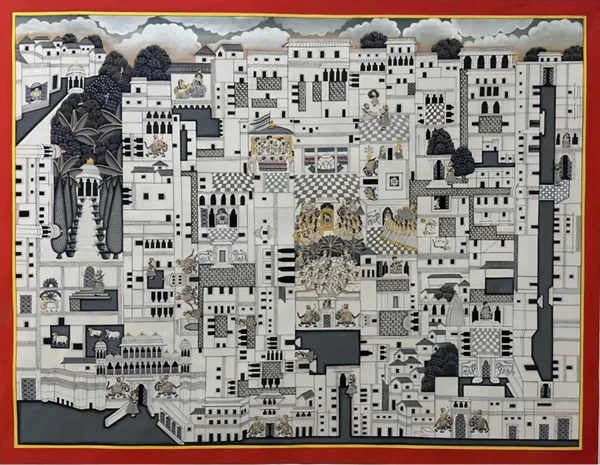
The Shrinathji Temple is built in a traditional Rajasthani-Haveli style, rather than a North Indian temple. Its layout resembles Nanda Bhavan, Lord Krishna’s foster father’s home in Vrindavan.
The complex has interconnected courtyards, residential quarters, and service rooms, with interiors adorned with white marble carvings, floral pietra dura work, jali screens, and jharokhas.
Since it functions like a traditional Rajasthani household, it has specialised spaces, such as:
- Kharcha Bhandar: the treasury
- Doodhghar: storage room for milk
- Gahnghar: storage room for ornaments
- Ashvashala: stable for horses
- Baithak: a drawing room
- Rasoighar: kitchen for preparing bhog
Darshan Routine and Timings of Nathdwara Temple
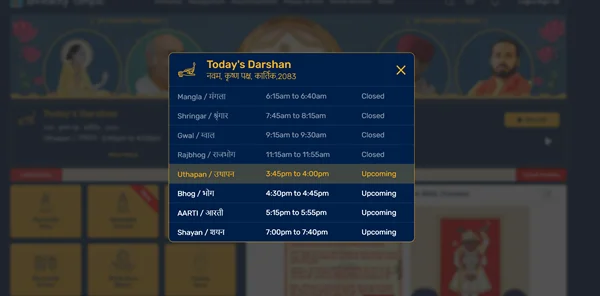
Nathdwara darshan time and routine follow the everyday routine of Lord Krishna, from waking up and getting adorned with ornaments and clothes, to being served with bhog, worshipped, and put back to sleep.
It reflects the centuries-old Pushtimarg traditions followed by devotees and pujaris (priests) at the temple.
| Darshan Routine | Nathdwara Darshan Time | Rituals |
| Mangla | 6:15 am to 6:40 am | It happens after Lord Krishna is awake. He is offered buttermilk, mishri, milk, and sheera. |
| Shringar | 7:45 am to 8:15 am | The deity is adorned with clothes and ornaments, and bhog is served. |
| Gwal | 9:15 am to 9:30 am | Shrinathji is presented in his cowherd form and is served with milk, rabdi, and kheer. |
| Rajbhog | 11:15 am to 11:55 am | During this ritual, the idol of lord Shiva is placed in front of Shrinathji’s idol and is served a royal feast. |
| Uthapan | 3:45 pm to 4:00 pm | Shrinathji is woken up from his sleep and is served dry fruits, milk, and fruits, accompanied by bhajans from Surdas ji. |
| Bhog | 4:30 pm to 4:45 pm | The lord is adorned with flowers and is served light snacks and fruits. |
| Aarti | 5:15 pm to 5:55 pm | The evening aarti honors Yashoda ji. Bhog is served, and kirtans are performed. |
| Shayan | 7:00 pm to 7:40 pm | The deity is put to sleep. Water, paan, and laddoos are offered, and lullabies are sung. |
Visit the official website of Nathdwara Templefor more information about donations, seva, and darshan.
A Legend About Nathdwara Temple:
As per the local legends, Shrinathji visited Mewar with his young devotee, Princess Ajab Kunwari, who loved staying in the region. Seeing her sadness whenever they returned to Vrindavan, Shrinathji promised that he would make Mewar his permanent abode.
Later, when the chariot stopped completely in Sinhad, devotees considered it as fulfilment of his promise and a divine sign to establish his home here.
Best Time to Visit Shrinathji Temple Udaipur
October to February is the best time to visit Shrinathji Temple, as the temperature is pleasant, making it ideal for outdoor exploration and darshan at the temple.
Here’s a complete season guide:
1. Peak Season: October to February
October to February is the best time to visit Shrinathji Temple. The weather is pleasant, ideal for comfortable travel, exploring the temple, and nearby attractions, making it one of the best places to visit in March. This is considered the best time because:
- Festivals and cultural celebrations, such as Holi and Diwali.
- Enable tourists to explore nearby areas comfortably.
Visitors may expect large crowds and soaring prices for accommodations. It is advised to book in advance to avoid last-minute price hikes and limited availability.
2. Moderate Season: March to May
March to May is the moderate season, with temperatures ranging from 25-40 degrees Celsius. This season is ideal because:
- The crowd is smaller than in the peak season.
- Offers a relaxed travel experience.
- Best time to enjoy indoor activities.
- Hotel prices and availability are quite decent.
3. Off Season: June to September
June to September is off-season and hence not the best time to visit Shrinathji temple. The weather is rainy, which may disturb the plans and alter darshan timings.
Since this is the off-season, hotel prices and availability are better, and the crowd is generally smaller.
Additional Recommendation:
If you want to witness grand festivities, then it is advised to visit Shrinathji Temple during Holi (March), Diwali (October-November), Janmashtami, and Annakut.
Must-Attend Festivals Celebrated at the Temple
Annakut, Diwali, Holi, and Janmashtami are the major must-attend festivals at Shrinathji Temple Udaipur.
1. Annakut
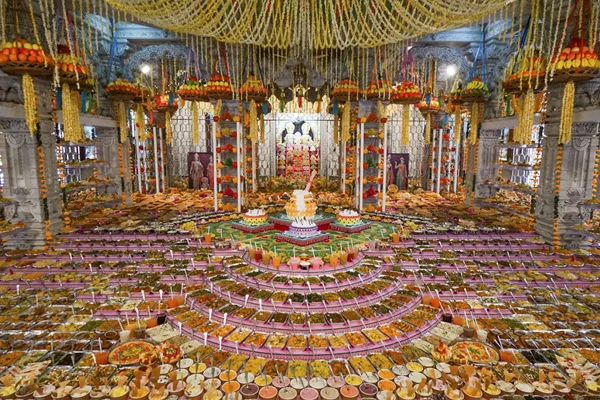
Also known as Govardhan Puja in many parts of India, Annakut is a major festival celebrated one day after Diwali. One of the grandest festivals at the Shrinathji Temple, it includes the preparation of Chappan Bhog (approximately 2500 kgs of rice), which is then offered to the deity by purjaris at the temple.
The key rituals and traditions include:
- Mounting the food before the deity to express gratitude.
- Special morning and evening aartis, kirtan, and bhajans.
- Worshipping cows, adorning, and bathing them (Gau Puja) as they were central to Lord Krishna’s life.
- Distribution of food to devotees as prasadam.
History Behind This Festival:
This festival is celebrated to express gratitude to Lord Krishna for saving the people of Vraja from the wrath of Lord Indra by lifting Govardhan mountain on his pinky finger.
2. Diwali
During Diwali, the deity is adorned with chakdar jama (silver brocade) attire, emerald ornaments, ruby, diamonds, and a pearl-studded pichvai. Key Diwali rituals include:
- Gau puja and cow procession, where cows are adorned with the finest clothes and painted horns.
- Hathadi, recreating a market scene where Lord Krishna charmed Gopis.
3. Janmashtami
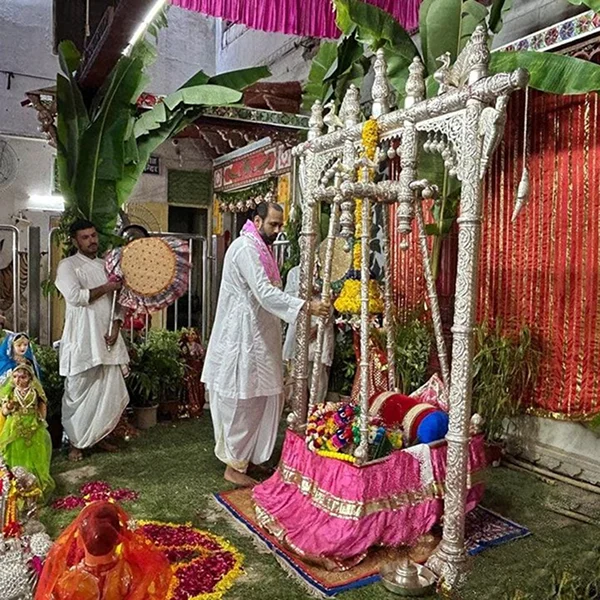
Janmashtami marks the birth of Lord Krishna and is one of the major festivals celebrated at Shrinathji Temple. During this festival:
- The temple is decorated with flowers, lights, and intricate decorations.
- The celebration starts at midnight with kirtan and bhajans.
- The infant Krishna idol is adorned, placed in a decorated cradle, and toys are offered during darshan.
4. Holi
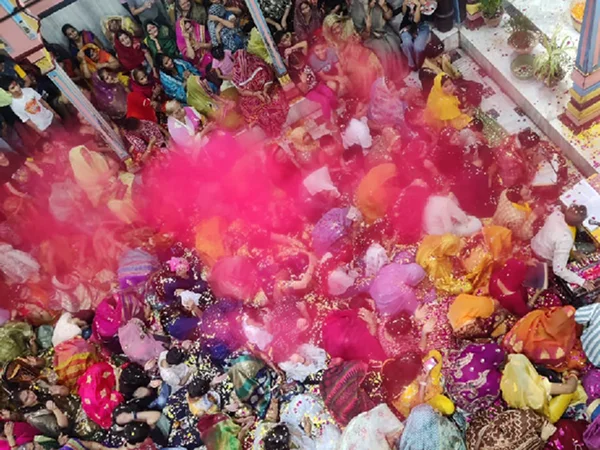
On Holi, Shrinathji’s idol is decorated with festive attire and ornaments. The main festival features Phoolon ki Holi (Holi with flowers), bhajans, and aartis in the temple. People on the streets enjoy Holi with organic gulals and flowers.
Nearby Attractions You Must Visit When Visiting Nathdwara
Top nearby attractions include Eklingji Temple, Haldighati, Nathdwara local market, Rajasamand Lake, and Dwarkadheesh Temple.
1. Eklingji Temple
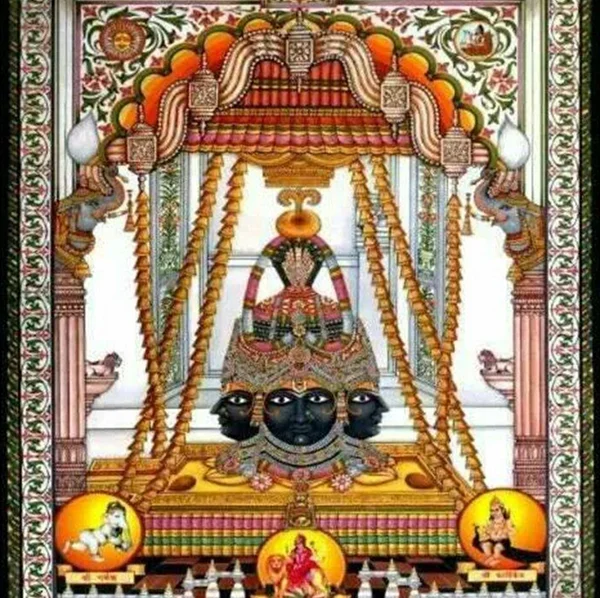
Dedicated to Lord Shiva, Eklingji Temple is located approximately 25 km from Nathdwara and is one of the best Shiva temples in India. The complex features a 50-foot, four-faced idol of Lord Shiva made of black stone, a silver image of Nandi, and beautiful marble architecture. Darshan is available from 4:30 am to 6:30 am and 10: 30 am to 1:30 pm (morning session) and 5:30 pm to 8:00 pm (evening session).
- Entry Fee: Free
2. Haldighati
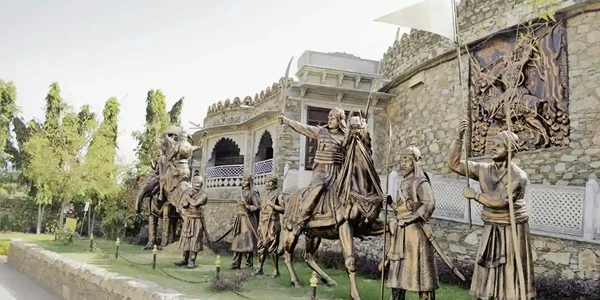
Located 20 km from Nathdwara, Haldighati is known for the historic battle between Maharana Pratap and the Mughal army. The name originates from turmeric-coloured yellow soil. Visitors can explore the Maharana Pratap Museum and Chetak Horse Memorial, depicting the battle and its brave history.
- Timings: Open 24/7
- Entry Fee: Free
*Timings may vary for museums and memorials.
3. Nathdwara Local Market for Shopping
Situated around the Shrinathji temple, the Nathdwara local market is ideal for shopping for Pichwai paintings, deity clothing, seva samagri, handicrafts, textiles, jewellery, and more. Must-try food at this market includes spiced mint tea, Nathdwara peda, and dal kachoris.
4. Rajasamand Lake
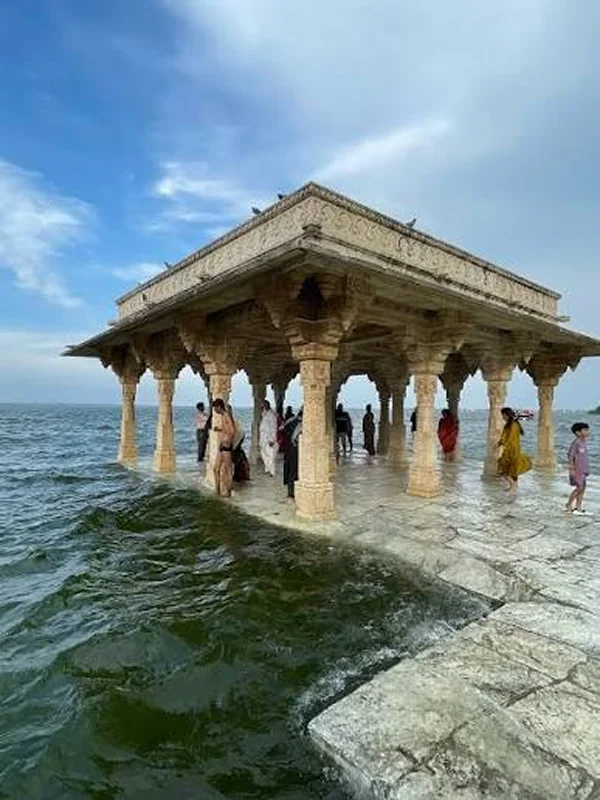
Rajasamand Lake, located 20 km from Nathdwara, is a freshwater reservoir, built in the 17th century. It features Nau Chauki Ghat, a marble embankment, and open skies, perfect for photography and nature walks. Visitors can also enjoy boating and water sports (jet skiing, speed boating, etc.).
5. Dwarkadheesh Temple
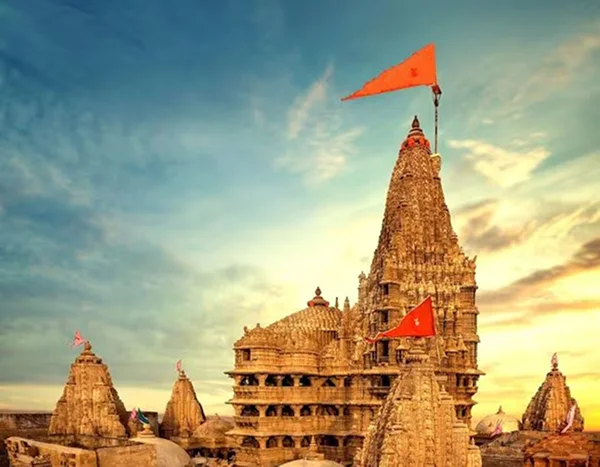
Located close to the Rajasamand Temple, Dwarkadheesh Temple is dedicated to Lord Krishna. Built in a traditional Rajasthani style, it is one of the four sacred Char Dham. Darshan at this temple starts daily from 5:00 am to 12:30 pm (morning) and 4:00 pm to 8:00 pm (evening darshan).
Other nearby temples include:
- Charbhuja Temple
- Karni Mata Temple
- Vitthalnathji
Where to Stay in Nathdwara Near Shrinathji Temple
Nathdwara town offers multiple stay options, including luxury and mid-range stays. Additionally, there are dedicated temple board cottages and dharamshalas, offering simple and low-cost stays.
1. Cottages and Dharamshalas:
You can book a cottage or dharamshala at Shrinathji Temple itself. Bookings made are non-refundable and non-transferable. Visit the Shrinathji cottage booking page to check availability and book your cottage. The prices start at INR 400 and go up to INR 2,400.
2. Luxury Stays:
The top 4-star choices include:
- Shri Vallabh Vilas Lords Plaza
- The Sky Imperial Hotel Sugam
These are located 200 metres away from Shrinathji Temple and offer modern AC rooms, free breakfast, parking, and other amenities.
3. Mid-Range Stays:
Located 150-300 metres from the temple, the top mid-range stays include:
- Hotel Shri Anand Dham
- Hotel Vrinda
Practical Tips For Visitors
Here is some practical advice that must be followed when visiting Shrinathji Temple:
- Wear traditional clothes on the temple premises. Women must wear suits, sarees, and ethnic clothing, and men must cover their knees.
- Photography, mobile phones, wallets, and large handbags are strictly not allowed within the temple premises. However, the official shoe-keeping counters and lockers are available to safely store your belongings.
- The temple is open ONLY during the eight darshan timings. The sanctum stays closed between the darshan windows.
- Visitors can also book their darshan timings using the official website: Nathdwara Temple.
- Maintain silence, do NOT touch idols and artifacts, and walk clockwise within the temple. Start your day early in the morning to escape the crowd and heat.
What is not allowed in the Nathdwara temple?
Carrying mobile phones, cameras, wallets, and large handbags is not allowed; photography is also restricted within the temple premises. It is advised to wear traditional attire that covers the knees and head.
What is Shrinathji Temple famous for?
Shrinathji Temple is famous for its black stone idol, depicting Lord Krishna in his Baal Swarup, lifting Govardhan Hill with one finger to protect the Vraja people from the wrath of Lord Inder.
Can visitors see the Pichwai paintings in the temple?
Yes, visitors can see Pichwai paintings within the temple. However, do not touch the paintings and artifacts, as it is prohibited.
What are the darshantimings at Shrinathji Temple Udaipur?
There are eight Shree Nath Ji darshan timings throughout the day, starting from Mangalam at 6:15 to Shayan at 7:40. The temple is open ONLY during the eight Nathdwara darshan times. The sanctum stays closed between the darshan windows.
What is the best time for Shree Nath Ji darshan?
October to February is the best time for Shree Nath Ji darshan, as the temperature is cool and festivities are around the corner. Start early in the morning to escape the crowd and get enough time to explore the temple.