
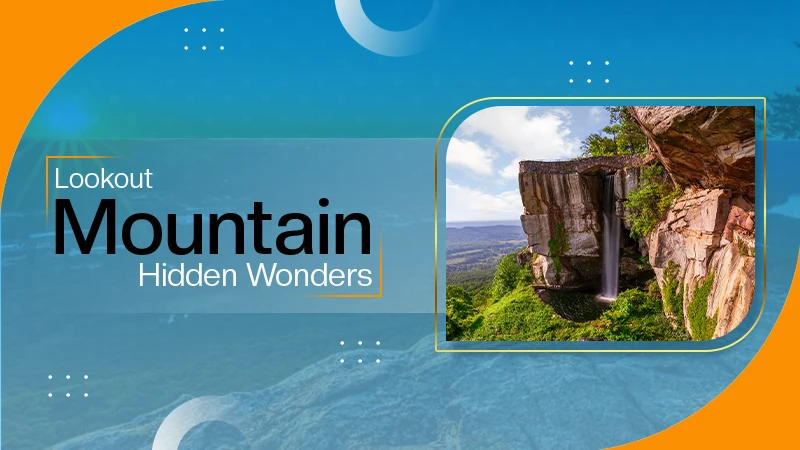
When you are someone looking for peace, mountains are the best solution to escape the busy city life.
The Lookout Mountains are one such place, with their beautiful intersection of the attractive states like Tennessee, Georgia, and Alabama, making it one of the most appealing geographical locations right at its start.
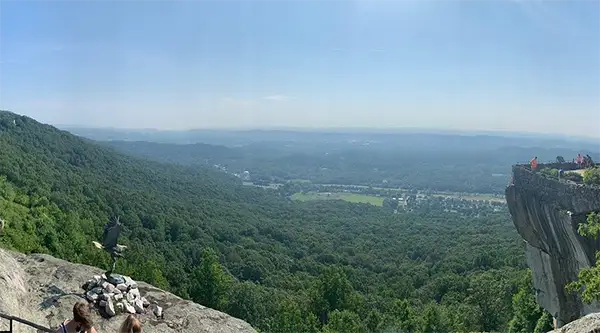
These mountains are not just about rocks or high trails; it is much more than any usual mountain experience.
In fact, it is even convenient for travellers who love comfort and travel at the same time.
As a Lookout mountain rentals is offered as a base for exploration, this ridgeline offers much more than Point Park’s famous views.
Key Takeaways
- Exploring the bliss of discovering a secret waterfall that gives you comfort and a sense of achievement at the same time.
- Revisiting the past with an exploration of Rock City’s famous barn paintings and deciphering the stories behind them.
- Researching the civil war echoes on the ridge, along with mountaineering experience, that will give both your mind and body an exemplary experience.
- Scouting the trails that go beyond the tourist spots.
Inside the Mountain: Discover a Secret Waterfall
Below Lookout Mountain lies one of its most unexpected wonders – Ruby Falls, a 145-foot-high waterfall hidden more than 1,100 feet underground.
And that’s not it.
A lift ride into the mountain is the first part of the experience, which continues with a meandering path through limestone passageways full of complex rock formations created over millions of years.
At the end of the journey, the waterfall reveals itself, and a tranquil cavernous pool is filled with light to demonstrate its dramatic scale.
Surprisingly, this natural attraction was unintentionally found in 1928 when a drilling project provided access to an uncharted subterranean realm.
The Story Behind Rock City’s Famous Barn Paintings
Rock City Gardens is set atop a striking natural cliff near the summit of Lookout Mountain that provides a view:
- where towering sandstone formations form a network of narrow passageways
- natural bridges and winding walkways among ancient stones covered in moss and native vegetation.
From the famous Lovers’ Leap viewpoint, visitors enjoy sweeping views that are said to span seven states on exceptionally clear days – a claim that has sparked both fascination and debate for decades.
Apart from its geological beauty, Rock City’s most enduring legacy lies in its marketing history.
Barn owners in the rural South were paying travelling sign painters small amounts of money, sometimes as little as three dollars, as early as the 1930s so they could put the words “See Rock City” on their roofs.
One of the most iconic and enduring roadside advertising campaigns in American history was created by the numerous painted barns that are still standing today.
Civil War Echoes on the Ridge
Lookout Mountain’s strategic position above the Tennessee River made it a critical objective during the Civil War.
The fog that obscured much of the fighting from onlookers below led to the Battle of Lookout Mountain, fought in November 1863, being dubbed the “Battle Above the Clouds”.
Point Park, maintained by the National Park Service, preserves the battlefield and offers interpretive exhibits that trace the movements of Union and Confederate forces across the mountain’s slopes.
Even after more than 160 years of forest growth, the earthworks and rifle pits that soldiers carved into the rocky terrain are still visible when you stroll around the grounds.
Trails Beyond the Tourist Stops
A more tranquil side of the mountain can be found on its less commercialised trails. With sporadic openings that frame views of the Tennessee Valley far below, the Bluff Trail traces the western escarpment through mixed hardwood forest.
Covenant College’s campus, perched near the mountain’s southern end, is open to respectful visitors and features walking paths through mature stands of oak and hickory.
The Guild Trail descends from the mountain into Reflection Riding Arboretum and Nature Centre, a 300-acre preserve that offers access to the Chattanooga Creek watershed, native plant collections, and a raptor rehabilitation facility.
Greater Chattanooga as a Home Base
Lookout Mountain is just one piece of the greater Chattanooga outdoor puzzle.
The city itself has invested heavily in trail infrastructure, public riverfront access, and climbing areas along the Tennessee River gorge.
The downtown waterfront is anchored by the Tennessee Aquarium and Coolidge Park, while Signal Mountain and Raccoon Mountain provide more hiking and hang-gliding options.
Exploring more rentals in Greater Chattanooga opens access to this entire network without the limitations of a single hotel location.
When to Visit
Spring wildflower season and autumn foliage are the peak periods. Still, winter offers its own advantages: thinner crowds, clearer air for long-distance views, and the atmospheric experience of watching fog settle into the valley below. At the same time, you stand above it in sunshine.
Any season on Lookout Mountain rewards visitors willing to look beyond the marquee attractions.
The Bottom Line
Mountains can turn out to be the most refreshing experiences in life. But apart from that, it is important to choose the right spot to make sure your experience is followed by comfort.
Therefore, making the Lookout Mountains one of the prominent choices. So, the next time you decide to plan a mountain trip, make sure it is the Lookout Mountains.
How many states can you see from the Lookout Mountains?
You can see up to seven US states from the Lookout Mountains.
What is the top of the Lookout Mountains?
The top of the Lookout Mountains consists of the Rock City, in fact, the infamous red and black barns are visible right from the top.
What movie was filmed in Chattanooga?
One of the prominent movies that was filmed in Chattanooga was “Dolly”, a famous movie that features a woman who is abducted by someone wearing a cap.
Are there any caves in the Lookout Mountains?
Lookout Mountain is the second largest cave known in Hamilton County, making it an extremely famous spot.