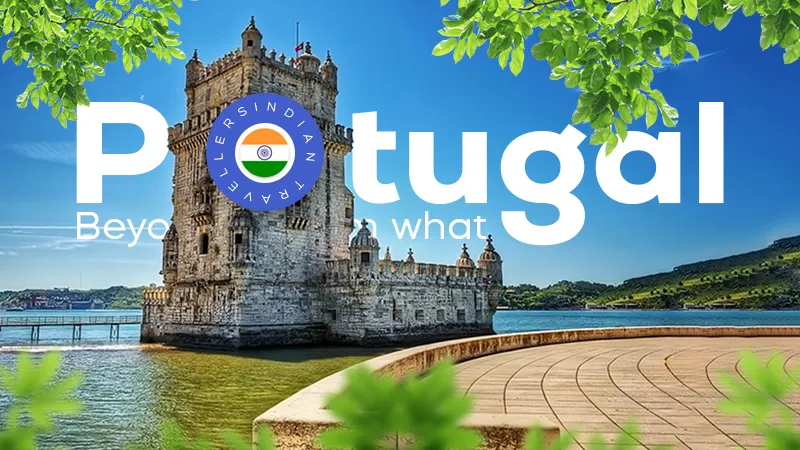
As we all know, a seven-day itinerary showcases exquisite locations, while the seven-week residence uncovers profound insights. Every Indian traveller who visits Portugal returns home with a common sentiment: Why was I not informed about this remarkable destination?
It commences with the evident attractions—the custard tarts, the azulejo tiles, and the breathtaking vistas from São Jorge Castle that render Lisbon’s appeal on Instagram indisputable.
However, for those who extend their stay beyond the conventional European tourist circuit, Portugal unveils attributes that resonate unexpectedly deeply with Indian cultural sensibilities.
In this blog post, we are going to explore more layers of this segment and provide valuable insights to the readers.
Let’s begin!
Key Takeaways
- Understanding the Atlantic connection between Goa
- Decoding things further, the tourist timeline
- Looking at the extended time reveals
- Uncovering indian community factor and practical consideration
When Goa Meets the Atlantic
The Portuguese connection to India isn’t a historical footnote. It’s a living heritage. Walk through Lisbon’s Alfama district during sunset, and something feels oddly familiar-not because you’ve seen it in travel guides, but because the quality of light, the narrow streets, the rhythm of evening conversations carries echoes of other places you know.
This is not a mere coincidence. Both cultures have been influenced by their shared history over four centuries. The Portuguese brought vindaloo spices to Goa and Goan cooking techniques back to Lisbon. The trade went both ways, and its effects continue to surprise visiting Indians.
“I expected Europe to feel foreign,” admits a Delhi-based architect who spent three months in Porto last year. “Instead I found my grandmother’s recipes on restaurant menus, just with different names.”
Interesting Facts
Portugal is the oldest nation-state in Europe, with its current borders established in 1139.
Beyond the Tourist Timeline
Most Indian travellers experience Portugal in fragments: three days in Lisbon, one in Sintra, maybe a flight to Porto before heading elsewhere in Europe. The itineraries optimize for major sites and efficient transit.
But Portugal rewards slower exploration in ways that rushed visits cannot capture. Because the country is smaller than Uttar Pradesh, any base offers access to incredible diversity. Beach towns and mountain villages, wine regions and medieval cities are all within two hours’ drive.
For Indians accustomed to planning travel around limited vacation days, the possibility of extended stays rarely enters consideration. Yet Portugal has developed infrastructure specifically welcoming longer visits. Visa frameworks accommodate remote workers. Rental markets serve monthly tenants. Language barriers, while real, prove lower than most European destinations.
Several families from Mumbai and Bangalore have discovered that pathways to longer Portuguese stays exist beyond tourist visas-options that transform Portugal from destination to base camp for broader European exploration.
What Extended Time Reveals
The Portugal that reveals itself to longer-term visitors differs fundamentally from the tourist version.
- Local rhythms emerge. The country genuinely shuts down between 1pm and 3pm in many areas-not for tourist-facing siesta theater, but because that’s how life works here. Dinners start at 8pm or 9pm. Sundays remain sacred for family gatherings, not shopping.
- Regional character emerges. Porto’s working-class authenticity stands in stark contrast to Lisbon’s cosmopolitan bustle. The Alentejo region offers rural landscapes that feel remarkably similar to certain parts of Rajasthan-golden plains stretching to distant horizons. The Azores islands might as well be a different country entirely.
- Community forms naturally. The Portuguese aren’t effusive in the American sense, but they’re warm once initial reserve passes. Extended stays allow relationships to develop with neighborhood vendors, café proprietors, the regulars at local establishments. This social texture simply cannot develop in a week.
The Indian Community Factor
For Indian families considering longer Portuguese stays, a practical question arises: is there community?
The answer has shifted dramatically in recent years. Portugal’s Indian-origin population, while small by global diaspora standards, has grown notably. Hindu temples operate in Lisbon. Indian groceries stock familiar ingredients. Restaurants range from tourist-oriented to genuinely regional-finding proper South Indian breakfast requires knowledge but isn’t impossible.
“I was worried my mother wouldn’t adjust,” says a Pune entrepreneur who relocated his family to Cascais. “But she found her community faster than I did. There’s a WhatsApp group for Indian grandmothers in Lisbon that organizes prayer meetings and cooking exchanges.”
The professional Indian community has expanded particularly in tech. Lisbon’s emergence as a European startup hub has drawn Indian engineers, entrepreneurs, and investors. Networks exist; they just require initial effort to access. Different pathways in terms of visa residency options that they ended up with, from D7 Visa, to digital nomad visas, or the most seeked option for the golden visa right now, investments funds path.
Practical Considerations for Extended Stays
Moving from tourism to longer residency involves practical transitions worth understanding:
- Cost structures differ. Tourist-area restaurant prices don’t reflect actual Portuguese living costs. Monthly grocery budgets can be remarkably modest. Housing represents the largest expense-but also offers the widest variance between tourist-oriented rentals and local-market options.
- Healthcare quality surprises. Portugal’s public healthcare system ranks among Europe’s best. Private options exist for those preferring English-speaking doctors and shorter wait times. For Indian families accustomed to excellent private healthcare at Indian prices, Portuguese care offers comparable quality at higher but manageable costs.
- Education options exist. International schools in Lisbon and Porto serve expatriate families with IB curricula. Local Portuguese schools-free for residents-offer immersion that produces trilingual children. The best option depends on your plans: short-term stays favour international options; longer commitments may benefit from local integration.
- Connectivity remains strong. Direct flights connect Lisbon to Mumbai; connecting options reach other Indian cities within single-stop convenience. Digital infrastructure supports remote work. Time zones allow morning calls with India before Portuguese business hours begin.
The Return Question
Indians who spend extended time in Portugal inevitably face questions from family back home. Why there? Why not somewhere more established for Indians-Dubai, Singapore, the UK?
The answers tend toward the ineffable. Something about the pace of life. The absence of striving that characterizes many expatriate destinations. The ability to live well without ostentation.
“In Dubai, everyone’s hustling,” reflects one long-term Portuguese resident originally from Chennai. “Here, people work to live rather than living to work. At first it seemed lazy. Now it seems wise.”
Portugal won’t suit everyone. Those who thrive on intensity, constant stimulation, and the energy of megacities may find the pace frustrating. The country’s pleasures are quiet: good food, beautiful light, unhurried conversation, spaces to think.
But for Indian travellers who’ve visited once and felt that unexpected recognition-that sense of finding something they didn’t know they were seeking-Portugal offers a question worth exploring: what if you stayed longer?
What is Portugal famous for?
Portugal is famous for its historic cities, golden beaches, and world-class wines, particularly Port wine.
Is Portugal wealthy or poor?
Portugal is a developed country and a member of the EU, but it is considered one of the poorer countries among wealthy nations.
What is Portugal’s national dish?
Bacalhau (salt cod) is widely considered the national dish of Portugal due to its cultural significance and versatility.