- What a Travel Management System Means for Modern Travelers
- Why Travel Management Systems Are Useful for Trip Planning
- Key Features to Look for in a Travel Management System
- Benefits for Solo Travelers, Families, and Frequent Flyers
- How to Pick the Right Travel Management System for Your Travel Style
- At a Glance: Smarter Trip Planning with Travel Management Systems

Alt: What Is a Travel Management System? Features, Benefits, and Uses for Travelers
“The journey of a thousand miles begins with one step.”
— Lao Tzu (Philosopher)
I’ve found that when booking, expenses, schedules, travel documents, etc., are scattered across different places, even the most exciting trips can become stressful. This travel management system can be extremely helpful. It assists me in planning out each and every facet of a trip in a single location, making travel arrangements simpler and more effective. These systems make things easier for me when I need to plan a vacation or run business trips, and help me enjoy the trip more.
So, today in this guide, I will cover everything about the travel management systems that each traveler should be informed about.
Let’s get started!
What a Travel Management System Means for Modern Travelers
A travel management system is an online solution that assists me in planning, organizing, and managing travel from end to end. Travelers can store all information in a single system rather than using several apps, emails, and spreadsheets.
Leisure travelers, frequent flyers, businesses, and travel management companies use these platforms to better coordinate travel. Everything from booking flights, booking hotels, expense reports, travel documents, etc., can be accessed from one dashboard.
Why Travel Management Systems Are Useful for Trip Planning
Whenever I travel, I have to deal with hundreds of things, including flights, accommodation, transport, and budget needs. And keeping track of everything can be overwhelming for anyone like me.
A travel management system makes this easier with the consolidation of all travel information on one platform. I can find all the details I need without scrolling through my emails to find confirmation numbers or booking information.
Professionally, these systems also enhance efficiency and minimize the risk of lost reservations, paperwork, and unanticipated costs. The outcome is a more streamlined and relaxed journey.
Key Features to Look for in a Travel Management System
Not every travel management system has the same features. So, if you are choosing an option, then I would recommend looking for some important features because, in my own experience, the most successful travel story starts when the planning of it all goes according to plan.
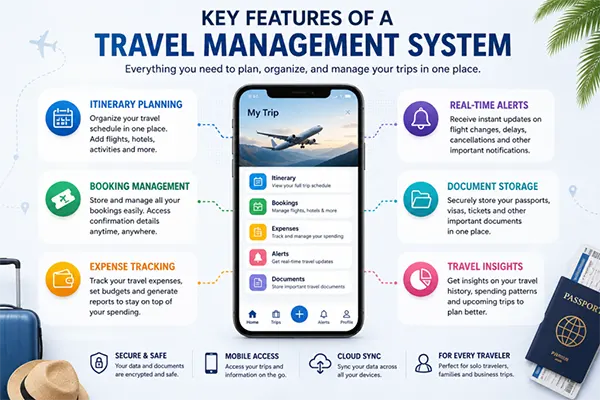
Itinerary Planning and Booking Management
Itinerary management is one of my favourite features. It enables me to plan flights, accommodations, travel, and all kinds of activities in one timeline.
There are a lot of modern systems that automatically import booking confirmations and make detailed itineraries. This will save time and does not require manual travel schedule changes.
Expense Tracking and Travel Budget Tools
When traveling, it is important to keep track of expenses, particularly if you are traveling longer distances or for business.
A travel management system is a great tool to track expenses during a trip to keep a check on spending. Some platforms will automatically classify costs, create reports, and offer budget summaries.
This allows me to consider staying within the financial “bounds” of my travel budget as well as gain insight into where my travel dollars are going.
Alerts, Updates, and Document Storage
Travel plans can suddenly change. There is a possibility of flights being cancelled or diverted due to inclement weather and transport-related delays.
TMSs are apt to send me love alerts so that I know about important updates. This way, I can respond rapidly and modify plans if necessary. Also, secure document storage is appreciated. Having all your travel documents stored together will make it easier to access and better to have a backup if they are lost or stolen.
Benefits for Solo Travelers, Families, and Frequent Flyers
As a traveler, I know the queries running in your head regarding the benefits of Travel management systems. No worries, here is a brief explanation of the advantages of TMSs for solo travelers, families, and frequent flyers:
- Solo Travelers: I am a solo traveler and love having all my travel information in one place and readily accessible. It is a stress reliever and keeps me up to date during the trip.
- Families: Multiple bookings and travel plans with family can be a hassle. When everyone is in the picture and it is easy to coordinate, a travel management system can be of great help.
- Frequent Flyers: Frequent flyers and business travelers can get the most value out of it. Advanced booking management, expense monitoring, and reporting tools are time-saving and make travel more efficient. Corporate travelers with intricate travel plans often make up many of the client base of travel management companies, and the platform of a company is tailored to their needs.
How to Pick the Right Travel Management System for Your Travel Style
I would recommend that you consider your travel requirements instead of picking the one that is richest in features when selecting a travel management system.
This is done through many factors, including:
- Ease of use
- Mobile accessibility
- Expense tracking tools
- Itinerary management features
- Real-time notifications
- Secure document storage
- Customer support quality
Currently, the focus is on integrating with airlines, hotels, and travel providers.
Switch to a travel platform from a trusted travel management company with sophisticated reporting and business travel features if traveling, especially for business. A more basic system might be sufficient for personal vacations.
At a Glance: Smarter Trip Planning with Travel Management Systems
In my opinion, travel management systems have revolutionised trip planning. They consolidate bookings, schedules, expenditures, documents, and updates in a single location.
From planning a weekend getaway to an international vacation or business trip. It is always better to have a travel solution that is centralized. These will be good to have for smarter and more organised travel planning as travel evolves.
What is a travel management system?
A travel management system is software that allows travelers to manage their travel bookings, itineraries, documents, budget, and trip updates all in one system.
Who uses a travel management system?
These systems are often used by solo travelers, families, business travelers, and travel management companies.
Is it a travel management system only for business travelers?
No, they can be helpful for both leisure travel and business trips, assisting travelers to remain organized, no matter what sort of trip they are taking.
How does a travel management system help with travel expenses?
It tracks spending in real-time, categorizes purchases, stores digital receipts, and provides clear budget summaries to ensure expenses stay within designated limits.