
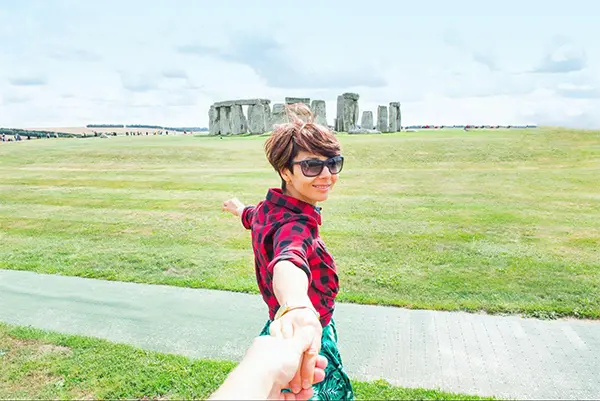
If you are planning a few-day trip outside London, you should visit Stonehenge and Bath. One is a 5,000-year-old monument on Salisbury Plain, while the other is a Georgian city believed to be built around Roman bathhouses. And the fun thing is both are less than an hour apart. If you are traveling for the first time and want to make the most of it, this pairing consistently proves itself worth the early start.
Read the full blog to learn more about how to see both on a London trip without the coach crowds.
Why Stonehenge and Bath Are the Perfect Day Trip Duo
Stonehenge and Bath are both UNESCO World Heritage Sites, a uniqueness that speaks to their global historical significance. Together, they provide a fascinating combination of prehistoric heritage, Roman history, and Georgian architecture, making them an interesting pairing for a day trip from London.
What makes these two sites such a natural pairing isn’t just location. It’s the contrast. Stonehenge offers a glimpse into a prehistoric world we still don’t fully know, while Bath demonstrates the height of Roman engineering and later, Georgian elegance in its honey-colored terraces. Together, they tell two very different parts of Britain’s story, and a well-planned Stonehenge and Bath private tour from London makes it possible to experience both without needing to stay overnight.
The Case for a Private Tour Over Coach Tours
Large coach tours are a popular option, but they come with real trade-offs. Fixed schedules, fixed stops, and a busload of 50 or more people mean you are usually waiting around, whether it is for stragglers at the gift market or a queue to reboard. For families traveling with children, or small groups who’d rather not change their day to a stranger’s pace, this can chip away at the experience.
A private car solves most of these problems directly. There is no shared itinerary to accommodate, no waiting on other passengers, and no strict drop-off times dictating how long you get at each site. Door-to-door pickup from your London hotel also eliminates the problems of navigating public transport connections to Salisbury Plain, which can be inconvenient given Stonehenge’s rural spot roughly 90 miles west of the city. In practice, a private tour from London lets you travel at your own pace, linger a bit longer at the stone circle if the light is good, or cut your visit short if the weather turns. That flexibility is hard to overstate once you are actually on the road.
What a Realistic Day Looks Like
A well-organized day trip often starts early, with an 8 a.m. departure from London giving you a comfortable time against traffic on the way to Stonehenge. The drive takes around an hour and a half to two hours depending on the spot route and time of day.
At Stonehenge, tickets operate on a timed-entry system, meaning you pick a specific arrival window in advance, after which you are allowed to stay on-site as long as you like within opening hours. A visit of around 90 minutes is often enough time to explore the stone circle viewing pathway, take in the visitor center exhibitions, and walk through the reconstructed Neolithic houses.
From there, it’s almost an hour’s drive to Bath, arriving in time for lunch and an afternoon of exploring. The Roman Baths are the beautiful centerpiece, offering a remarkably well-preserved look at ancient bathing rituals, but the city itself needs a wander too. The Royal Crescent, with its fascinating row of Georgian townhouses, is a short walk away and worth the detour for photos alone. Two to three hours in Bath is usually enough to see the highlights without feeling rushed. Accounting for the average two-hour drive back to London, most travelers are back at their hotel by early evening, tired but not exhausted.
Essential Planning Tips
A few little planning preparations go a long way toward smoothing out the day. Stonehenge tickets should be booked in advance, especially during summer months, since visitor numbers are capped and walk-up availability isn’t guaranteed. Comfortable shoes are required; Bath’s streets are cobbled and hilly in places, and the walking paths at Stonehenge can be uneven and exposed to wind. It’s also important to check seasonal opening hours before you go, as these can change throughout the year. Check English Heritage’s website for the recent opening hours before your visit. Lastly, consider adding a knowledgeable local guide to the day. Someone well-versed in the history of both sites can transform a simple sightseeing trip into a genuinely memorable one, filling in the context that a self-guided visit mostly misses.
Why This Day Trip Works
Part of what makes this pairing so efficient is how complete it feels for a single day. You leave London in the morning and, by the time you’re back, you’ve walked among stones older than the pyramids and enjoyed the atmosphere of a Roman spa town. For international visitors from the US, the Middle East, or India who may only have a small window to see England outside London, this combination provides a genuinely efficient way to encounter two very distinct sides of British history. The manageable driving distances involved make it feel far less chaotic than struggling with train timetables or multiple separate excursions.
A Day Trip Worth Planning Around
Stonehenge and Bath complement each other in a way that few day trips manage, combining prehistoric wonder with Roman and Georgian history in a single, well-paced itinerary. A private day trip from London to Stonehenge and Bath provides
the flexibility, comfort, and pacing that make this ambitious day trip actually enjoyable, instead of something to survive. For a first trip to England, it’s difficult to find a pairing that delivers this much history in this little time.
How much time is needed to see Stonehenge?
Travelers need roughly 1.5 to 2 hours time to see Stonehenge.
What is the best time of day to visit Stonehenge?
The best time to visit Stonehenge is in the early morning at 9:30 am, or in the evening around 4:00 pm to avoid crowds.
What is the distance between London and Stonehenge?
The distance between London and Stonehenge is 90 miles that is roughly around 145 km.