- Understanding the Travel Retail Customer
- Convenience Is a Major Factor
- Store Layout Matters
- The Role of Retail Fixtures
- Product Displays Can Influence Shopping Decisions
- Digital Technology in Travel Retail
- Airport Stores Need Strong Visual Communication
- Local Products Can Add Value
- Designing for Different Types of Travelers
- Managing Limited Space
- Lighting and Store Atmosphere
- Sustainability in Travel Retail
- Creating a Seamless Online and Offline Experience
- The Future of Travel Retail
- Conclusion
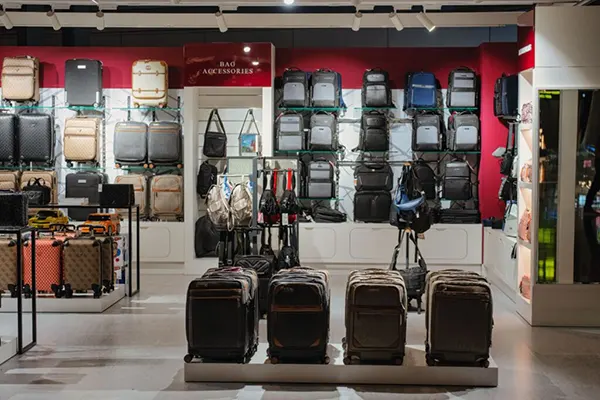
Besides a place to catch a flight, airports are now a shopping destination that combines convenience, discovery, and memorable experiences. This shift is creating new opportunities for travel retailers, but it also raises the bar for store design and customer service.
According to the Airports Council International Asia-Pacific & Middle East, around 70% of airport purchases are impulse-driven, highlighting the importance of making products easy to discover and purchase.
With strategic store layouts, flexible shop fixtures, digital technology, and local product displays, modern airport retail is adapting to travelers who expect a seamless experience, even when they have limited time.
Understanding the Travel Retail Customer
Tourists are different from traditional shoppers because their priorities can change depending on their journey. Someone waiting for a flight may have only a short amount of time to explore a store, while another traveler may have several hours before departure.
Consumers may also be looking for travel products like:
- Electronics accessories
- Personal care products
- Snacks
- Clothing
- Books
- Gifts
- Travel equipment
- Other convenient items
Understanding these different needs can help retailers determine which products to display prominently and how to organize their stores.
If shopping might leave you with much less cash, consider budget Brisbane airport car hire as you deboard.
Convenience Is a Major Factor
A travel retail shop should keep it simple. Customers may be carrying bags or luggage, so clear pathways and accessible product locations are particularly important.
Products should be classified into recognizable categories, with signs that help travelers quickly identify what they need.
For example, a traveler looking for a phone charger should not have to search through numerous unrelated sections. A dedicated technology accessories area can make the shopping process faster and easier.
Store Layout Matters
The physical arrangement of an airport retail store can influence how quickly customers understand the space. Product variety must be balanced with simplicity.
Too many products in a tight area can make it difficult to navigate. On the other hand, leaving too much unused room can reduce the number of products available for customers.
A carefully planned layout can create a natural path through the store while ensuring that critical products remain visible.
The Role of Retail Fixtures
Travel retail environments often require flexible and durable furniture because of high levels of customer traffic. Shelving, counters, racks, display units, and storage solutions need to support daily operations without making the store feel crowded.
Businesses researching Shop Fixtures can consider how different fixture designs may fit into a travel-focused retail setting.
The right fixtures can help businesses use limited space efficiently while keeping products accessible. They can also provide areas for branding, signage, lighting, and digital gear.
Product Displays Can Influence Shopping Decisions
Travelers often make quick purchasing decisions, which makes product presentation extremely important.
A well-organized display can communicate what a product is and why it may be useful without requiring a long explanation from a salesperson.
For instance, a travel accessories display could group luggage organizers, adapters, headphones, chargers, and other useful items. Customers immediately understand the section’s purpose and identify products that may be relevant to their trip.
Modern Retail Shop Displays can be used to create dedicated product areas while maintaining an organized appearance.
Digital Technology in Travel Retail
Tech is becoming increasingly common in airports and other transportation environments. Digital signage, self-service systems, mobile payments, interactive screens, and automated inventory systems can all contribute to a more efficient customer experience.
Digital screens can deliver product information or highlight specific areas of a store. Self-service payment systems reduce crowding.
Technology can also help retailers manage stock more effectively. Inventory systems can show information on product availability and help employees identify when particular products need replenishment.
Airport Stores Need Strong Visual Communication
Tourists may come from different countries and speak different languages. Clear visual communication can therefore be valuable in international travel environments.
Consumer store exploration is eased by:
- Simple signs
- Recognizable symbols
- Product categories
- Easy-to-understand information
The design should communicate important information quickly because customers may not have time to halt and study complicated signs.
INTERESTING INSIGHT
ACI Asia-Pacific & Middle East says that adding just 10 minutes of airside dwell time increases average retail spend by 5% to 15%.
Local Products Can Add Value
Travel retail can also be used to introduce visitors to local products and culture. Mementos, regional food, crafts, books, clothing, and other locally connected products can give travelers something memorable to take home.
A dedicated local-products section can make these items easier to discover.
Vendors can also use storytelling to explain the background of products. The connection between a product and the destination can be explained with:
- Short descriptions
- Photographs
- Digital content
Designing for Different Types of Travelers
Not every tourist has the same shopping habits. Business travelers may be interested in technology accessories, professional clothing, or convenience products. Families may look for snacks, entertainment items, or travel essentials. Tourists may be more interested in mementos and locally produced goods.
Retailers can consider these different customer groups when organizing their stores.
Creating clearly defined sections can help customers quickly identify products relevant to their trip.
Managing Limited Space
Space is often valuable in travel retail environments. Airports usually have stringent requirements regarding:
- Store dimensions
- Safety
- Customer movement
- Access
Retailers therefore need to make efficient use of both floor and vertical space.
Wall-mounted shelving, compact displays, multi-purpose counters, and carefully positioned racks can help increase storage and presentation capacity without creating unnecessary obstacles.
Lighting and Store Atmosphere
Lighting can help make a comfortable shopping environment while improving product visibility. Well-positioned lighting can draw attention to specific merchandise and help customers examine products more easily.
The environment should also reflect the type of store. A premium airport retailer may use a more refined design, while a convenience-focused store may prioritize brightness, simplicity, and speed.
The crucial thing is to create an environment supporting traveler needs.
Sustainability in Travel Retail
Sustainability has become an important consideration for many businesses and travelers. Vendors can explore ways to reduce waste, improve energy efficiency, and select durable materials.
Reusable packaging, digital receipts, energy-efficient lighting, and responsible material selections are examples of approaches businesses may consider.
Store furniture can also be selected with long-term use in mind. Durable fixtures may reduce the need for frequent replacement and help businesses maintain consistent store settings.
Creating a Seamless Online and Offline Experience
Travelers often use their smartphones while shopping. A customer may research a product online before coming to an airport and then decide to purchase it in person.
Retailers can connect their physical stores with digital channels through QR codes, online catalogs, product information pages, and mobile payment options.
This makes for a more connected shopping experience and gives customers access to additional information without requiring more physical signage.
The Future of Travel Retail
Airport retail will keep changing as technology, customer expectations, and travel habits evolve. Businesses may increasingly use artificial intelligence, data analysis, digital signage, automated checkout systems, and personalized digital experiences.
Also, the fundamentals of good retail design will remain important. Customers still need clear pathways, organized products, useful information, and comfortable spaces.
The strongest travel retail environments will likely be those that combine digital comfort with practical physical design.
Conclusion
Airport retail has evolved into an important part of the modern travel experience. Airports provide businesses with opportunities to connect with customers looking for convenience, local products, travel essentials, or memorable buys.
To succeed in this environment, retailers need to understand the unique needs of travelers. Efficient layouts, clear product categories, useful technology, attractive displays, and practical fixtures can all make for a better shopping experience.
As the travel industry continues to evolve, retail businesses that focus on convenience, flexibility, and customer experience can create environments that serve travelers while adapting to the changing nature of modern travel.
What is travel retail?
It refers to the sale of products and services in transportation environments such as airports, train stations, and other travel hubs.
How can shop fixtures improve airport retail stores?
Shop fixtures help retailers organize products, use available space efficiently, improve visibility, and support customer navigation.
Why is store layout important in airport shopping?
A clear layout with accessible products, recognizable categories, and unobstructed pathways can make shopping faster and more convenient.