
A family RV trip without electric hookups actually works well when three limits shape the plan before any sightseeing does. And the three limits are how much power the RV can store, how long the kids can comfortably ride, and how much water the tanks can carry. So, when the number becomes clear, it becomes easier to choose routes.
Sometimes people think that camping without electric hookups means no electricity, which is not true. The house battery can help in generating lights, the water pump, and other 12 V systems. Many families also add a solar generator for phones, tablets, and cameras. Here’s come the planning part, that helps in matching real requirements and scheduling stops to refill, dump, and recharge.
Take Stock of Your RV’s Power Before You Book
Some of the ways are explained below that help you in planning RV power.
Check the House Battery and Outlets
The battery label or RV manual often lists the battery type, voltage, and amp-hour rating. It also helps to know whether an inverter feeds the wall outlets, since multiple rigs power only the 12 V sockets, USB ports, lights, and water pump once shore power is unplugged.
Chemistry and voltage both change the calculation. A 12.8 V, 100 Ah LiFePO4 battery stores about 1,280 Wh nominally, and most of it is actually available. For a 12 V, 100 Ah lead-acid battery, planning around 50% discharge, unless the maker recommends otherwise, leaves roughly 600 Wh before conversion losses.
List the Loads That Run Without Hookups
Larger loads raise two questions: whether the system can begin and run them, and how much energy they use over time. A 1,500 W appliance, for example, uses about 125 Wh in five minutes but 1,500 Wh in an hour, before conversion losses.
| Load | What to check before the trip | Planning move |
|---|---|---|
| Furnace | Blower fan draw | Cold nights can drain a small battery |
| Refrigerator | Propane, 12 V DC, or 120 V AC operation | Electric operation is often the largest steady draw |
| CPAP, if required | Manufacturer-approved power options | Measure one night’s use at usual settings |
| Microwave, hair dryer, roof AC | Running and startup watts vs. inverter rating | If output allows, budget energy for the planned runtime |
Plan Campsite Power for Nights Without Hookups
Before heading out, plan campsite power for nights without hookups.
Size Backup Power to the Gap
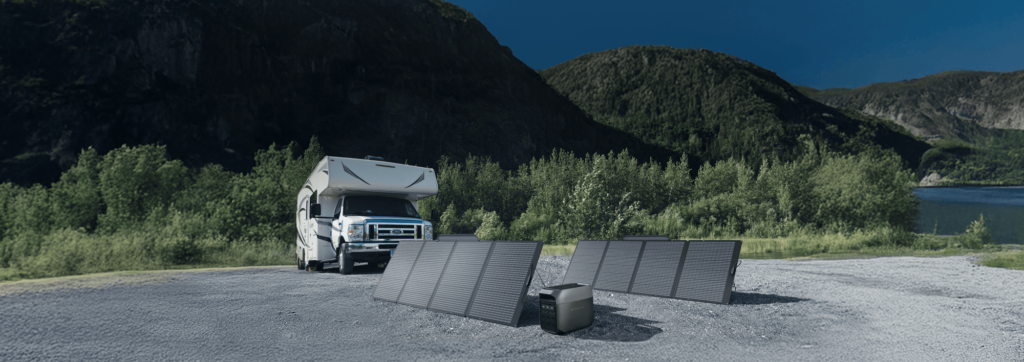
For nights at campsites without electric hookups, a suitably sized solar generator can supplement your RV’s existing power setup and help keep important devices charged. It pairs a portable power station with compatible solar panels that recharge it in sunlight.
The number that matters is the energy required throughout the stay before the next reliable recharge, involving the fridge, furnace fan, water pump, lights, and inverter standby. With a reserve added, that total can be compared with the house battery’s usable energy; any shortfall is the gap to cover.
Count Device Charging Separately
For a family of four, four phones at about 15 Wh a day and two tablets at about 30 Wh each come to 120 Wh. A camera battery and charging losses push that toward 150 Wh a day, or around 450 Wh over three days.
Device charging is usually the easiest load to shift to a solar generator. Starting fully charged, the EcoFlow DELTA 3 Plus stores 1,024 Wh nominally, well above that 450 Wh budget, though conversion losses, standby draw, and additional loads shrink the margin. It has six AC outlets and two USB-C ports and is rated below 30 dB at loads under 600 W, which can support keeping campsites quiet.
Recharge speed relies on panel wattage, shade, weather, and what else is running, so one sunny day may not replace multiple nights of use.
Choose Routes and Campsites That Suit Your Kids
When you are planning, keep in mind a few things.
Build Driving Days Around Your Kids
Children make the pace more than the map does. Their track record on past car rides, along with nap and meal times, is a better guide than any fixed number of hours, and a long midday stop somewhere with space to run usually resets the mood for the next stretch.
Arrive Early Enough to Set Up
Many RVers use a loose 2-2-2 rule of thumb: about 200 miles a day, arrival by 2 p.m., and two nights at each stop. Early arrival is important even more without hookups, because leveling the rig, checking tanks, and setting out solar panels are all simpler in daylight.
Confirm What Each Campground Offers
Two sites listed without hookups can vary a lot in what they provide. Before booking, it is worth confirming these details with the campground or handling agency:
- Drinking water spigots, and whether they are on for the season
- Flush toilets, vault toilets, or showers
- A dump station on-site or along the route
- Generator hours and quiet-time rules
- Site length, slope, and sun exposure for solar charging
Make the RV Work for Meals, Sleep, and Downtime
Plan all RV work for meals, sleep, and downtime in advance.
Keep Meals Simple and Low-Water
One-pan dinners cooked on the propane stove, for instance, tacos, fried rice, or quesadillas, save both water and power. Chopping vegetables and cooking meat at home, then chilling it promptly, means less cooking and cleanup at camp, and paper plates for a few nights ease the load on the gray tank, which keeps sink and shower water.
Store Food for Fewer Fridge Openings
Many RV fridges have little space, and some recover slowly once the door has been open for a while. Turning the fridge on a day before departure often lets it cool fully. Grouping snacks and drinks in one bin or a different cooler cuts down on door openings, and shelf-stable lunches free up cold space for dinners.
Protect Sleep in a Shared Space
Sleep shapes the mood of the complete family trip. Assigning beds before departure, packing each child’s bedding in its own bag, and keeping a small battery light by each bunk make bedtime smoother. On warm nights, a roof vent fan uses much less power than air conditioning, and window covers help when the sun rises early.
Pack Road-Day Activities That Work Offline
Cell signal can be vague at remote campsites, so audiobooks, shows, and maps are worth downloading before leaving town. A small bag per child with card games, a sketchbook, and a flashlight helps on long drives. Giving each child a camp job, such as checking the water gauge or unfolding the solar panel, keeps them occupied in the daily routine.
Stretch Water and Schedule Service Stops
Many sites without electric hookups also lack water and sewer connections, a setup usually called dry camping. For a family of four with a 40-gallon fresh tank, using 8 gallons per person a day would empty it in about a day and a quarter, while 4 gallons each would last two and a half days.
Short showers with the water off while soaping, wiping plates before washing, and using campground restrooms minimize fresh-water use and slow the filling of the gray and black (toilet) tanks. Service stops work best when timed to real use, before fresh water runs low or either waste tank nears capacity. Travel centers, some state parks, and municipal dump sites can help.
Driving days add charging as well. Motorhomes often recharge the house battery from the engine alternator, whereas travel trailers usually get only a modest charge through the tow connector.
Leave Room for Weather and Extra Nights
Weather can reshape these plans immediately. A run of cloudy days slows solar generator charging, cold nights keep the furnace blower busy, and heat can make an unshaded site difficult to enjoy.
Keeping one flexible night each week, a campground with hookups, water, and a dump station as a fallback, and an extra day of food and water on board makes those shifts easier to manage, including the day the kids ask to stay one more night by the lake.
What does RV stand for?
RV stands for Recreational Vehicle.
What is the best RV for a family?
The best RV for a family is a bunkhouse travel trailer.
What are the three types of RVs?
The three types of RVs are Class A, Class B, and Class C.