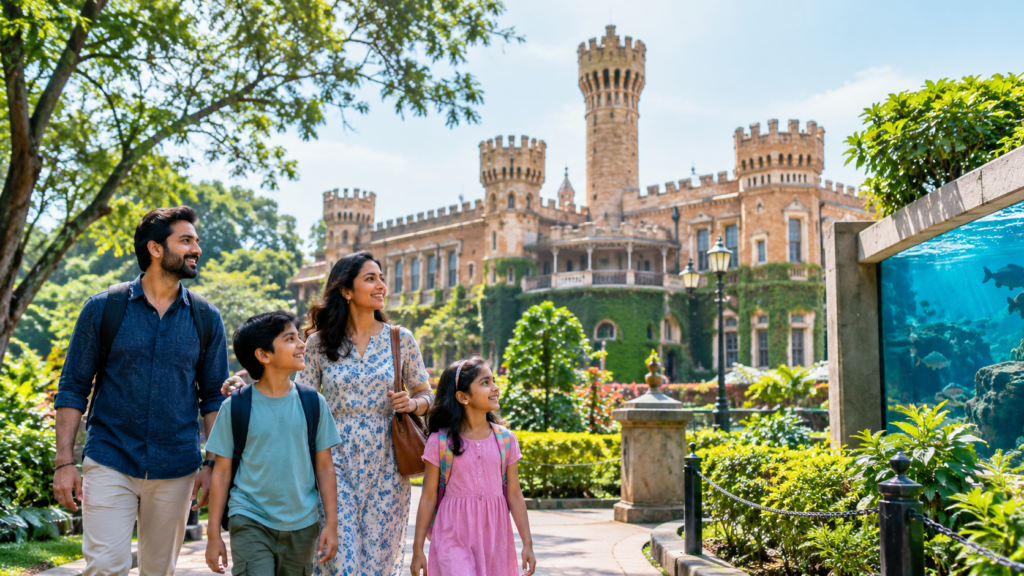
While Bengaluru is a busy place full of technology hotspots, there are many family-friendly activities to do. Whether it be exploring the history, roaming greenery, or aquatic life, there is more to this city than meets the eye.
When you are planning a family trip, it can sometimes be difficult to handle all your children’s preferences, while some love exploring the crucial carvings at Bengaluru Palace, another one prefers to roam around the shady pathways of Lalbagh Botanical Garden or to watch the brightly colored fish at the Government Aquarium in Cubbon Park.
Historic buildings provide children with a taste of the history behind Bengaluru, while the garden encourages them to take in their surroundings. The aquarium helps to stimulate their minds with an interest in aquatic life.
If you group all places that are close to each other, then taking plenty of breaks and choosing activities to suit your children’s interests and energy will always be a better option to adopt.
Begin with Bengaluru’s Royal Heritage
Bangalore Palace provides an introduction to the city’s royal connections and architectural history. Karnataka Tourism explores the palace with the Wadiyar legacy and defines its selective towers and Tudor-style appearance.
For children, architecture becomes more interesting when they have something specific to learn. Ask them to spot differences between the doorway and those at home, notice repeating patterns or identify a feature that makes the building look unique compared to a modern apartment block.
There is no need to turn the visit into a history examination. A few simple questions can open a discussion about how buildings were used, who lived in them and why some places are maintained for so long.
Before visiting, confirm current access arrangements and photography rules. Make strategy around what is actually open to visitors instead of assuming every part of this place can be explored.
Make Space for the Garden City
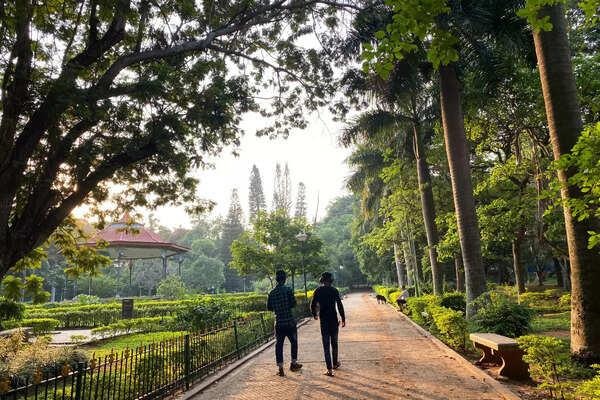
Bengaluru’s green spaces offer another outlook on its uniqueness. Cubbon Park, a historic park in the city centre, gives you a setting where your family can shift from looking at structures to observing trees, paths and everyday public life.
Take your time to explore this part of the day. Children notice things like a fallen leaf, the shape of a trunk or a bird flying between branches before they notice anything adults consider a landmark.
These small observations can become the point of the visit. Ask children to identify three different leaf shapes or describe how the sounds differ when they move away from a busy road.
For visitors, a park also gives you an idea of how people live in the cities. History is not just about the monuments; it is also mirrored in the public areas that people continue to use.
Add a Modern Chapter to the Itinerary
A city does not stop evolving once its best-known landmarks have been built. Modern attractions can sit alongside historical visits and show another side of how families spend time together.
At Palace Grounds on Jayamahal Main Road, Aquarium Paradise offers you an underwater tunnel experience that can provide a change of pace from gardens and architecture.
Its place in this itinerary is as a modern visitor attraction. Pairing it with a heritage stop creates variety without needing to present the aquarium itself as a historic site.
Young children usually love this change and find it engaging. After seeing how people designed buildings and landscapes, they can focus on movements, shapes and behaviour in aquatic displays.
Turn Looking into Discovery
An aquarium visit can be instantly rewarding when children have time to observe instead of moving immediately from one presentation to the next.
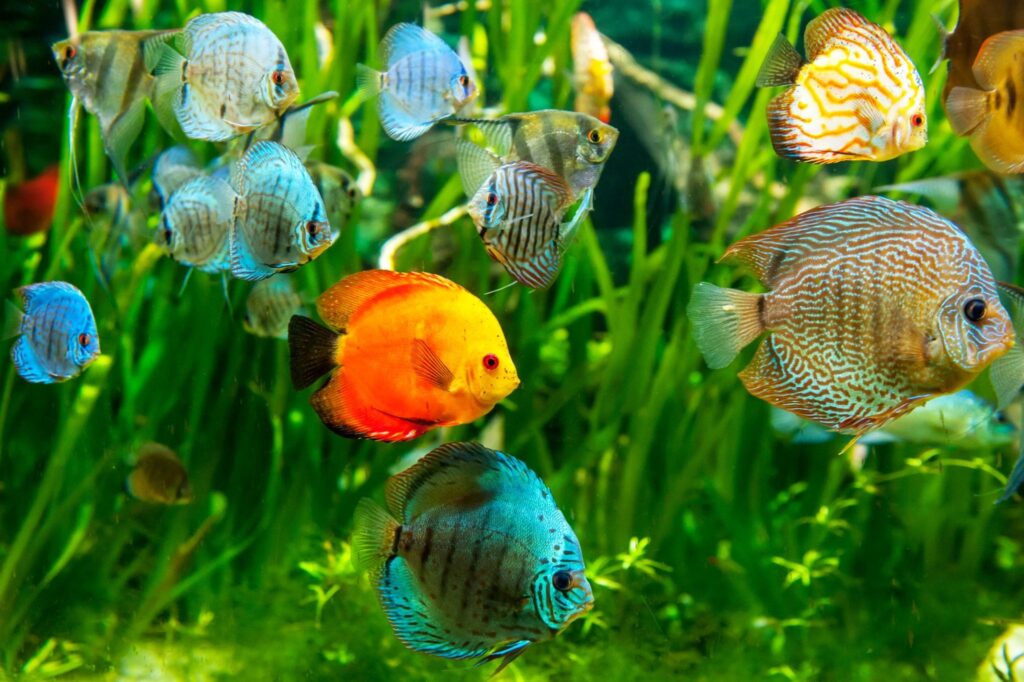
Choose a few simple prompts. Which fish stays close to the bottom? Which moves through open water? Can you spot a change in their body shape or the way fins move?
Watch identification marks together where available. Avoid taking a guesswork on a species from its appearance alone, and encourage your children to ask staff when they want to explore more.
A notebook can help older children record a name or sketch something that catches their attention. Younger children may choose one animal to describe afterwards.
These are relaxed ways to make the visit useful. They do not depend on a scheduled lesson, and they leave children free to follow what engages them more.
Plan a Manageable Route
Although these places can form part of the same Bengaluru visit, they do not all need to fit into one day.
Families with younger children may prefer Bangalore Palace and the aquarium on one day, leaving Cubbon Park for another morning. Others may choose a short park visit followed by the aquarium and save the palace for a different outing.
Check actual travel times from your capacity, including the correct visitor entries. Allow for traffic, meals and the time required to get everyone ready between stops.
Before settling the schedule, review Aquarium Paradise tickets for current admission details and the date you intend to visit. Book each attraction separately unless a specific package clearly states otherwise.
A closer route with room to pause often gives families more to remember than an ambitious list completed in a rush.
Visit with Consideration
Help children comprehend that shared spaces require various kinds of supervision. At heritage sites, follow access rules and avoid touching covered surfaces. In gardens, stay within permitted areas and leave plants undisturbed.
At the aquarium, follow staff instructions and published photography directions. Do not tap on the reflector or try to feed animals unless the platform explicitly allows a supervised training.
Keeping these expectations simple and consistent helps children participate without feeling that every stop comes with a new set of confusing instructions.
It also makes the experience more relaxing for other travelers.
If You Go
Choose two main experiences for a single day and keep any third stop optional. Check what the opening times are a little before travelling, particularly around holidays.
Carry the booking confirmations you need, wear comfy footwear and prepare a meal break, preferably waiting until everyone is tired. Ask each destination directly about accessibility or other conditions specific to your family.
Bengaluru can be explored through more than one story at a time. Its royal ancestry, green spaces and newer interests offer different points of entry. Letting children travel between those adventures at their own speed can give a family tour a more focused exploration of the city.
Is Bengaluru a good place to visit with kids?
Yes, there are lots of interesting historical buildings such as palaces, pretty large gardens, science museums and aquariums. There are a variety of activities that families can do depending on the age, interests and energy of the children.
What are the best places to visit in Bengaluru with kids?
Some great places to visit include the Bengaluru Palace, Cubbon Park, Lalbagh Botanical Gardens, the Government Aquarium and the Visvesvaraya Industrial and Technological Museum.
Is one day enough to explore Bengaluru with children?
You will have enough time to visit 2-3 local sights but if you have more time you will be able to spend more time exploring the gardens, museums and historical sites.
What is the best time to visit Bengaluru with kids?
Start with outdoor activities in the mornings as the weather tends to be nicer. In the hotter part of the day, visit indoor attractions. Check the weather forecast for the time of year.
Can we visit Cubbon Park and the aquarium on the same day?
Yes, the Government Aquarium is in Cubbon Park so it’s an easy option. Just check the current opening times and if it’s closed on certain days of the week.
How can families save money while sightseeing in Bengaluru?
Try to mix free outdoor places with some paid for attractions. Check out how much children’s tickets are, public transport options and official ticket prices.