- Recognizing the Present-Day Virtual Threats While Traveling
- Developing a Strong Virtual Protection Base
- Online Safety During Your Remote Work Travel
- Securing your Data
- Professional Demands
- Basics in Tech
- Healthy Practices on the Go
- Why a Strong System Is Important for Your Income
- Data Protection: Checking on Data
- The Final Steps to a Safe Trip

After arriving in a new country, there’s much to experience and a lot to get done. You’ll have to tick off things from your itinerary, book a taxi, and find a hotel. All these things would likely take up your time, and you might end up skipping the details regarding your online safety.
Maintaining safe online practices is just as important as packing and checking your baggage for your travel plans. It is very important to protect your data while travelling to steer clear of various issues.
This article looks at a few that could ensure the overall online safety of you and your family while travelling abroad.
Key Takeaways
- Tourists are more prone to cyber attacks, as most of them are distracted and unknowingly log in to unsecure systems.
- Remember to set your social accounts to private, as people can track you with the available location data.
- Install a password manager application and use additional security methods to keep your data secure.
- Avoid clicking on random links or files that you don’t recognize, thus staying away from potential threats
Recognizing the Present-Day Virtual Threats While Traveling
The majority of tourists will be victims of a hacker during their travels simply because they are easily distracted and will log in to unfamiliar systems. These online risks range from merely gaining someone’s login details to something more severe, like identity theft.
The FBI has had to deal with over 880,000 online web crimes, accounting for over $12.5 billion worth of lost money. These facts clearly display that cybercrime is still present and will continue to grow in the coming years.
One of the best pieces of advice is to simply protect your devices and adopt secure ways that help keep the data on them yours.
Although many are ignorant of virtual threats and only take note of them after they have become victims, many people never do. Do not become a statistic like those who ignore such warnings.
Have you looked over your bank account details and transactions recently? Taking precautions is the key to maintaining great online safety throughout your trip.
Developing a Strong Virtual Protection Base
The right to privacy, which is a basic right in all countries, must be preserved and protected. One needs to actively work toward preserving their online safety. One needs to actively try to preserve their digital privacy.
Your entire social networking account should be set to private when you leave the country. Sharing where you exactly are and not when the situation can be done can allow cyber criminals to discover where to find you during your trip abroad.
In fact, sharing your live location, even just to friends, could be a great hazard. Limiting applications’ access to your personal details and turning off services that are not relevant or are known to cause damage to your privacy.
Check your devices and see what apps are monitoring you all of the time, and always update them, change all of your passwords, and remember not to use the same ones for all your accounts.
Using a password manager greatly assists you in keeping your complex and difficult-to-guess passwords completely secure.
The only thing that you would need to consider is that one password would be able to grant you full access and complete online safety to all your personal accounts.
Online Safety During Your Remote Work Travel
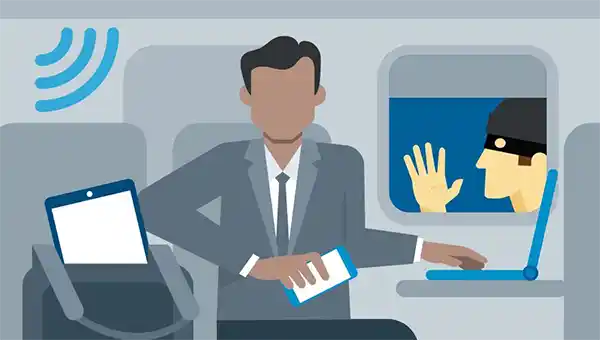
Every tourist is tempted to connect to the free WiFi offered in many cafes and hotels. But what they don’t realize is that public WiFi’s security is very vulnerable, making it dangerous to use.
It’s not unusual to find an infected hotspot created with the name FreeAirportWiFi in a busy international airport. And upon connection, the scammer has all of the data sent from your devices that you can only hope includes only personal details, such as emails.
Using your local SIM card is the only way you can keep your connection safe and sound. Mobile networks are much harder to tap than an open router.
Nevertheless, should you decide to connect to any public hotspot and log into anything, it’s best not to log into your bank and instead make sure to first establish if you can get a reliable connection.
Securing your Data
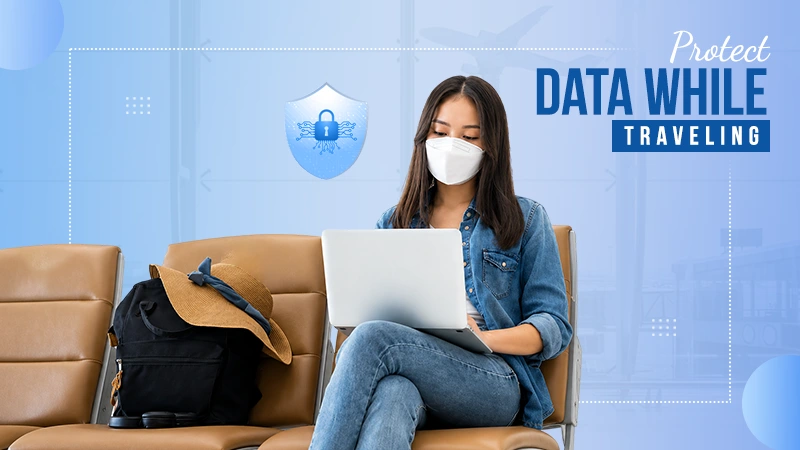
All of the information that is on your smartphone and laptop could easily become useful for the dark web, including pictures, personal data, credit cards, etc. These travel tips are to keep yourself protected from the outside, not only in the physical sense but in the virtual aspect too.
- Protecting your devices via password, face ID, or even biometrics like fingerprint will keep others from logging into your gadgets.
- Encrypt your hard drives if they could get stolen so that they cannot access the information contained within them.
- Backing up your files to the cloud allows you to still access them in case something happens to your device.
- Always make sure to equip screen protectors on your laptops, as anyone could be having a peek at your device, attempting to steal your work.
Protecting yourself against these digital threats allows you to maintain your online safety and stay secure at all times.
Professional Demands
The nomadic trend and remote work lifestyle are rapidly spreading throughout the globe. Most people today manage campaigns and websites, SEO project management tasks from different cities all over the world, etc.
Collecting data in real time and from different websites is essential when working on a project. For example, an e-commerce website expert might need to acquire competitive price ranges from different markets on a regular basis.
Using a good proxy provider allows you to access a website while working within platform restriction parameters and collecting public data. This tool, working with headless browsers, helps automate and boost productivity.
Make sure the service you opt to use is not just reliable but also works in line with GDPR and similar regulations. Using a morally sourced proxy service provider is an integral part of your technical security and would greatly ensure that your online safety is not compromised.
Did You Know?
Public USB charging stations in airports or cafes can be modified to steal data or install malware instantly. Using your own wall brick is the safest option.
Basics in Tech
Knowing cybersecurity basics will assist you in staying safe online. Phishing emails, emails from bogus companies, will try to get you to log in to their website with fake details about their company or your account.
Looking out for the correct website links (those with a lock in your URL) and for the sender’s email, the spelling of the company’s domain name, and the details within will save you from having a cybercriminal access your accounts.
You’d also want to make sure that all the newest updates are installed on your devices, including the OS and application patches, as they are often where newly discovered bugs are fixed.
Failing to do so leaves you open to existing hacks and threats that may put your online safety at risk, so it’s wise to always have your software set to auto-update installation, so that you never miss out on them.
Healthy Practices on the Go
Safe browsing has become a digital necessity for every nomad. Visiting secure websites by making sure they use an HTTPS connection ensures that the data sent between your computer and the website is always secured and encrypted.
Also, avoid opening unknown files and downloads from random links or pop-ups, as such files are mostly filled with malware that monitors your keystrokes.
Your global internet access needs to be managed well. Often, buying a SIM card in your host country is both cheaper and a much safer option than using the global roaming option.
It allows you to access maps and translation programs, connect to reliable networks, and gives you a sense of security knowing you are not connected to an unknown system at any time.
Why a Strong System Is Important for Your Income
Your internet security directly corresponds with the success of your professional ventures while you are traveling abroad. The nomad life relies on your virtual systems; one small error could result in numerous days without productive work or even a huge loss in trust and professional details from clients, which is why cybersecurity is so vital.
Dedicate some time and resources to making sure you have secured your devices properly before your travel plans begin.
Try finding places where you can travel from and work at the same time without compromising on the internet speed.
Also consider including extra hardware keys for two-factor authentication in your travel packing list, since they can provide nearly unbreakable security against hacking. It’s a strong barrier for your online safety.
Data Protection: Checking on Data
Constant vigilance and periodical checkups will give you great protection.
- Scan their laptops for any viruses at least once every week.
- Use reliable software that monitors for viruses that may run silently in the background.
- Regularly review the applications on your mobile phone and check that nothing has access to your camera without permission; these things will secure your online safety at all times.
- Delete old unused apps from your device so you can protect them with all security features available and be sure they do not carry any vulnerabilities for your online safety.
- Always log out of every browsing page after finishing work, and clean your web cache/cookies regularly as well.
The Final Steps to a Safe Trip
This is a step that never finishes: Improving your online security and improving awareness of any suspicious activity on your accounts.
Check your bank statements every week, so any fraudulent activity can be found quickly. If a card goes missing, be sure to report the loss to your bank through their official mobile application.
By considering what the worst possible case is, you make the worst possible case less likely to happen. Most cyber crimes, after all, are crimes of opportunity.
Once you close the digital doors and windows of your accounts, it becomes a more difficult target to pursue, and you are free to enjoy the sights and sounds of your next travel destination.
If you are hoping to experience all the world has to offer with complete peace of mind, just remember to follow this guide.
Q1) Why is it essential to know about device security?
Ans: Device security is very important, as many threats around the world are looking to gain unauthorized access to your private information, and to protect yourself from them, you must understand the basic security practices.
Q2) Why is it important to protect your information while travelling?
Ans: At the time of travelling, your devices contain personal data like government IDs, travel documents, credit card information, and more, which, if lost, can cause major issues on a trip.
Q3) How can I secure my data?
Ans: Data can be safeguarded by installing a password manager application and adding 2FA (two-factor authentication) to all your accounts, ensuring that your information never gets compromised.
Q4) How can I keep my devices updated?
Ans: Check for the auto-updates option in the settings menu of your device. Enabling this function allows your phone to always be up-to-date with preventing security measures regarding the latest online threats.