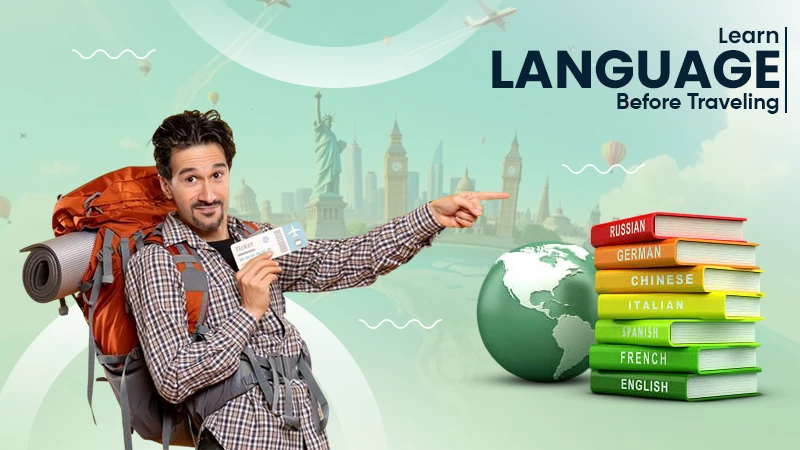
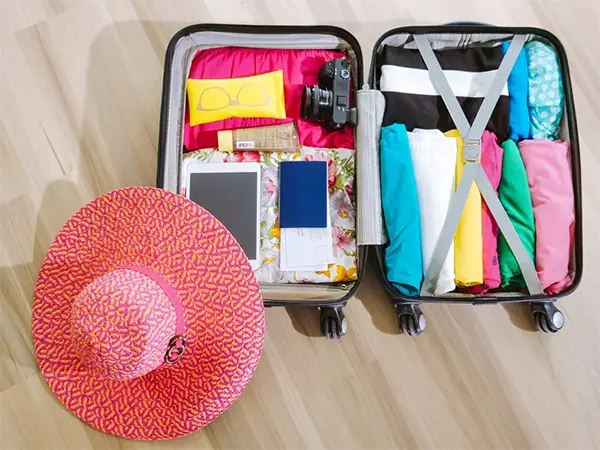
There is no need to master fluency before your trip in order to be able to communicate effectively. The vast majority of travelers find it much more beneficial to learn a number of practical phrases needed in specific situations rather than memorizing hundreds of random words.
Do not try to learn vocabulary in isolation from context; organize phrases by situations to be able to remember them. It does not take you months to prepare for your trip; daily practice of only 15 minutes will yield good results. Consistency will work for you the most. The sooner you start and practice regularly, the better you will feel in a foreign language.
KEY TAKEAWAYS
- You don’t need fluency before traveling—just a focused set of useful phrases for real-life situations.
- Learning travel-related vocabulary (food, directions, greetings, numbers) is far more effective than random word lists.
- Consistent short practice sessions, even 10–15 minutes daily, work better than long irregular study sessions.
- Apps, AI tools, and roleplay exercises help simulate real conversations and build confidence before your trip.
1. Use Apps and AI for Daily Repetition
Want to learn a language with an app, but a little bit too keen? In practice, that divides attention and complicates momentum. Research backed by peer-reviewed papers favours short experiences on a regular basis rather than infrequent deep dives: this means that selecting one app and sticking with it is more crucial than selecting the best tool.
For anyone unsure where to start, the tools a certified teacher recommends most offer a grounded starting point for choosing a dependable tool stack.
Langua
While traditional language learning drills vocabulary and sentences in isolation, Langua immerses learners in real conversations. For example, you rapidly develop an actual understanding of travel contexts because phrases appear in relevant contexts in which they would be used.
This is also a way of enabling learners to do listening and pronunciation exercises simultaneously. Langua provides a gradual and structured pathway for travelers who want to progress beyond flashcards and into real conversations.
Duolingo
Duolingo: Works well for travelers, has brief, addicting, and commonsense-based phrases in the longest lessons. Duolingo features a gamified learning process, including rewarding streaks and other elements that motivate learners to engage daily in studying.
Audio-based exercises for pronunciation and dictation tasks for listening practice are also provided within the app. Preparation for the travels: I usually only study the travel-related modules because otherwise, the study time is not very effective and not particularly useful for the forthcoming trip.
ChatGPT
ChatGPT is actually useful for practicing conversation. You can ask it to write a fake restaurant or taxi dialogue, practice saying responses out loud, and have it correct your tone, phrasing, etc. This flexibility is great for personalizing practice to specific destinations or contexts. AI creates a humanistic way to adapt to individual needs that few fixed curricula can match.
Google Translate
Google Translate can play a role here, although not as the main source of knowledge. Rather, it will be more convenient to use it as a fast reference during your studies than as a way to learn how to keep words. The pronunciation feature assists with unknown sounds, and the camera option is beneficial for reading signage or menus when on the move.
Roleplay Little Dialogues to Yourself
Reading phrases is one thing. And it’s another thing to say them at an ordinary pace while ensuring that your pronunciation is good. That kind of listening practice and oral rehearsal instills confidence that no passive study session can provide. You speak the same phrases over and over and then repeat them out loud, turning them into real language you can actually use before you ever fly the coop.
2. Develop a Basic Travel Vocabulary
Travelers apply their memory more effectively when their vocab list matches the contexts they will encounter. Vocabulary is not something you get for school, but a travel filter, a way of determining which words will earn a spot in limited preparation time and which ones will not.
Learn Words That You Can Really Use
The biggest mistake you can make in planning your trip: overdoing things. A traveler who confidently knows fifty high-frequency common words will communicate much better than one who half-remembers five hundred.
Concentrate on the five major scenarios: greeting, ordering food, asking where something is, paying, and emergency. It also keeps the toolbelt short and ready to wear. The cultural element plays its part as well. Other languages have a formal and informal way of greeting others. Before visiting an unfamiliar land, check these insights to avoid any embarrassing mistakes.
Organize Phrases by Travel Context
By organizing phrases according to the travel situation, it makes them less likely to escape you if memory is the first thing to go under pressure, as so many of us know. Phrases related to the airport, restaurant, and street navigation each fall into their own category. That is exactly how immersion works: /not/ the brain links language to abstract lists but links language to context. When we learn “table for two” and “the check, please”, they create a mental scene that fires together as a unit. It is well suited to this method when you use a phrasebook for regular repetition instead of a last-minute cram.
3. Practice Listening and Speaking at Home
According to my observations, almost all travelers think meaningful practice means being in the country itself. This assumption is one that is easily dismissed at the start, since immersion in the home environment actually breeds authentic confidence long before boarding the plane. Some of the easiest listening practice you can find is through YouTube and podcasts. The channels that were meant specifically for language learners would have sloooooow audio, and many times subtitles and an environment that allows for repetition, so you could train your ear before you ever encountered a native again in person.
One of the skills that I believe should be used is shadowing. It consists of listening to a very briefly featured phrase and then repeating it as soon as possible, trying to imitate the speaker’s rhythm and diction. Just five minutes a day can remold how the mouth creates strange sounds.
Online platforms that connect learners to native speakers to practice conversation provide travelers with realistic simulations of real exchanges. Short exchanges in the target language build spoken confidence in a matter of minutes more than hours of quiet study. The passive recognition is transformed into active communication through practice at home, so that when traveling, you can meet the demands of travel.
4. Rehearse the Moments That Matter Most
The travel would throw you the same situations as every traveller. At a restaurant – ordering, at a hotel – check-in, directions, buying groceries, resolving a small issue at the front desk. These are the scenes you should practice before leaving. Practicing every scenario ingrains vocabulary that comes out as second nature when under pressure. While you are good with different cultures and food around the world, you can say those phrases in advance for every conversation.
A good way of practicing your conversation skills is learning to say the same thing in different ways. If you lose a word mid-sentence, a backup keeps the exchange rolling. Role-play sessions at home, limited in time, with limited reluctance. Verbalizing a “hotel check-in” or “market transaction” runs common words from recognized to retrieved. And this is where prepared travels pay off on the earlier side.
How Much Can You Learn Before Traveling?
Well, the true answer depends on how much time is available, but even a small window can support meaningful preparation for travel.
A few months allow for greater vocabulary, greater listening confidence, and repetition for certain phrases to feel more natural. A couple of weeks is still survival phrases and repeated situations like ordering food or asking for directions. A handful of days, however sparse, helps with memorizing essentials and practicing the correct pronunciation of words related to key places. Motivation matters more than fluency. Non-native travelers who practice at least a little, even in short, bite-sized chunks, arrive already possessing usable skills that facilitate each interaction and make it easier for the parties at hand.
Final Thoughts Before You Pack
Travel preparation need not be entirely perfect to work. A deliberate practice centered on genuine situations and everyday repetition on a non-event of your life will make any destination seem easier to negotiate than the occasional rush job ever could. Progress matters more than fluency.
Visitors who come armed with a few well-practiced phrases and an earnest desire to connect will be consistently rewarded with easier, more rewarding experiences abroad. Even the simplest effort is rewarded when it is generated by a continuous practice instead of sporadic study.
Get your suitcase ready, the work is already done.
How much of a language should I learn before traveling?
All you require is some basic phrases, survival language and vocabulary related to travel to handle the situation.
What is the fastest way to learn a language for travel?
Learning only high frequency phrases, daily repetitions, and practicing scenarios is all you need to do without learning grammar.
Are language apps enough for travel preparation?
There are numerous language applications available such as Duolingo, which can provide great results when combined with practice.