

- 1. Learn From Regional Travel Experts
- 2. Be Flexible With Dates, Not Destinations
- 3. Search Flights in Incognito Mode
- 4. Compare Multiple Booking Platforms
- 5. Consider Nearby Airports
- 6. Book Accommodation With Flexibility
- 7. Travel During Shoulder Seasons
- 8. Use Alerts, Not Constant Searching
- 9. Think Beyond Traditional Hotels
- 10. Separate Flights and Experiences
- A Smarter Way to Travel
“Travel is the only thing you buy that makes you richer.”
Did you ever sit next to someone at a place who paid half as much as you did for the same seat? It is a stinging realization. Statistics indicate that airfares for the same route can fluctuate as much as 40% within a single 24-hour window.
In a world where global tourism has increased past pre-pandemic levels, looking for value is not just about being cheap; it’s about outsmarting the algorithms.
This article will make you a strategic voyager instead of a passive booker, ensuring that your hard-earned money goes towards experiences and not expensive tickets.
1. Learn From Regional Travel Experts
Ditch corporate engines for local wisdom. Regional experts understand local festivals and carriers. For Asia, specialized voices such as Linda Goes East offer hyper-local insights that generic sites often miss.
It reveals hidden transport passes and regional discounts that are only known to residents. You can save money and also travel like an insider by going with local expertise.
2. Be Flexible With Dates, Not Destinations
Most people select a place and then try to find a cheap flight. You need to flip that script! If you let the price dictate when you fly, the savings are splendid.
- The Golden Rule: You must aim for midweek departures. Data consistently suggests that flying on Wednesdays and Tuesdays can actually save you up to 15-20% when compared to weekend travel.
- Tools used: You can use ‘Whole Month’ views on search engines to locate the price canyons.
3. Search Flights in Incognito Mode
Airlines make use of dynamic pricing, which tracks your cookies. If you keep looking for the same route, the price often increases to pressure you into booking. You should always open a private or an incognito window.
This will force the website to treat you like a first-time visitor, ensuring that you see the lowest baseline fare instead of a manipulated amount.
Fun Fact: The shortest commercial flight is in Scotland, which lasts just 90 seconds.
4. Compare Multiple Booking Platforms
Instead of settling for the first price you see, you should use tools like Skyscanner or Momondo along with regional players. Some local carrier flights don’t appear on major US engines because of missing integrations.
If you expand your search to a local booking engine, you’ll be able to uncover hidden, exclusive discounts that mainstream sites miss, ensuring that you truly find the lowest fare available.
5. Consider Nearby Airports
Major hubs undoubtedly are convenient; however, it is the secondary airports where you’ll find budget airlines.
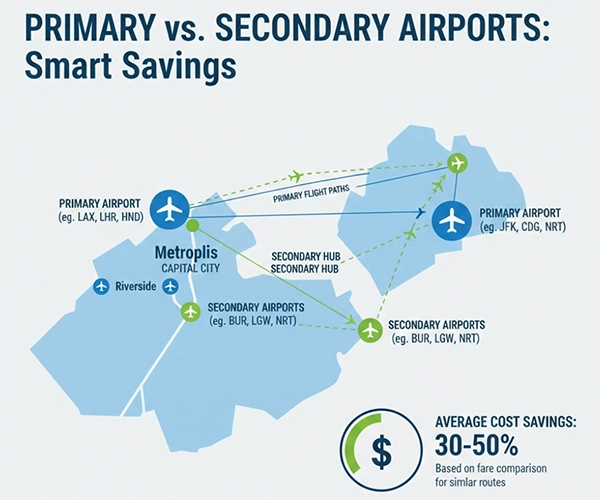
Flying into London Stansted instead of Heathrow or Oakland instead of San Francisco can cut your ticket price significantly. You just need to be sure to calculate the cost of the train or bus ride into the city to ensure that the deal is actually a win.
6. Book Accommodation With Flexibility
Avoid going with non-refundable tooms to stay flexible. By securing hotels and accommodations that come with free cancellation, you can lock a spot while keeping your options open.
As your date comes near, you can re-check the prices; better deals appear at the last minute as hotels cut rates to fill vacancies, allowing you to swap bookings for a cheaper one.
7. Travel During Shoulder Seasons
The Shoulder Season, which is the gap between peak holidays and winter, is a paradise for travelers.
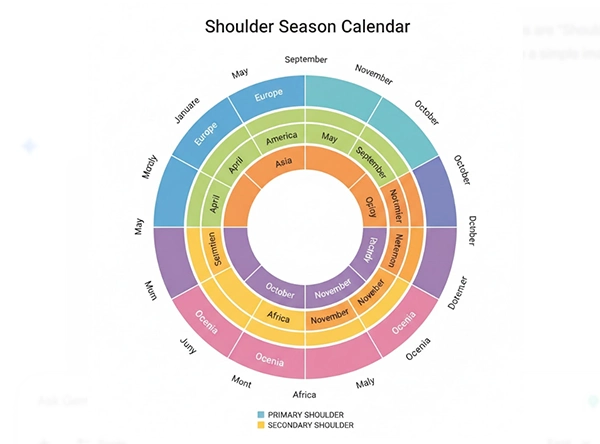
You’ll get 80% of the weather for 50% of the price. Think of Italy in October and Thailand in May.
This timing ensures less crowd at landmark destinations and a more authentic and relaxed atmosphere with locals who aren’t even exhausted by the frantic peak-season tourism rushes.
8. Use Alerts, Not Constant Searching
You no longer need to refresh your browser; allow technology to do the heavy lifting. Set up automated price alerts in platforms such as Google Flights or Skyscanner to check fluctuations in real-time.
You’ll get a quick notification the second the fare hits the mark that you have set. This will allow you to secure the deal without the stress of constant and manual searching.
9. Think Beyond Traditional Hotels
Broaden your horizons and look beyond traditional hotels, which are often the priciest option. Alternative lodging, such as boutique hotels, farm stays, guesthouses, etc., saves cash while offering an authentic local experience.
These unique environments will let you connect with hosts and travelers, turning a simple night’s sleep into a memorable and culturally rich part of your journey.
Did You Know?
Bumped passengers often get cash compensation in the US and EU worth several ticket prices.
10. Separate Flights and Experiences
Booking flights separately and finding local tours is often cheaper than the pre-packaged ones. Separating your local components allows you to cherry-pick high-quality experiences that fit your budget well.
It also avoids the steep markups and rigid schedules hidden in the overly priced holiday bundles. Traveling smart will offer you the best experiences!
A Smarter Way to Travel
Eventually, travel hacking shouldn’t be about deprivation; it should be about liberation. Saving 30% of costs can extend your trip or fund a luxury dinner as well. All you need to do is travel smart, stay curious, and use incognito tabs to secure competitive rates.
Adopting these strategies will make your adventure more affordable and rewarding. You can ensure that your hard-earned money is not getting wasted on just overhead costs, and you are truly spending it for your pleasure.
Ques: Are budget airlines worth to invest?
Ans: Yes, but they do get pricey after adding sneaky baggage fees.
Ques: How far in advance should I book?
Ans: If you are traveling internationally, booking 2-8 months prior should be fine, whereas for domestic flights, it can be 1 to 3 months.
Ques: What should I use to book, a desktop or an app?
Ans: Mobile apps are better as they offer exclusive 10-15% travel discounts before booking.