That feeling is very special when you are finally ready to go on your first trip abroad, all by yourself. But that fascinating feeling can be ruined the moment you land, confused about what to do next. That’s why planning is the most important part of a solo trip, especially one abroad, and you should always know the limits before trusting AI with travel.
Most of the solo travellers lose their wallet or phone, encounter pickpockets, and face overpriced taxis when they arrive in a country for the first time, these mishaps can be prevented by some simple considerations.
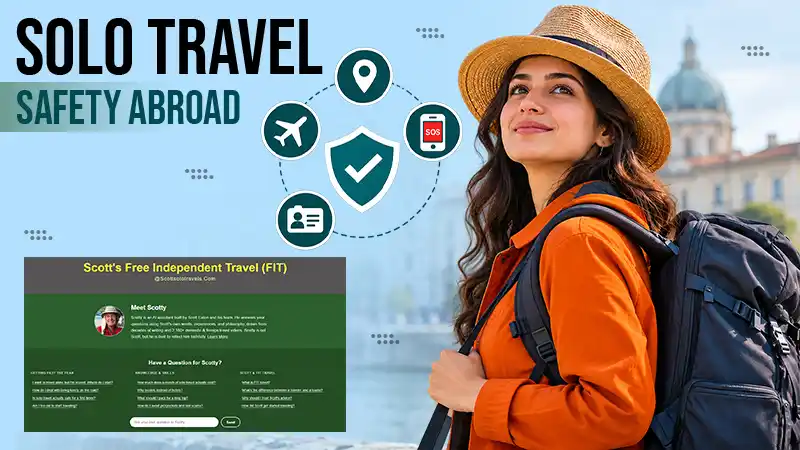
The more you understand about where you’re going and how things typically go wrong for visitors, the more confident you’ll feel, and confidence makes you a less appealing target. Platforms like scottsolotravels.com break solo travel safety into a series of detailed guides, from how tourists ensure their safety without compromising the experience and enjoyment.
This guide will let you know how to stay safe as a solo traveler, from the planning stage right through to your time on the ground.
Before You Go: Preparation Is Your Best Protection
Most travel safety happens before you ever board a plane. A little organization at home saves a lot of stress later.
Research your destination properly.
Begin with your government’s official travel advisory for the country you’re arriving in. These pages are updated regularly and cover local laws, areas to avoid, common scams, health requirements, and entry rules. Then read the recent traveler accounts, check forums for recent experiences, and learn a little about local customs and dress, tipping, and photography.
It also pays to understand basic geography before you arrive. Know roughly where your accommodation sits in relation to the airport, the main train station, and the areas you plan to explore. Having a mental map makes it much harder for anyone to take you on a long and expensive detour.
Organize your documents
Keep digital copies of your passport, visas, flight details, and accommodation bookings. Store them somewhere you can access offline, and in a secure cloud folder or email account. Carry one printed copy of your passport photo page separately from the original.
If your passport is lost or stolen, these copies make the replacement process at your embassy or consulate far smoother.
Share your plans with someone at home.
Leave a copy of your itinerary with a trusted friend or family member, including flight numbers and where you’ll be staying each night.
Simple check-in routines can be helpful; they can be a quick message every day or two. If your plans change, update them. Someone at home knowing where you should be is a valuable safety net when you are travelling alone.
Arrival: The Most Vulnerable Few Hours
The stretch between landing and checking in is when many travelers feel most exposed.
Carrying all your belongings and being unfamiliar with your surroundings can make you tired and jet-lagged. A bit of planning makes a big difference.
Book your first night in advance.e
Always have your first night’s accommodation confirmed before you land, even if you prefer to travel spontaneously.
Knowing exactly where you’re heading removes a major source of stress and stops you from making rushed decisions in an unfamiliar arrivals hall.
Try to arrive in daylight.ht
Where possible, choose flights that land during the day. Public transportation is more frequent, more people are around, and finding your way is simply easier.
Consider booking a hotel transfer or an airport hotel for the first night and heading into the city the following morning if a late arrival is unavoidable.
Know how you’ll get from the airport.
Research your transport options before you fly. Many airports have official taxi ranks, prepaid taxi counters, airport trains or express buses. Ignore anyone approaching you inside the terminal offering a ride with a friendly face.
Head to the official taxi stand or use a ride-hailing app that’s widely used in that country, and check the expected fare range so you know what’s reasonable.
Get local currency and connectivity sorted.
Withdraw a modest amount of cash from an ATM inside the airport, ideally one attached to a bank, so you have enough for transport and a meal.
Before leaving the airport, arrange a local SIM or an eSIM. Having working maps and messages from the moment you land is one of the simplest safety tools you can have.
Blending In: Look Less Like a Target
Thieves and scammers tend to look for people who seem distracted, lost,t or obviously new in town. You can’t hide being a visitor entirely, but you can avoid advertising it.
Dress for the place, not the trip.
Look at what locals wear and aim for something similar in style and modesty. Avoid flashy jewelry, expensive watches, and designer bags.
In many countries, clothing that covers shoulders and knees is expected at religious sites and appreciated more generally, especially in conservative areas.
Walk with purpose
Before heading out, check your route on your phone so you are not constantly stopping to look at a map on a busy corner. If you do need to check directions, step into a shop, cafe, or hotel lobby instead of standing in the middle of the street with your phone out.
Be mindful of your attention.
Wearing headphones in both ears, scrolling reels, or looking up at buildings for too long can make you less aware of what’s happening around you. Enjoy the sights, but stay alert to who’s nearby, especially in crowded places.
Protecting Your Money and Belongings
Petty theft is the most common problem travelers face, and the most preventable.
Split your money and cards.
Never carry all your cash and cards in one place. Keep a small amount of cash for the day in an easy-to-reach pocket, a backup card in a separate spot, and the rest locked in your accommodation’s safe or a secure part of your luggage. If one wallet goes missing, you’re not left stranded.
Choose the right daypack. ack
A good daypack has zips that close fully, and compartments that sit against your back rather than facing outward. In crowds, on public transport and at busy markets, wear it on your front. Avoid hanging bags on the back of chairs in restaurants, and loop a strap around your leg or chair leg when you sit down.
Watch out in crowded places.
Metro carriages, markets, festivals, queues, and other crowded places are favorite spots of pickpockets. Be extra alert during distractions, such as someone spilling something on you, asking for directions with a map, or bumping into you unexpectedly. These are classic ways to divert your attention while someone else reaches for your bag.
Use ATMs wisely
Choose ATMs inside banks or shopping centers rather than standalone machines on quiet streets. Cover the keypad when entering your PIN, check the card slot for anything that looks loose or added on, and put your cash away before you step back out onto the street.
Recognizing Common Scams
Most travel scams rely on catching you off guard or appealing to your good nature. Knowing the general patterns helps you spot them quickly.
The friendly stranger
Be cautious of anyone who approaches you unprompted with an offer that seems too good to be true, such as a free guided walk, an invitation to a special event, or a tip that your chosen attraction is closed today, but they know somewhere better. Not every friendly local has an agenda, of course, but redirecting tourists to shops, restaurants, or tours that pay a commission is a common tactic worldwide.
Taxi tricks
General issues are broken meters, long detours, and drivers who insist your hotel has closed. Agree on a price before you get in if the taxi does not use a meter. Or consider sticking to ride-hailing applications where the fare is set in advance. Following the route on your own phone also discourages detours.
Overcharging and bait pricing
In markets and smaller restaurants without clear prices, confirm the cost before ordering or buying. If someone hands you something, such as a bracelet, a flower, er or a sprig of rosemary, and then demands payment, politely hand it back and keep walking.
Say a polite but firm “no, thank you” without engaging further; this is the best defense for such situations. Do not explain anything to anyone.
Getting Around Safely
Once you’re settled in, transport becomes part of daily life. A few simple habits keep it straightforward.
On trains and long-distance buses, keep valuables with you rather than in overhead racks or luggage holds where possible, and secure larger bags with a small lock. On overnight journeys, choose upper bunks or window seats where your belongings are harder to reach.
Learn how ticketing works before you need it for local transport. Many cities now use contactless payments or transport cards that save you from fumbling with cash at a turnstile. A licensed taxi or a ride-hailing app is often a better choice than walking unfamiliar streets or waiting at an empty stop.
If you’re renting a car or scooter, check that your license is valid locally and that you’re comfortable with local driving conditions.
Choosing Safe Accommodation
Where you stay affects how safe you feel throughout your trip. Read recent reviews carefully, paying attention to comments about the neighborhood, lighting, front desk hours, and how easy it is to get there after dark.
Guesthouses, small hotels, and well-reviewed hostels with private rooms can be excellent for solo travelers. Staff often know the area well, and you’ll meet other travelers easily. Search for places with lockers or in-room safes, and a reception that’s staffed around the clock if you’re arriving late.
Once you check in, take a moment to note the emergency exits, keep your door locked even when you’re inside, and avoid sharing your room number in public spaces.
Staying Healthy on the Road
Health is a big part of travel safety, and it’s easy to overlook.
Visit a travel health clinic or your doctor several weeks before departure to discuss recommended vaccinations and any preventive medication for your destination. Pack a small kit with basics such as pain relief, rehydration sachets, antiseptics, plasters, along with a copy of your prescription.
Where tap water isn’t safe to drink, stick to sealed bottled water, filtered water, or a purification device, and be careful with ice and raw produce washed in tap water. Busy street food stalls with high turnover are often a safer bet than empty restaurants, since the food is cooked fresh and doesn’t sit around for long.
Finally, pace yourself. Exhaustion makes you more vulnerable to illness, accidents, and poor decisions. Build rest days into longer trips.
Trust Your Instincts
The most useful safety tool you carry is your own judgment. If a street feels wrong, turn around. If a situation makes you uncomfortable, leave, even if it feels rude. If an offer seems too good to be true, it probably is.
Solo travelers sometimes override their instincts because they don’t want to look impolite or paranoid. But always remember, we are the only person responsible for our own safety on the road, and you never need to justify a decision to walk away.
Final Thoughts
Traveling alone for the first time can feel daunting, but the risks are usually far smaller than the fears that come before them. Remember, solo travel is the best confidence boost for students.
A few daily habits, good preparation, and some healthy awareness can make your solo travelling experience less about worrying and more about the freedom it brings. Set your own pace, follow your curiosity, and discover what you are capable of.
Start with a destination that feels manageable, plan carefully, and permit yourself to learn as you go. Every trip builds on the last, and the confidence you gain on the road tends to stay with you long after you get home.
How to stay safe when travelling abroad for the first time?
Research your destination, share your itinerary with someone at home, arrange your first night’s accommodation in advance, and use trusted transport.
How can solo travelers protect their belongings?
Keep cash and cards in separate places, use a secure daypack, and stay alert in crowded areas such as markets and public transport.
What to check when choosing accommodation for a solo trip?
Read recent reviews about the neighbourhood, lighting, reception hours, and access after dark. Look for secure lockers, check emergency exits, and keep your bedroom locked.