
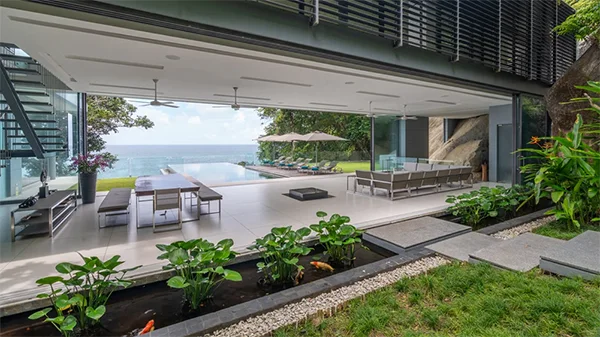
Your comfort expands the travel pattern. Large resorts offer a lawn, restaurant, security, and pool area. They can separate travelers from local communities.
Resorts enhance everything you need, but stay behind managed gates. A private villa can break that pattern when it resides in a residential area, placing markets, cafes, and local commutes within everyday routines.
Every rental usually tries to protect against bad property stays that can strain housing and communities.
The good situation where a villa offers comfort while keeping local life within reach?
How Mega-Resorts Engineer Isolation (Even With Good Intentions)
Large seaside resorts do not cut visitors off from local life out of spite. They do it because their business model relies on keeping every dollar inside the property line.
Walk through most gated hotel zones in Southeast Asia and the blueprint peeks similar. A sprawling lobby channels guests toward an infinity pool, a spa menu, three themed restaurants and a roped-off stretch of sand.
Breakfast buffets lean heavily on imported pastries, bacon and espresso devices, quietly nudging regional street food off the itinerary.
When visitors rarely need to leave the grounds, hotel operators capture almost all of their dining, transport and expedition budgets.
To soften that sterile footprint, mega-resorts organize weekly “cultural nights” beside the pool. Dancers arrive by bus, conduct a condensed 30-minute practice under floodlights and pack up before dessert. While the performers are skilled, staging living practices for a seated cocktail crowd turns community heritage into dinner theater.
That packaged routine sits worlds apart from authentic cultural immersion. On off-the-beaten-path escapes, culture is rarely on a published timetable.
It shows up in the smoke of grilled satay drifting across a scooter lane at dusk, or a spontaneous temple procession that slows traffic for 20 minutes while neighbors chat on the curb.
When a hotel charges premium rates to shield you from conflict, it strips away the unscripted points that make a destination unforgettable.
Stepping Outside the Gates: Why Private Villas Plug You Into Real Neighborhoods
Renting a standalone residential home flips that dynamic overnight. Instead of matching into a commercial strip zoned exclusively for tourists, you unload your bags inside a functional neighborhood.
In Bali, that often suggests waking up along a narrow street controlled by the local banjar, the traditional village committee that coordinates everything from morning temple traditions to community supervision.
Step past the garden gate and you hear immediate school bells ringing down the road, sense incense from woven palm-leaf offerings on doorsteps and dialogue nods with the same intersection shopkeeper every morning.
Whether you stay amid central Bali’s rice-terrace villages or calm into a hillside estate in Sri Lankan tea country, your daily rhythm intrinsically aligns with the people who actually live there.
That geographic shift is what gives slow travel in Asia its real texture. Curated collections of staffed luxury villas across the Asia-Pacific region increasingly embed travelers inside working coastal villages and highland districts rather than commercial hotel corridors.
Unlike corporate resorts that revolve transient international administration through isolated compounds, locally staffed estates depend on housekeepers, gardeners and managers born and raised in the surrounding neighborhoods.
Hospitality operators such as Elite Havens, which manage staffed private villas with reliable villa managers and local chefs across Bali, Thailand and Sri Lanka, anchor immersive group travel instantly within these districts.
Because the full-time teams operating these staffed vacation homes live just down the road, their recommendations never sound like a concierge binder.
They know which backroad woodcarver welcomes drop-in visitors, which fishing pier unloads mahi-mahi at sunrise and how to follow village etiquette without footing on local customs, turning an easy stay into community-rooted tourism.
The Wet-Market Kitchen & The Group Math Advantage
Food is usually the fastest casualty of a resort stay, yet it becomes the highlight of living in a residential villa. Having an in-villa local chef transforms how you eat without closing you into a formal dining room.
Many villa cooks start their day at dawn at wet markets, bargaining for red snapper, galangal, bird’s-eye chilies and freshly grated coconut before the warmth increases.
You can walk along early in the morning, then pull up a stool in the open-air kitchen to watch fresh spice pastes come together by hand. Meals feel custom-tailored to what is really in season rather than pulled from a corporate freezer.
Better yet, there is zero pressure to eat every meal at home. Nothing exceeds wandering down the lane in flip-flops to a family-run neighborhood warung, where a wooden counter lined with simmering curries and crisp tempeh costs a few dollars and provides half the block.
That balance of home-cooked regional dishes and casual street stalls delivers authentic cultural immersion you will never taste at a poolside grill.
Then there is the budget reality most travelers bypass. On paper, a standalone estate looks steep if you view it as a solo booking. Run the numbers for group villa stays of six to eight friends sharing a three- or four-bedroom home, and the equation moves fast.
Once everyone separates the nightly rate, the per-person split cost frequently lands right alongside mid-range boutique hotel spaces.
Instead of cramming into separate hotel corridors, your crew gets a private pool, an open living pavilion and a kitchen stocked at grocery-store costs.
You stop spending steep resort markups on cold beers and bottled water, and when you divide the check on shared market runs, your everyday travel spend extends much further.
How to Pick a Villa That Connects Rather Than Isolates
Not every villa delivers local connections. Plenty of newly built estates sit inside walled visitor developments that feel just as detached as a mega-resort.
Before securing private villa rentals, run any listing through three functional filters:
- Prioritize walkable neighborhoods over gated complexes: Pull up satellite maps and look at what surrounds the property line. Favor staffed vacation homes folded into working villages or coastal towns where you can walk to a bakery, coffee stand or fishing beach instead of calling a car for every chore.
- Choose full-time local staff over lockbox rentals: Self-check-in properties with key codes keep interactions transactional and leave you troubleshooting alone. A dedicated local villa manager and cook act as cultural translators, arranging reliable independent drivers, describing temple dress regulations and helping you get around narrow rural lanes without guesswork.
- Check the community footprint: Look for signs that the household funds in its own district. Properties employing long-term neighborhood teams and sourcing produce from nearby farms and markets keep your travel dollars spreading locally rather than draining offshore.
A quick look at zone, staffing and sourcing distinguishes a real neighborhood home ground from an unattended vacation bunker.
Redefining What “Upgrading” Your Travel Style Means
Outgrowing hostel dorms should never mean surrendering your curiosity to a plastic resort wristband. Comfort and genuine grit are not opposites. You want a peaceful bedroom, a clean kitchen and space to spread out with friends without shutting yourself behind hotel walls.
At its best, slow travel in Asia is about staying put long enough to learn a neighborhood’s morning habits, favorite noodle stalls and backroad shortcuts.
Trading a packed bunk room for a shared residential home base offers you room to breathe while keeping the front door wide open to the destination outside. That is what a real travel upgrade looks like: spending more stylishly so you see more, not smaller.
Can a private villa really care more about local commutes in hotel areas?
Yes, if a villa is part of a vast community and supports local expenditure, where the location and any other features are absolutely major concerns.
Are all resorts really bad for local communities?
Not every time. The local community benefits from the local economy by enhancing employment and relationships. A major problem arises when it does not support an economy with low leakage.
Does renting a villa always support the local economy?
Not always; temporary villas can increase local business. Supporting housing supply improves long-term market availability.