
- Jaisalmer Fort at a Glance
- History of Jaisalmer Fort
- Jaisalmer Fort Architecture
- Things to See Inside Jaisalmer Fort
- Jaisalmer Fort Timings
- Jaisalmer Fort Entry Fee
- Best Time to Visit Jaisalmer Fort
- How to Reach Jaisalmer Fort
- Tips for Visiting Jaisalmer Fort
- Places to Visit Near Jaisalmer Fort
- Plan Your Visit to Jaisalmer Fort
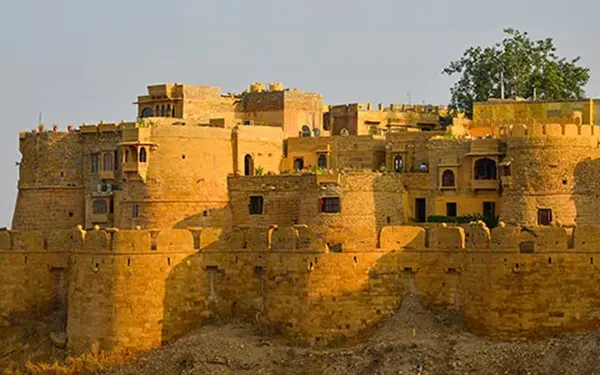
Built on Trikuta Hill and rising from the Thar Desert, Jaisalmer Fort is not just an amazing fairy tale but is comparable to the factories of fairy tales. It is also called “Sonar Quila”. This fort is one of the few remains of Rajasthan that are still inhabited by people and continue trading till now.
Towering majestically above the golden sands of the Thar Desert, Jaisalmer Fort is regarded as one of the finest sites of Rajasthan, located at the center of the famous Golden City. The fort has an amazing hue of warm honey yellow. Apart from its impressive look, it has great historical importance as a significant Rajput fort. Encompassed by lots of houses, temples, shops, and cafes, the fort is still a living fort, making it unique from others.
Jaisalmer Fort at a Glance
Let’s have a look at the quick details of the Jaisalmer Fort location and all.
| Basic Information | Fact |
| Location | Jaisalmer, Rajasthan, India |
| Founder | Rawal Jaisal, |
| Year of Construction | 1156 CE |
| Architecture Style | Blend of Rajput and Indo-Islamic tradition |
| Constructing Material | Golden-yellow sandstone |
| Common Name | Sonar Quila / Golden Fort |
| Type of Fort | Living fort with residents and traders |
| UNESCO Status | UNESCO- certified Hill Forts of Rajasthan |
| Ideal Time to Visit | October to March |
| Sightseeings | Fort walls, gateways, Jain temples, palaces, lanes and panoramic views |
History of Jaisalmer Fort
Standing on Trikuta Hill for over 800 years, the Jaisalmer Fort was built by Rawal Jaisal and was the centre of desert trade in Rajasthan. Serving as a fort and capital of the state of Jaisalmer, the Jaisalmer Fort history has witnessed many ups and downs in the fortunes of Rajasthan.
Who Created Jaisalmer Fort?
Founded in 1156 CE by a Rajput prince belonging to the Bhati dynasty, Rawal Jaisal made Jaisalmer his capital and selected the Trikuta Hill as the site of the fort. The fort became an important center for the development of a new desert state.
What Was the Purpose of Constructing the Fort?
The fort was chosen for both defensive and trade purposes. It was built on top of a hill that was much higher than other surrounding hills, from where the fort could be seen. Its perfect positioning enabled its owner to take control over the routes connecting Jaisalmer with other parts of the world.
Jaisalmer’s Golden Age
Jaisalmer prospered during medieval times when merchants were passing through the town. With the help of trade, Jaisalmer became wealthy and got a lot of unusual industries, seen in some of the city’s temples.
Battles & Historical Changes
Due to its strategic location and great wealth, the fort was a target of attacks and fighting during periods of war – one such period was the sagas of regional Rajput rulers versus the forces of the Delhi Sultanate. The impressive walls, bastions, and gates helped defend against the attacks. The fort lost its military significance as trade routes shifted and political frameworks changed over the years.
From Royal Castle to Living Heritage
In contrast to several ancient forts, which exist merely as monuments, Jaisalmer Fort is a living heritage site. People still inhabit the fort’s premises, which contain temples, shops, restaurants, guest houses, and traditional architecture. Thus, visitors do not see the fort as merely a historical monument, but they can experience a part of Jaisalmer’s culture.
Jaisalmer Fort Architecture
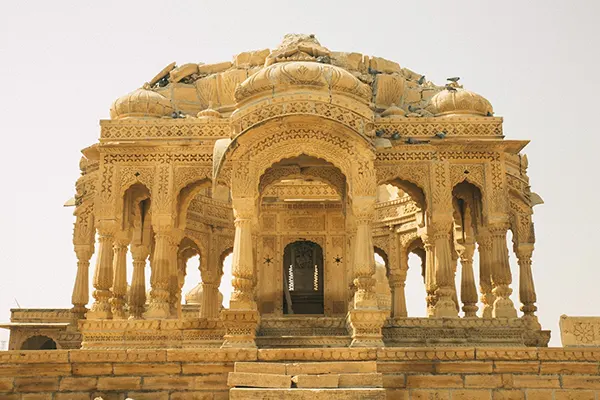
Jaisalmer Fort is known for its stunning golden-yellow sandstone architecture, giving the city of Jaisalmer the title of “the Golden City. Standing atop Trikuta Hill, the fort boasts enormous defense walls reinforced with significant bastions. The inside of the fort features a maze of narrow streets that connect various temples, cottages, shops, and courtyards. The buildings have unique stone décor.
The façades of the buildings are decorated using elaborate arches, balconies, and jharokas, which are some notable features of Persian architecture. The buildings display fine craftsmanship in stonework with carved façades, balconies, arches, and jharokha-style windows. The Jaisalmer Fort has seen over eight centuries of history in Rajasthan.
In addition, the fort boasts beautifully decorated Jain and Hindu temples, some of them with beautiful carvings and other sculptural details. Several residential buildings add to the architectural character and have different ornate façades in contrast with the military walls of the fort.
One of the most exciting things about Jaisalmer Fort is its façade changes depending on sunlight. At dawn and at sunset, it gets bathed in rich shades of gold, honey, and amber, which create a glowing appearance, making it the most captivating place to visit.
Things to See Inside Jaisalmer Fort
Jaisalmer Fort is more than just a monument; it holds many other attractions. Its winding paths have many palaces, shrines, gateways, and houses that provide a full heritage experience.
Raj Mahal
Raj Mahal is also known as the Royal Palace. Once, it was the home of the kings of Jaisalmer. This place was constructed over many centuries, combining defensive features with elegant Rajput-style architecture.
Temples of Jainism
The complex of Jain temples is one of the greatest architectural wonders of the fort. From the 12th to 16th centuries, these temples are famous for their sandstone sculptures, carved pillars, ceilings, and importance to the Jain community.
Temple of Laxminath
The Laxminath Temple, which is devoted to both Lord Vishnu and Goddess Lakshmi, is significant in Hindu culture as it is one of the most significant temples in the fort. Its inner walls are well decorated, and the temple is regularly worshipped.
Havelis of Merchants
The havelis of traders were constructed by the rich traders of Jaisalmer. These beautiful houses not only served as residences but were adorned with intricate carvings, beautiful doors, and windows, thus symbolizing how prosperous these families were due to the traders’ activities.
Gates of the Fort
The journey through the fort begins with several gates, such as Akhai Pol, Surya Pol, Ganesh Pol, and Hawa Pol. The purpose of these gates was to fortify the entrance of the fort.
Viewpoints
From the various terraces and ramparts in the fort, one can witness the beauty of Jaisalmer. The view of sunset is mesmerizing, as it turns the houses and streets into golden colors.
Jaisalmer Fort Timings
The Jaisalmer Fort timings are from 6:00 AM to 6:00 PM for visitors, when all the other areas of the fort, including streets, temples, shops, cafes, and residential areas, are open.
The Town Hall, or Raj Mahal, or the fortnight Palace, is available from 8:00 AM to 5:00 PM. The opening time of the Jain Temples is also around the same time, but they may be closed for a couple of hours at noon for prayer.
Opening Time: From 6.00 AM
Closing Time: At 6.00 PM
Morning and evening are the best times to visit the fort to avoid crowds and the scorching heat of the desert
Jaisalmer Fort Entry Fee
As stated earlier, the Jaisalmer Fort entry fee is nothing. However, some attractions within the fort require separate tickets. For example:
- Jaisalmer Fort Museum (Raj Mahal) – Rs 250 /- to Rs 300/- for Indian visitors and Rs 500 – Rs600/- for foreign tourists.
- Jain Temples – Rs 50/- to Rs 100/- depending upon the temple complex.
- Audio or local guide – charges vary from Rs 300/- to Rs 800/- based upon the duration and group size.
Since the entry fee keeps changing, the visitors are advised to check the latest updates about the fees with Rajasthan Tourism Department or Jaisalmer Fort Museum authorities.
Best Time to Visit Jaisalmer Fort
Plan your visit to Jaisalmer keeping in mind its extreme desert climate for a pleasant trip:
- October to March: This is the ideal season for visiting Jaisalmer with comfortable temperatures.
- Morning time during winter months (7-10 AM): Perfect time to go sightseeing in the picturesque lanes of the fort and to visit temples.
- Evening time during winter: The right time to enjoy the lit-up fort along with the spirit of the fortified town.
- April to June: The weather is hot, and exploring during the afternoons can be tiring.
- Festivals and peak season (December- January): It is possible to experience a lot of culture during this time, but it is important to get ready to encounter crowds and long lines.
How to Reach Jaisalmer Fort
Jaisalmer Fort is situated right in the center of Jaisalmer city. It is well connected with the country by several means
By Air:
Jaisalmer Airport approximately 13 km from the fort. From there, taxis and auto-rickshaws are readily available.
By Train:
The railway station is around 2 km from the fort and connects well with Jodhpur, Jaipur, and Delhi, and many other major cities in India.
By Road:
Jaisalmer is connected to Jodhpur (NH 125) and the other cities of Rajasthan through national highways. Local taxis, auto-rickshaws, and hired scooters can readily take visitors to the fort.
Parking: Jaisalmer Fort has both private and public parking places at the base and main entrances. Because vehicles are not permitted in most parts of the fort, you’ll have to park away and make your way to the fort on foot.
Tips for Visiting Jaisalmer Fort
- Visit in the early hours of the day to avoid the crowds.
- Wear a pair of flat, walking shoes as the ground is rocky and uneven.
- Bring supplies such as water, sunglasses, sunscreen, and a scarf or hat.
- Dress according to the local culture while visiting Jain and Hindu temples in the fort complex.
- Keep cash in your pockets for entry fees and purchases at local shops.
- Explore the fort at leisure for two to four hours.
- Watch the sun set over the fort, but avoid standing in residential lanes for a photograph to avoid blocking traffic during your visit to the fort.
Places to Visit Near Jaisalmer Fort
Patwon Ki Haveli: The largest and most magnificent haveli complex in Jaisalmer, known for its delicate sandstone carvings.
Salim Singh Ki Haveli: Features an unusual peacock canopy and beautiful balconies.
Nathmal Ki Haveli: A lovely decorated mansion, an epitome of Rajput and Islamic architecture.
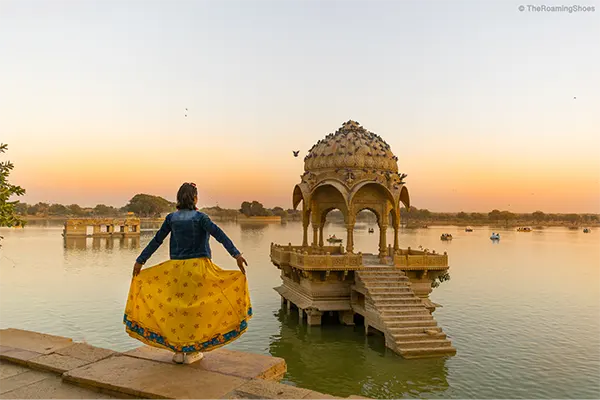
Gadisar Lake: A picturesque lake, suitable for boating and enjoying sunsets.
Bada Bagh: A beautiful garden area with royal tombs as well as desert landscapes.
Jaisalmer local bazaars: Visit Sadar Market, Manak Chowk, and Bhatia Market for items such as handicrafts, textiles, jewelry, leather items, and traditional Rajasthani souvenirs.
Is it possible to enter Jaisalmer Fort without paying?
Yes, Jaisalmer Fort does not charge an entry fee; however, there may be an entrance fee for both the temples and museums.
What are the visiting hours?
The fort remains open during the whole day from 6.00 AM to 6.00 PM.
How long can one stay there?
The time needed to visit the fort usually varies between 2 to 4 hours depending on the visitor.
What season is ideal for visiting?
The ideal month for traveling to Jaisalmer is from October to March.
Is it possible to hire a guide?
Yes, hiring licensed local guides is allowed at any entrance.
Can photographs be taken while in the fort?
Taking photographs is allowed in the majority of public places, although at certain temples and museums it incurs additional payment for using a camera.
Plan Your Visit to Jaisalmer Fort
Jaisalmer Fort is a place where visitors can enjoy watching stunning heritage sites, the marvelous architecture of buildings, local culture, and ongoing contemporary heritage in one destination. It is the only place where visitors can see sandy hills. Visitors are expected to plan their trip carefully to experience the beauty of the Golden Fort.
Uncover the hidden treasures of Jaisalmer Fort with TripHippies.com.