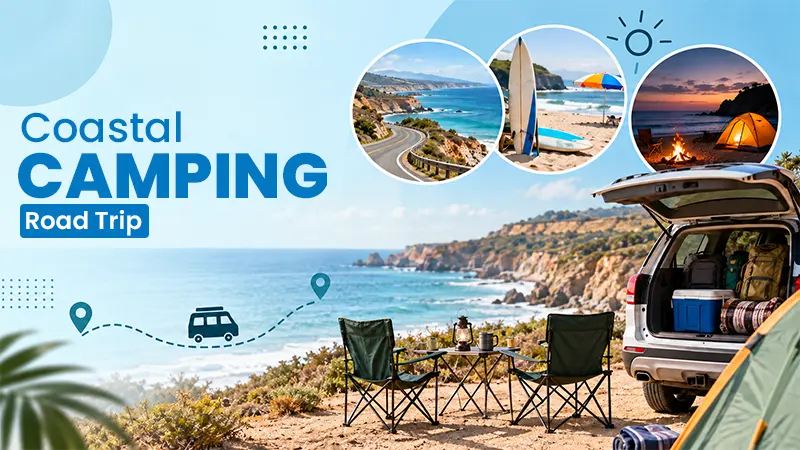
A coastal road trip is actually a perfect way to spend the day swimming or walking along the beach, go camping at night, and visit nearby towns in the morning. But without proper planning, the relaxing trip might turn into a constant search for parking, repeated trips to the car, and more driving than you’d like.
Coastal camping usually means exploring beaches during the day and staying at a separate campground overnight. It is also important to know that not every beach allows camping, even if daytime visits are allowed. Read the full blog to learn more.
Choose Your Campsite Before Planning Your Route
It’s tempting to begin a coastal trip by picking out beautiful beaches and figuring out where to stay later. When camping is part of the plan, it’s better to change that order.
Public beaches and state parks have different rules for night camping, parking, and tent setup. Some allow only daytime visits, while designated campgrounds may need reservations. Before leaving, check official park or campground websites for camping rules, site dimensions, booking needs, and parking restrictions.
If you’re spending two or three days in the same coastal area, think about using one campground as your base. You could arrive and camp on the first day, visit nearby beaches and towns on the second, and visit a more distant bay or scenic overlook on the third, returning to the same campsite each evening.
This saves you from finding somewhere new to stay every night and always packing up your gear. Once you’ve booked your campsite, organize the rest of your route by driving distance instead of trying to visit every stop on your map.
What Should You Bring for a Day at the Beach?
Beach days and overnight camping need different gear, even when they’re part of the same trip.
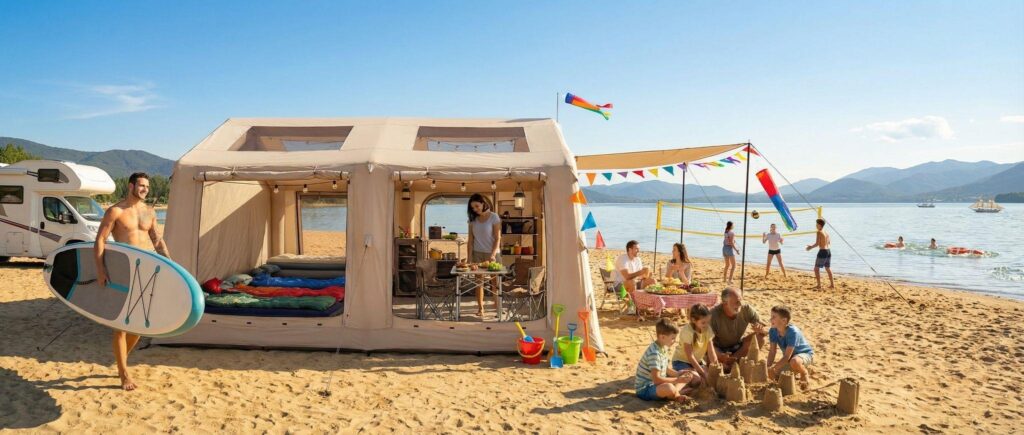
For a day on the sand, you’ll mainly need shade, somewhere to keep your belongings, and a place to relax. If you’re bringing an inflatable beach tent, check whether the beach allows temporary shelters before considering its weight, shade coverage, and anchoring needs.
Coastal winds can pick up suddenly, so even a shelter used for a few hours needs to be secured according to its instructions. If conditions make setup unsafe, it’s good not to use it.
A beach shelter also isn’t a substitute for an overnight camping tent. The two offer different purposes and offer different levels of weather protection. Some beaches also prohibit leaving shelters in place overnight.
If you’re planning to swim, take a walk, or explore a nearby town, leave your sleeping bags, mattresses, and spare clothes at the campground. Bring water, sunscreen, food, and whatever else you want for the day. Carrying less makes it simpler to move around or change plans.
Choosing a Tent and Campsite for Overnight Stays
After a day at the beach, your campground is where you’ll sleep and keep your gear. Having enough space for bedding and personal things, along with easy access to the entrance, can make your stay more comfortable.
When choosing an inflatable camping tent, consider how many people are traveling, how much sleeping space you’ll need, and what your campsite can accommodate. Don’t depend on advertised capacity or setup speed alone.
For example, the ZONKOO Orion is an inflatable camping tent made for two to four people. For a small family or group of friends, a tent of this size provides a useful reference when planning space for bedding and personal gear.
Check for a campsite with reasonably level ground, good drainage, and enough room for stakes and guy lines. Coastal campgrounds may provide little natural protection from the wind, so check local conditions and any setup restrictions before you arrive.
Inflatable tents include fewer traditional pole-assembly steps, but they still need proper inflation and anchoring. An easier setup doesn’t mean you can ignore shifting coastal winds.
How Should You Pack for Short and Longer Camping Trips?
For a one-night coastal trip, packing light often makes sense. You’ll set up camp when you arrive and take everything down the next day, so there’s little reason to bring additional furniture or equipment you won’t use.
Staying at the same campground for four or five nights is different. You’ll need space for clothes, food, backpacks, and beach gear as well as bedding. When multiple people share a tent, getting changed or finding belongings becomes annoying if everything is piled around the sleeping area.
Some travelers consider a more spacious inflatable tent house to keep sleeping, storage, and everyday activities in separate areas. That doesn’t mean a longer trip automatically calls for a larger tent. What’s important is whether the space suits how you’ll use it.
A big tent also takes up more room in the car and may require more effort to carry and set up. If you’re changing campgrounds every day, packing and unpacking could outweigh the benefits of extra space. If you’re staying put for multiple nights, a roomier layout may be more useful.
For longer stays, inspect the campground facilities before booking. Find out where drinking water, showers, restrooms, and trash disposal areas are located. If you plan to cook, check the campground’s stove rules and local fire restrictions.
Leave Room in Your Itinerary for Weather and Travel Delays
A coastal highway can tempt you to stop at every viewpoint, but trying to do too much in each day can make your trip feel rushed.
Be particularly careful with your arrival day. You’ll still need to unload the car, pitch your tent, arrange your sleeping area, and get familiar with the campground. Finish before dark, even if that means skipping a few stops along the way.
On the following days, group attractions by spot. You might visit beaches north of your campground one day, then explore towns and viewpoints to the south the next. This minimizes backtracking. If reaching a beach involves a long walk, allow additional time for parking and the walk itself.
Weather can change your plans, as well. Check local wind and rain forecasts before heading out, and keep nearby towns,best restaurants, or indoor attractions in mind when beach conditions are bad.
If you plan to visit tide pools, sea caves, or places reached by walking along the shore, check official local tide tables and beach safety information beforehand. A path that’s accessible at low tide may become dangerous or impassable as the tide rises. Don’t depend on maps or photos alone.
Allow Enough Time to Pack Up Before Leaving
On the last day, you’ll have more to do than load your bags into the car. You’ll also have to pack away your bedding, clean the campsite, and check for forgotten stakes, trash, or personal belongings.
Brush loose sand off your tent before packing it according to the manufacturer’s instructions. If dew or rain has left the fabric damp and you can’t dry it before leaving, pack it for the drive home, then take it out and let it dry thoroughly as soon as possible.
Check your campground’s checkout time in advance and leave some time to take down your tent and load the car without rushing.
A great coastal camping road trip isn’t about shifting campsites every day or visiting every popular beach along the way. With a convenient campground as your base, a sensible plan for daytime activities, and some flexibility for weather and travel changes, you can visit the coast at your own pace.
What does FF mean for camping?
FF in camping means first come, first served.
What are the two types of camping?
The two types of camping are frontcountry camping and backcountry camping.
What are the five W’s of camping?
The five W’s of camping are wind, water, wood, widowmakers, and wildlife.