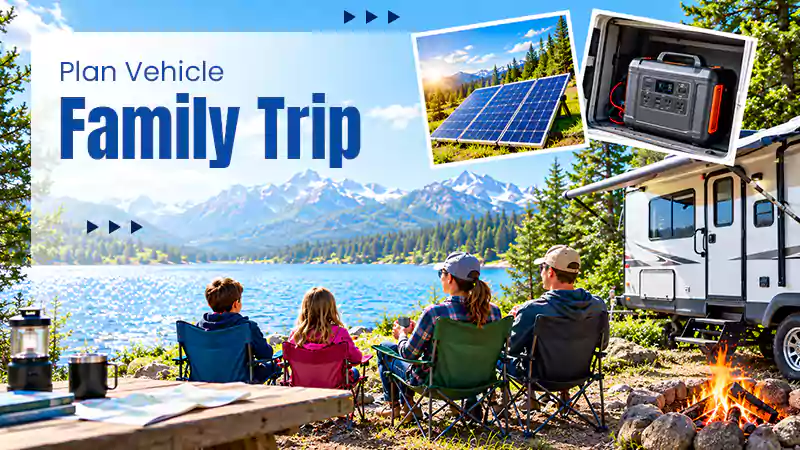
Extended Off-Grid RV Camping can be another getaway from your busy life. You may discover hidden places to visit, landscapes, and many more things.
However, you have to take some precautions and some essentials that can help you in your low time during the trip. Also, there are some common issues that you may find during your trip.
This article will help you find the answers to all you query and the essentials you may need on the trip, and all the setup for your trip.
1. Plan Your Route and Campsites
Find out your route, camping spots, local rules, and weather before you leave for camping. Scattered camping is allowed in some areas of public land; some allow overnight camping but limit the time, and others need permits.
Road conditions and whether or not your RV can make it. Use offline maps in places where there is weak phone connection. Mark fuel stations, water, grocery stores, and approved waste disposal sites.
Have a Plan B Campsite in case your chosen location is full or unsafe.
2. Set Up Your Off-Grid Power System
If there is no electric power at a campground, power is essential. First, identify your devices: refrigerator, lights, phone chargers, laptop, fan, etc., then write down the devices that you are going to use from these.
To estimate how much energy a given device requires in a day, multiply its watts by the number of hours you use the device.
| Device | Example Power | Daily Use | Energy |
| LED lights | 10W | 5 hours | 50Wh |
| Laptop | 60W | 3 hours | 180Wh |
| Phone charging | 15W | 2 hours | 30Wh |
| Fan | 40W | 6 hours | 240Wh |
| Total | 500Wh |
These figures are approximate; consumption depends on the device used and can be raised by refrigerators or air conditioners.
Select the Right Portable Power Station:
A movable power station is a battery that can be used to power consistent appliances and electronics. When trying to choose portable power stations for camping and RV travel, battery capacity, output power, charging options, and ports will come into perform.
The amount of energy stored in a unit is stated by the battery capacity in units of watt-hours (Wh). The output power (in Watts, or W) is a measurement of its power output per unit of time.
For instance, if you have a battery capable of 1000Wh and you need a device with 100W, you can expect to get approximately 10 hours of use. The actual duration will be reduced because of losses in the transformation process.
Consider the Souop S024 Lite:
One of the best choices for off-grid power is the Souop S024 Lite 2400W Power Station. The 2,400W on its listing can help you compare it to suitable appliances.
If you’re shopping, make sure to look at its battery capacity, continuous and rapid output, charging abilities, weight, and ports. Verify that the unit is suitable for your energy requirements and devices that you plan to power.
Where Possible Use Solar Charging:
A solar panel is able to charge a consistent power station while the sun is in the sky. But the product is dependent on the sunlight, shade, weather, and placement of the panels. Have an alternate powering option available if the weather is cloudy and/or you plan to stay for long periods.
3. Design Your Water System:
The need for water as a resource for drinking, cooking, and cleaning is necessary on the trip. Test the fresh water tank on the RV, look for leaks in the water lines, and if possible, carry extra clean drinking water.
Plan water utilization according to the number of travellers and the weather conditions. Demand may rise during hot weather and in the summer months when people are active outside.
Use the tap wisely, turn off taps when not in use, wash dishes with a basin and take shorter showers. Make advance plans for refilling stops and check for safe drinking water at refills.
4. Be Sure to Pack Cooking Supplies & Food:
Prepare easy meals in advance for longer trips, such as rice, oats, pasta, canned beans, nuts, and other shelf-stable foods are helpful. Fresh food items can offer variety, and canned goods offer a suitable backup meal option.
Look at the energy it takes to run your refrigerator and add it to your calculations for power consumption. Always maintain safe temperatures and don’t leave the refrigerator door open for a longer duration.
If you’re cooking outdoors, use outdoor cooking equipment, and do not use an outdoor camping stove in an RV unless it is designed and approved for use in this type of travel.
5. Check Your RV Before Leaving:
A pre-trip check will help to avoid breaking down in remote areas. Scrutinize tires, brakes, engine fluids, lights, and battery. Also, check the plumbing system, and test the water pump.
Keep extra tires, jacks, and other roadside tools in good working order. Test smoke alarms and carbon monoxide detectors and have the LPG system professionally inspected if you think it is faulty.
Professional maintenance can be beneficial for older RVs or lengthy trips in more remote areas, offering additional peace of mind.
6. Be Ready for Weather and Emergencies:
In remote areas, the weather can change often, so check weather forecasts and pack layered clothing and outerwear that is waterproof, suitable bedding, and sturdy footwear.
A first-aid kit, flashlight, extra batteries, basic tools, work gloves, medicine, and emergency contact information should be included in your emergency kit.
Examine a suitable satellite communication device if you are travelling through areas where there is no mobile range. Make sure to know how to use it before you leave.
7. Manage Waste Responsibly:
Your RV waste tanks don’t have an unlimited capacity; keep in mind where it’s ok to discard the waste. Never discharge sewage or untreated garbage into the environment. Use local rules and regulations for wastewater disposal.
Assure rubbish is contained and brought out if there is no bin. Obey fire restrictions and clean up your campsite.
8. Test Your Setup Before a Long Trip
Go on a short trip without hanging out before taking on a few weeks’ responsibility. Utilize your own power supply, water system, cooking facilities, and other necessities.
Keep track of the battery, water use, and refrigerator use. This trial can disclose issues before you’re far from home.
Establish a schedule to check supplies, weather, charge critical equipment, etc., and get ready for the next day’s trip.
Conclusion
Going for a long road trip with your RV involves preparing your power, water, food, car maintenance, and safety supplies for your trip before you go. Do a brief test drive before taking on a trip to see what you need to improve in your setup and what you should be cautious of for future trips in remote areas.
First, determine your power requirements, evaluate your RV, and get supplies ready. Before you buy, compare the most appropriate power solutions, such as a Souop S024 Lite, with your needs. The following tips will help you have a safe, comfortable, and enjoyable off-grid experience.
What is the maximum amount of time an RV can be off-grid?
Requires battery capacity, water storage, waste tanks, food supplies, and refill points. Some RVs can go without electricity for a number of days or weeks with proper planning.
How many watts does the RV require when it comes to off-grid camping?
Determine in watts per hour how much energy your necessary devices use every day. Select a power system that has enough available power for your requirements and additional losses and limited charging.
Will a portable power station power an RV refrigerator?
Yes, if the refrigerator uses the same type and fits into the capacity and output of the power station, it can be used. Ensure that the unit has a running wattage and a starting wattage before selection.
Can solar panels power long trips on an RV?
If you use solar panels to recharge your battery, they will affect its performance depending on the weather and sunlight. When solar production is low, backup charging is good.